

Culture
What do the suits of the Spanish deck mean?
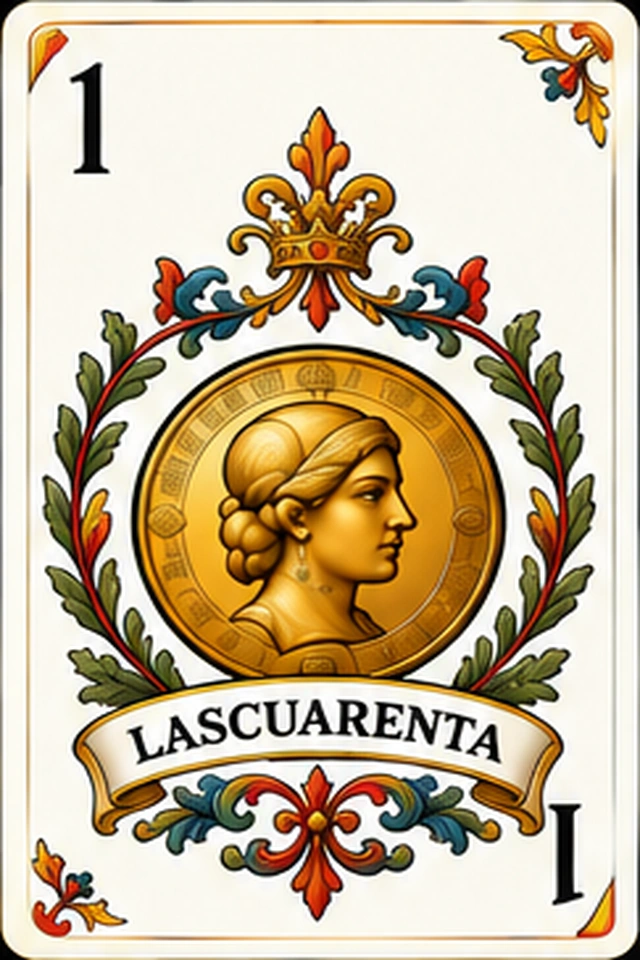
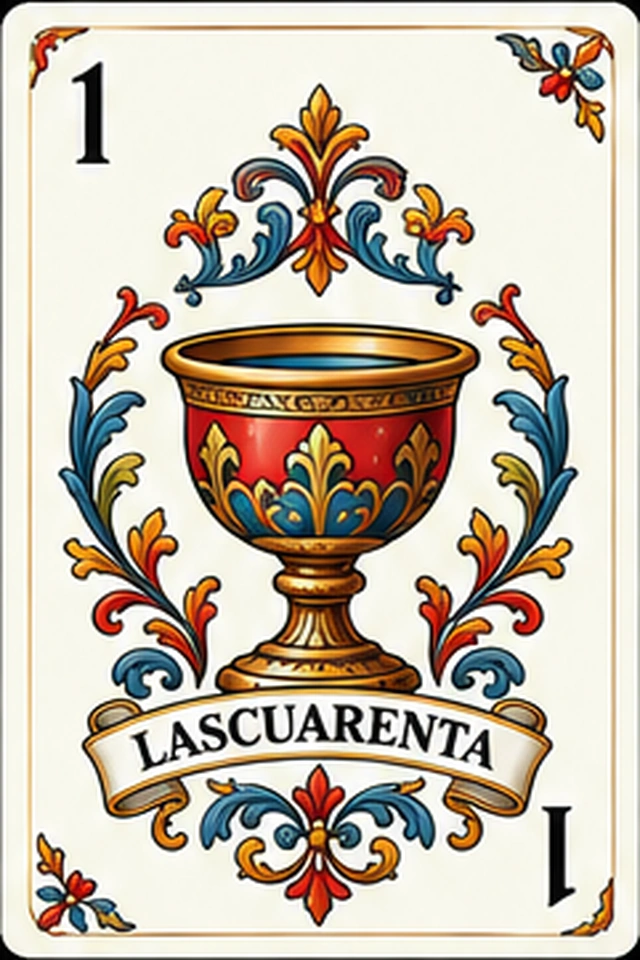
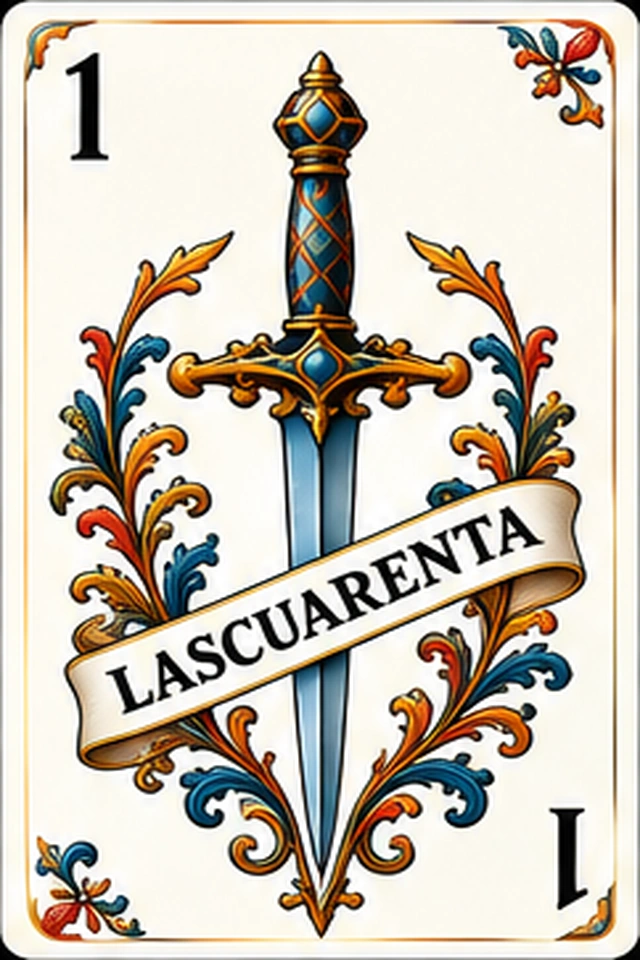
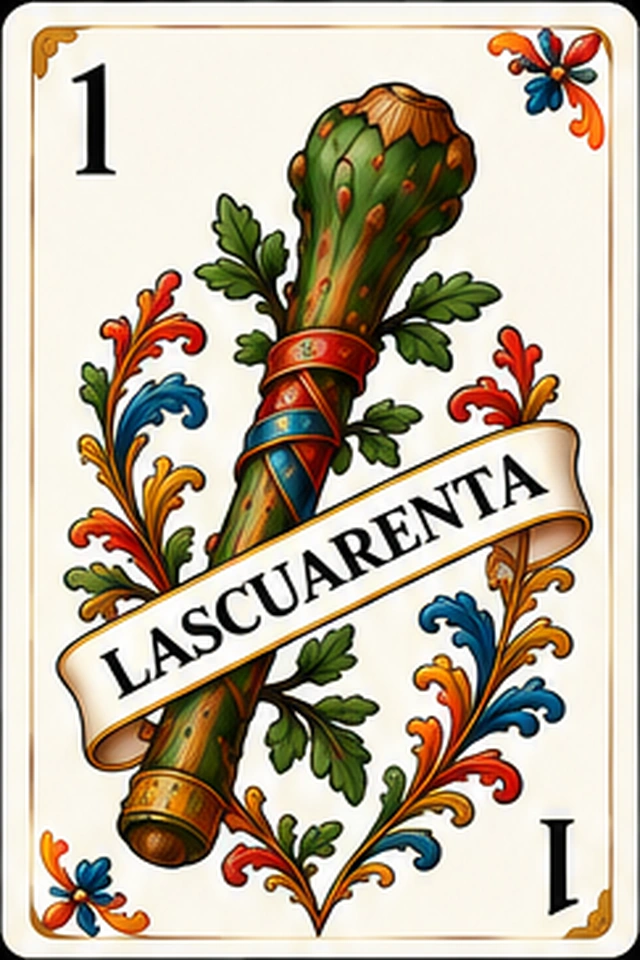
The Spanish deck’s four suits — Oros (coins), Copas (cups), Espadas (swords) and Bastos (clubs) — depict coins, drinking vessels, swords and cudgels. They are popularly associated with medieval merchants, clergy, nobility and peasantry respectively, but that interpretation came later: there is no evidence that the suits were designed to represent those social groups.
Their historical origin is much more travelled. The same objects already appeared, with some important differences, in Mamluk Egyptian playing cards. Upon arriving in Europe during the 14th century, they gave rise to the so-called Latin suits, which are still shared by Spanish and Italian decks. That is why a Neapolitan deck feels so familiar even before reading the name of a single card.
The origin of the suits of the Spanish deck
The oldest European records of playing cards appear at the end of the 14th century, but the cards did not arrive with iconography yet to be invented. A Mamluk deck preserved in the Topkapi Palace Museum in Istanbul was already organised into four families: coins, cups, swords, and polo sticks. It also had court cards, though without human portraits: the figures were represented by inscriptions and ornaments.
Three symbols passed almost without translation. The coins became Oros, and Copas and Espadas retained both the object and the name. The fourth required adaptation. Polo was an entertainment for the Mamluk elite, but their sticks did not mean much to the European public; here they ended up becoming Bastos, knotty branches or cudgels that were much more recognisable.
This journey better explains the origin than any rigid theory about kings, priests, or peasants. The four objects were already travelling together before adopting a Spanish appearance. What the peninsular workshops did was transform them, order them according to their own patterns, and give them the graphic personality we recognise today at a glance.
What Oros mean
The Oros represent coins. In some old decks, they look like minted discs, and in others, they are decorated as medallions, circular flowers, or large pieces. The Spanish name emphasises the precious metal; in Italy, they are called denari, meaning money or coins. It is the most direct correspondence between both decks.
From this comes their usual association with wealth, trade, and merchants. It is an intuitive interpretation and fits well with the drawing, but it should be understood as traditional symbolism, not as the birth certificate of the suit. Historically, we can state that they were coins; not that a medieval card master decided to represent a specific social class with them.
In games, the Oros itself does not possess a higher category than the other suits. Its strength depends on the rules and the triumph of each hand. The As [Ace] of Oros can be decisive in many trick-taking games, but due to its value as a card, not because the suit of money commands over Copas, Espadas, or Bastos.
What Copas mean
The Copas are ceremonial glasses or drinking vessels. Their shape varies greatly from one pattern to another: they can resemble a chalice, a wide-mouthed cup with handles, or a richly adorned vase. The Italian deck preserves exactly the same idea under the name of coppe.
The most widespread interpretation links them to the clergy due to their resemblance to the liturgical chalice. This is an understandable association in Christian Europe and eventually took root in books of symbology and cartomancy. However, Copas were already present in Mamluk cards, predating this Christian interpretation. Therefore, it cannot be asserted that they were created to represent the Church.
Meanings such as celebration, hospitality, or spiritual life are also attributed to them. These ideas belong to the symbolic language that has been built around the cards, not to the rules of the Spanish deck. In a game of Brisca or Tute, a Copa is simply the unmistakable sign of its suit.
What Espadas mean
The Espadas are the easiest suit to interpret literally: they represent weapons. In the Spanish model, they are usually straight, with long blades that cross on high-numbered cards. Some Italian patterns draw curved blades and arrange them differently, but they still belong to the same Latin family.
Due to their relationship with weapons, they have been linked to nobility, knights, and the military profession. Here the association is particularly natural, although it also does not prove that this was the original intention. Mamluk decks already included swords and reflected objects linked to their own courtly and warrior culture.
The Espada also offers a clue as to how the deck evolved: a symbol can remain for centuries while the drawing, placement, and even the way cards are counted change. One only needs to compare a seven of Espadas from Castile with an Italian one to recognise the common object and, at the same time, two distinct graphic traditions.
What Bastos mean
The Bastos represent sticks, branches, or cudgels. Their rough appearance, with knots, leaves, and wood cuts, is one of the most distinctive features of the Spanish pattern. In Italian, they are called bastoni and can be seen as straight rods, ceremonial staffs, or maces, depending on the region.
This suit retains the most curious transformation of the entire deck. Its Mamluk ancestor was not a cudgel, but a polo stick. When that object reached places where the sport was barely known, the artists reinterpreted it as something familiar. The Spanish result was the Basto that looks freshly cut from a tree.
Tradition associates it with manual labour and the peasantry, just as it assigns Oros to merchants. Again, this is a later interpretation that functions as a metaphor, not a proven historical explanation. The journey from polo stick to cudgel provides a much more solid clue about its true origin.
Do the suits represent medieval social classes?
The explanation is repeated often: Oros for merchants, Copas for clergy, Espadas for nobles and soldiers, and Bastos for peasants. It is neat, easy to remember, and seems to describe an entire society with four drawings. The problem is that no medieval source is known to state that the suits were designed with that intention.
The association spread centuries later as a symbolic interpretation. Furthermore, it forces us to overlook that the four emblems come from earlier Islamic playing cards, where they did not represent the estates of Christian Europe. It can serve to discuss how each era has interpreted cards, but it should not be presented as a proven fact about their invention.
Something similar happens with theories that correlate the four suits with seasons, elements of nature, or human temperaments. These are symbolic systems added later, especially in esoteric fields. They are curious, but they do not explain why the Spanish deck specifically has Oros, Copas, Espadas, and Bastos.
How the Spanish and Italian decks are similar
The Spanish and Italian decks are close relatives within the family of Latin decks. They share the four suits: Oros or denari, Copas or coppe, Espadas or spade, and Bastos or bastoni. They also share three court cards per suit: a lower court card, a Caballo [Knight], and a Rey [King], although their names and drawings change according to the pattern.
Speaking of “the Italian deck” simplifies a very varied reality. Italy preserves numerous regional models —Neapolitan, Sicilian, Trevisan, Bergamask, and others—, and not all of them draw the Espadas or Bastos the same way. Southern patterns, especially the Neapolitan, closely resemble the Spanish due to centuries of circulation and influence between both territories.
Many Italian decks have 40 cards, like the most commonly used Spanish version, and are used for related games. Brisca has its briscola and Escoba has its scopa. These are not simple card-by-card translations, but they show the extent to which both countries preserved the same branch of playing card history.
Differences with hearts, diamonds, clubs, and spades
The French deck uses hearts, diamonds, clubs, and spades, in addition to two very distinct colours: red and black. Their symbols are flat, small, and easy to repeat using stencils, an important advantage when card manufacturing began to grow. The Spanish deck, in contrast, retains recognisable objects that are usually individually coloured.
A practical equivalence is often made: Oros with diamonds, Copas with hearts, Espadas with spades, and Bastos with clubs. This serves to adapt some games, but it does not mean that one symbol is the exact historical translation of the other. They are distinct systems that ended up fulfilling the same function: dividing the deck into four families.
The court cards also change. The common French deck has a Valet, Queen, and King; the Spanish, a Sota [Knave/Page], Caballo [Knight], and Rey [King]. And while the French usually has 52 cards from As to ten, the traditional Spanish can have 40 or 48. The 40-card version skips from the seven to the court cards; the 48-card version also retains the eight and nine.
How to recognise each suit without looking at the drawing
Spanish decks incorporate a discreet aid called a pinta: interruptions in the top and bottom frame indicate the suit. A continuous line corresponds to Oros; one interruption, to Copas; two, to Espadas; and three, to Bastos. This is where the expression “por la pinta se conoce el palo” (you know the suit by the pinta) comes from.
There is also talk of short and long suits. Oros and Copas are short because their symbols occupy compact spaces; Espadas and Bastos are long because they traverse a good part of the card. This distinction appears in the vocabulary of games like Mus and helps to quickly describe a hand.
If you want to compare the four suits card by card, the Lascuarenta.es (The Forty) collections are in the deck section. And if you prefer to see what changes when they come into play, in learn to play you will find the rules for Tute, Brisca, Guiñote, Cuatrola, and other Spanish deck classics.
A shared history that remains on the table
The most certain meaning of the suits is also the simplest: money, vessels, weapons, and staves. Their history unites the Islamic Mediterranean, the Iberian Peninsula, and Italy, and demonstrates how a game can preserve symbols for more than six centuries while each place makes them its own.
Everything else —the merchants, the clergy, the soldiers, and the peasants— tells how later generations interpreted these objects. This interpretation is part of card culture, but it is better to enjoy it as a metaphor than to confuse it with a document of origin. Cards hold a lot of history; there is no need to invent one for them to be interesting.