

Spanish deck
Why are card numbers located in the corners?
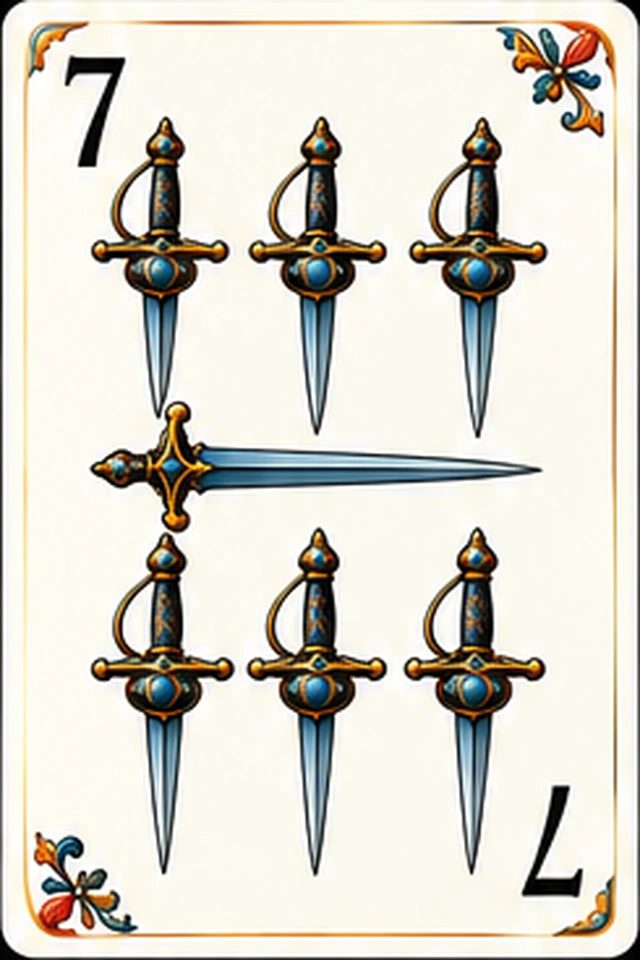
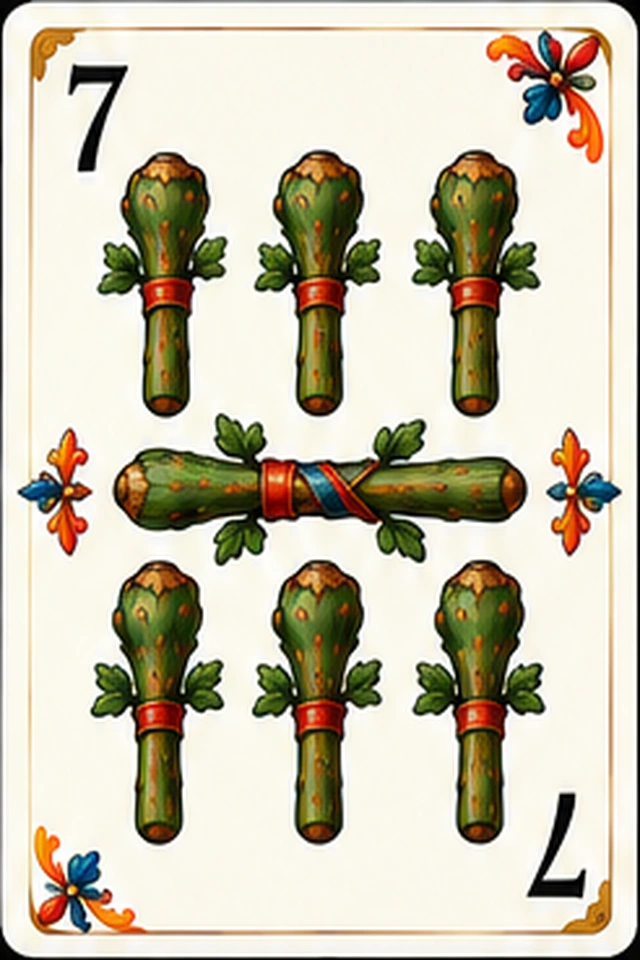
Numbers sit in the corners of cards so you can read your hand with just a slight fan, rather than spreading every card out fully. These corner indices became widespread in the second half of the 19th century; before that, players had to look at the whole illustration to identify a card.
Before indices
For centuries, cards only featured the figure or the suit symbols in the centre. To know how many Oros (Gold coins) were on a card, you had to count them. Players held their hand very wide open, which made it easier for others to spy on and more uncomfortable to manage.
A small invention with a big impact
Manufacturers began printing a small number or letter in the corners, first in French decks and shortly after in others. In the Spanish deck, numbers were added alongside the famous la pausa: the breaks in the border line that indicate the suit. A solid border for Oros (coins), one break for Copas (Cups), two for Espadas (Swords), and three for Bastos (Clubs). We explain this further in what the suits of the Spanish deck mean.
Why in two corners?
Because this way, it doesn’t matter which way you hold the card: when you rotate it, the index still appears in the top corner. For the same reason, many figures today are drawn double-headed or symmetrical.
You notice it when playing
In games with many cards in hand, such as Chinchón (a rummy-style game), indices make arranging runs and sets incredibly fast. In our digital decks, we have kept them so they remain legible even on a mobile screen.
Frequently asked questions
What is the 'pausa' on the Spanish deck?
It is the break in the border line that indicates the suit: no break for Oros (gold coins), one break for Copas (cups), two for Espadas (swords), and three for Bastos (clubs).
Were there always numbers in the corners?
No, they only became widespread during the 19th century.