

Spanish deck
Why does Fournier’s As de Oros (Ace of Coins) bear the name Vitoria?
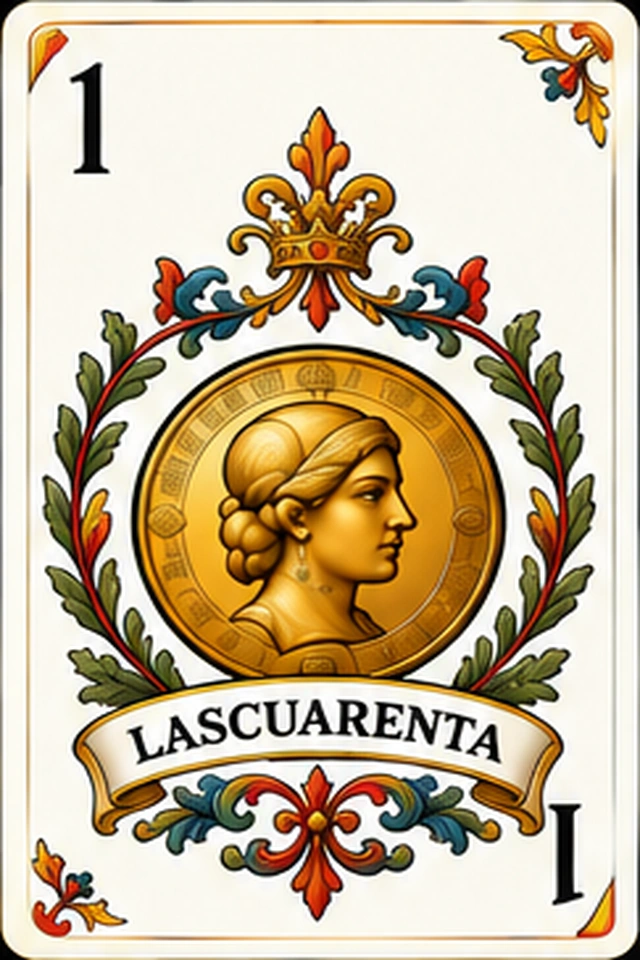
Fournier’s as de oros (ace of coins) bears the name Vitoria because Heraclio Fournier founded his playing-card factory there in the 19th century. As the as de oros (coins) is traditionally the card where the maker leaves their signature, his name and the city’s appear together as the company’s hallmark.
The as de oros, the maker’s card
For centuries, the as de oros was the card marked with the maker’s details. At certain times, it even served as proof that the taxes on the pack had been paid. We explore this in the history of the as de oros.
Fournier and Vitoria
Heraclio Fournier was born in Burgos but settled in Vitoria, where he opened his printing workshop in 1868. In 1889, he unveiled the playing-card design that we still use today, with very few changes. Ever since, ‘Vitoria’ has travelled on millions of packs of cards. You can read about his life in the story of Heraclio Fournier.
A highly recognisable hallmark
Fournier’s as de oros, with its sun and inscription, is probably Spain’s most recognisable playing card. Some collectors focus exclusively on as de oros cards from different periods. If you’re interested, take a look at the largest playing-card collections.
Frequently asked questions
Where are Fournier playing cards made?
In Vitoria-Gasteiz (Álava), where Heraclio Fournier founded his company in the 19th century.
Why is the as de oros (ace of coins) so special?
Because it is traditionally the card where the maker puts their mark and details.