

Spanish deck
The aces of the Spanish deck: the story behind each one
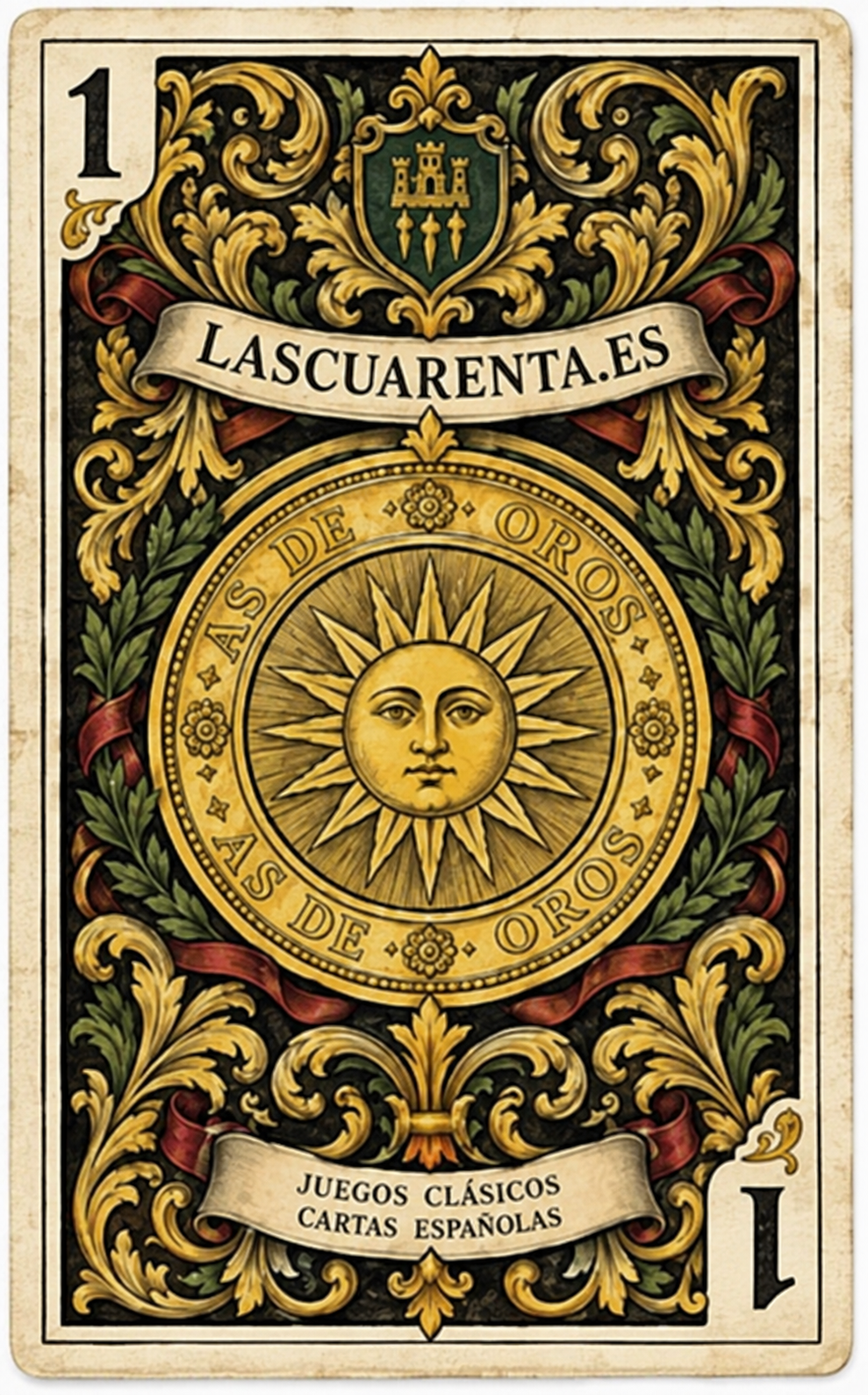
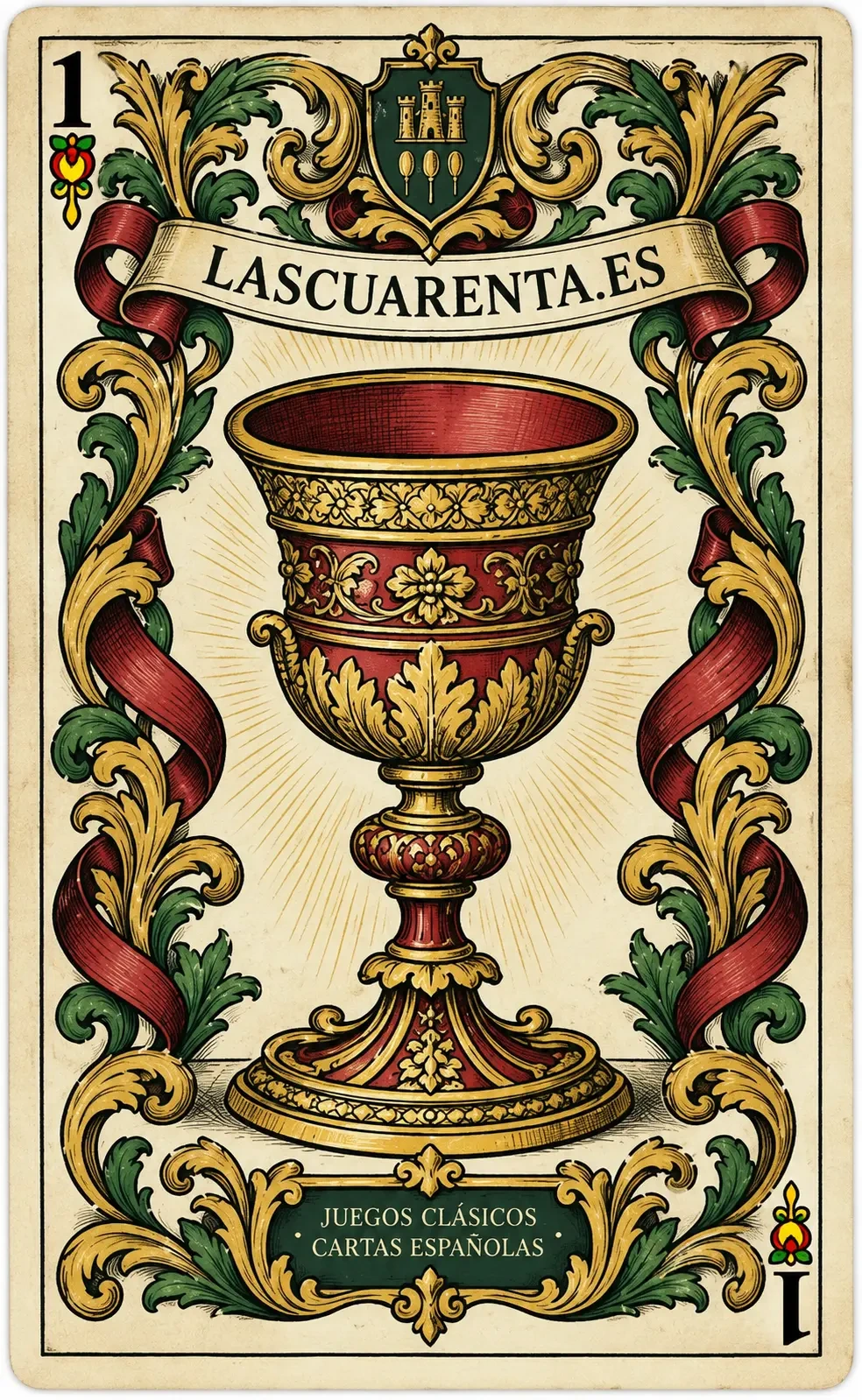
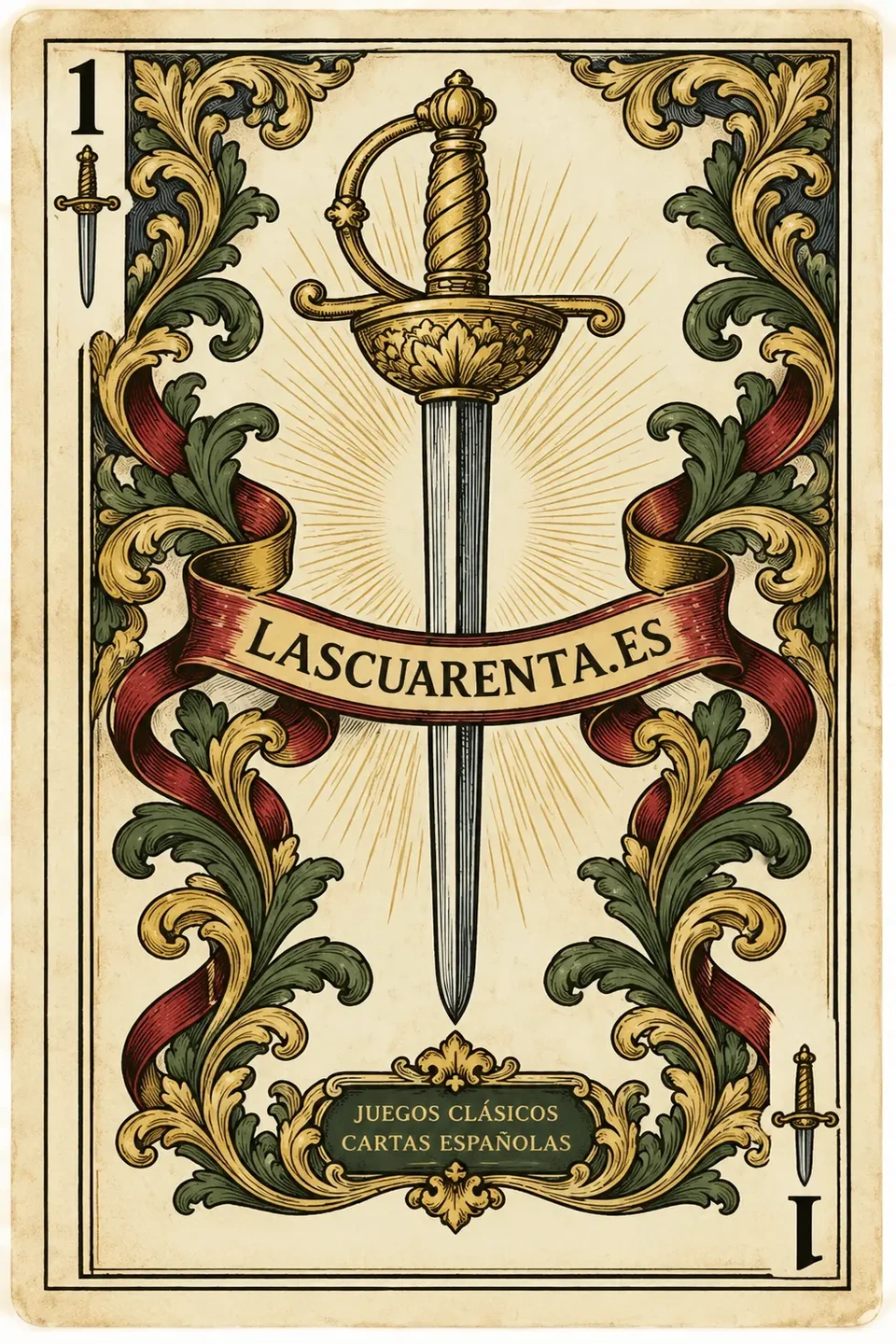
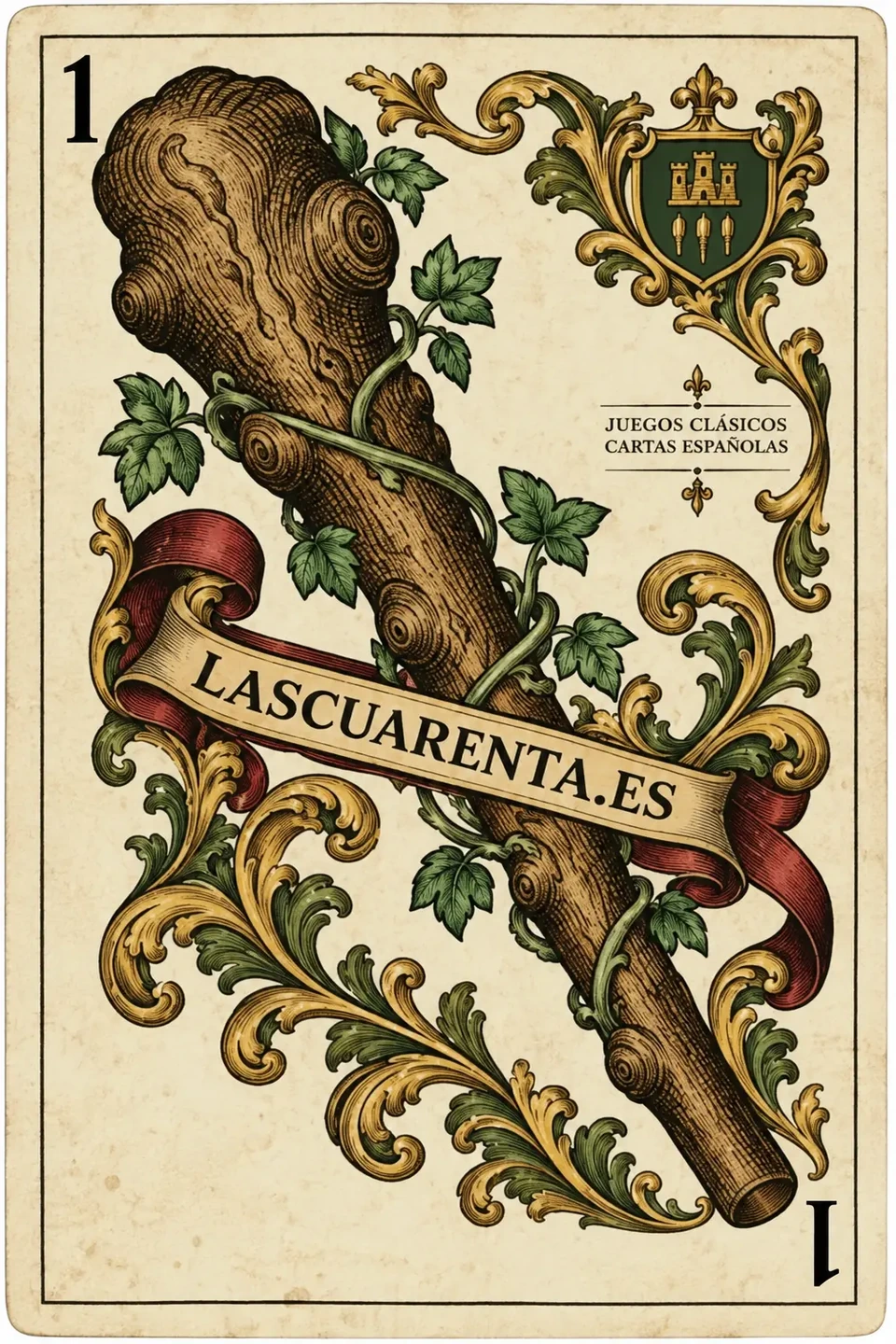
The four aces are the most recognisable cards in the Spanish deck. The as de oros (ace of coins) has served as its ‘signature’ for centuries, as it usually bears the maker’s name or mark. The aces of copas (cups), espadas (swords) and bastos (clubs) stand out for their large, ornate illustrations; in many games, they are the most valuable cards.
The as de oros (coins)
For centuries, this was the card where makers put their name, their town or a coat of arms, and where tax stamps were applied when playing cards were subject to duty. It has an article of its own: the history of the as de oros.
The as de copas (ace of cups)
A large cup or chalice, often decorated with rounded fluting or other embellishments. It is one of the prettiest cards in many old decks.
The as de espadas (ace of swords)
A single large sword, sometimes held by a hand or wrapped in ribbons. In Mus (mus) and other games, it is a highly prized card.
The as de bastos (ace of clubs)
The famous knobbly club, almost a cudgel. It is so distinctive that it has become a symbol of the Spanish deck in many designs.
Why are they worth so much?
In Brisca (brisca), Tute (tute) or Guiñote (guiñote), the ace is worth 11 points and wins almost any trick. We explain this in why the ace is worth more than the king.
Frequently asked questions
Why does the as de oros (coins) bear the maker’s name?
It is a tradition and, for centuries, also served a tax-control purpose: this was the card used to identify the deck.
How much is an ace worth in Brisca?
11 points, more than any other card.