

Culture
Everything you need to know about Mus: origin, history, rules, and curiosities
Mus: much more than a card game
Mus brings generations together through a mix of strategy, psychology, camaraderie and tradition. Played in bars, clubs, gastronomic societies, universities, cultural centres and family gatherings, it has remained popular for centuries through wars, migrations, social changes and technological revolutions.
Unlike other card games, in Mus, having good cards isn't enough. Knowing how to interpret your opponent, communicate with your partner using signals, calculate probabilities, and handle the pressure of an órdago [an all-in bet] are skills just as important, if not more so, than luck.
In this article, we're going to explore the entire history of Mus, from its origins to the present day, explaining its rules, its variations, its unique vocabulary, and some of the most surprising curiosities of this game that forms part of Spain's cultural heritage.
What is the origin of Mus?
The origin of Mus is almost unanimously placed in the current regions of Navarra and the Basque Country. Although its exact birth remains a subject of debate, there are documented references that allow us to affirm that the game was already fully established during the 18th century.
The first known written mention appeared in 1745, when the Jesuit and Basque philologist Manuel de Larramendi included Mus in his famous Diccionario Trilingüe Castellano-Bascuence-Latín. That reference constitutes the first documentary proof of the game's existence.
However, popular tradition holds that Mus was already well-known decades earlier. As with many orally transmitted games, it's likely that its practice predated any written document.
Its definitive expansion came in 1804 with the publication in Pamplona of the Reglas fixas que conviene usar en el juego llamado Mus, by José Ortiz de Zárate. This regulation represented the first serious attempt to unify rules and allowed the game to spread throughout Spain.
Where does the word "Mus" come from?
The etymology of the term continues to generate debate among linguists and historians.
The most widely known theory connects the word with the Basque musu, which means "kiss". This explanation fits perfectly with the tradition of signals, as one of the classic gestures used in some variations consists precisely of blowing a kiss to one's partner.
Another theory proposes a Latin origin from the verb musso, meaning "to be silent", "to murmur", or "to keep quiet". This interpretation is also consistent with the nature of the game, where verbal communication about the cards is forbidden.
Whatever its definitive origin, the truth is that Mus retains a strong influence from Basque in much of its vocabulary.
Well-known words such as órdago come from the Basque expression hor dago, which literally means "there it is". Similarly, terms like amarraco [a marker representing five game points] also have Basque linguistic roots.
How Mus reached all of Spain and America
During the 19th century, Mus definitively left its regional scope to become a national phenomenon.
The Carlist Wars, Basque and Navarrese emigration, and the subsequent diaspora to America decisively contributed to its expansion. Thousands of emigrants took their customs and traditions with them, including Mus.
Countries such as Argentina, Uruguay, Chile, Mexico, and the United States now have significant communities of players. In many Basque centres around the world, championships and gatherings are still organised to keep the tradition alive.
The creation of federations and specialised associations ultimately consolidated its international character.
The deck used in Mus
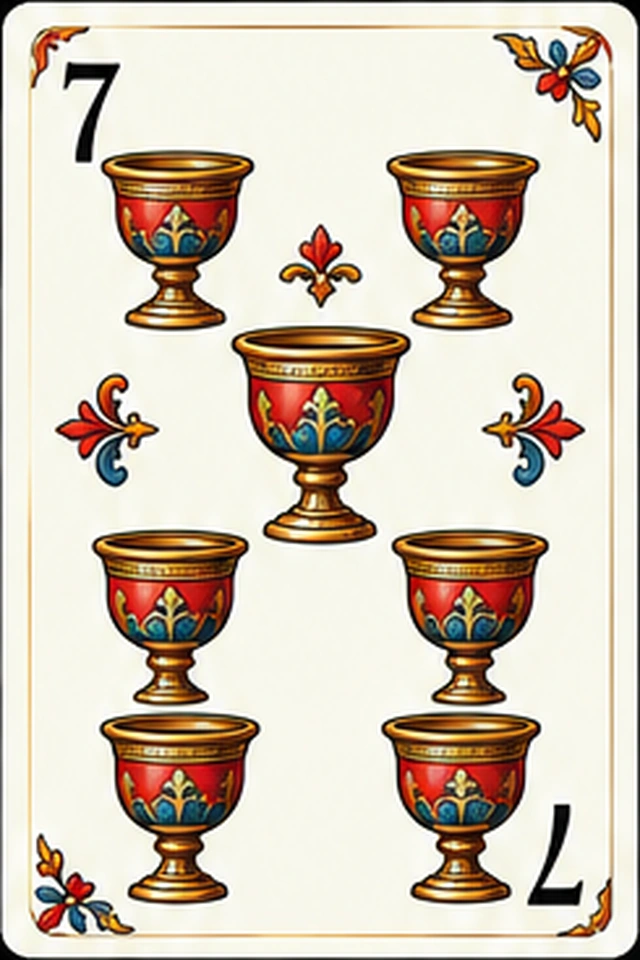
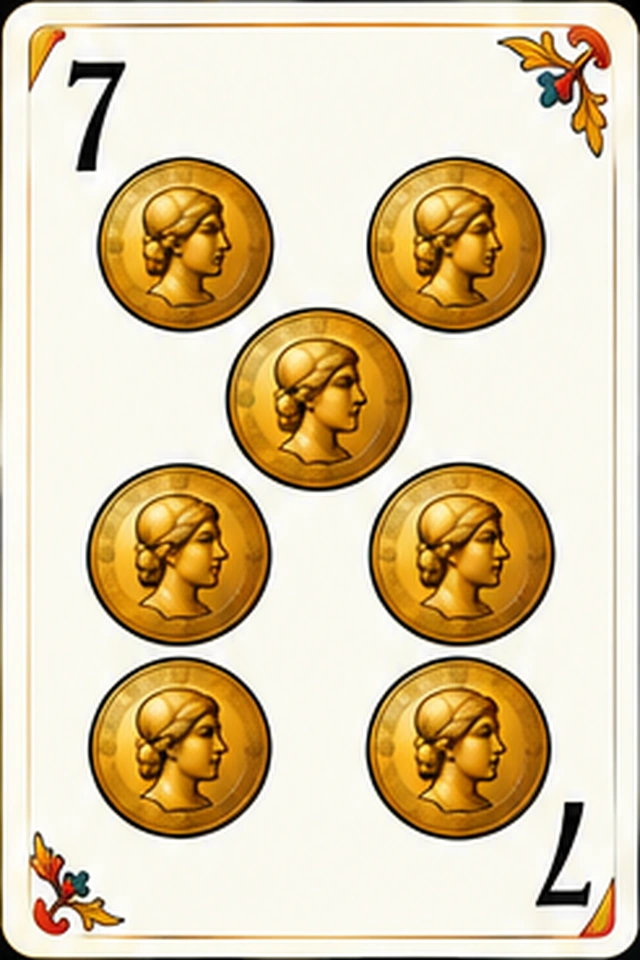
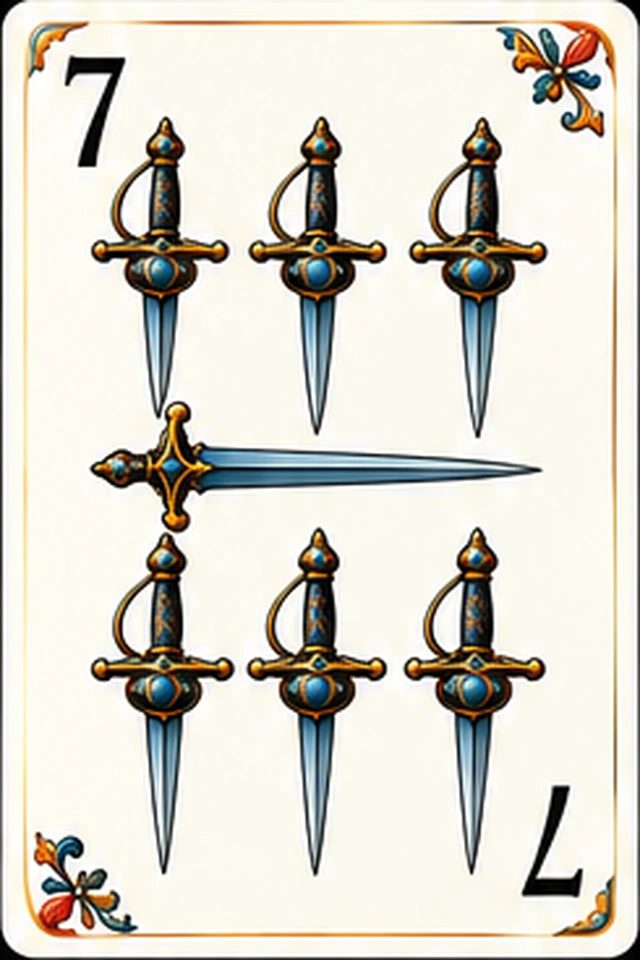
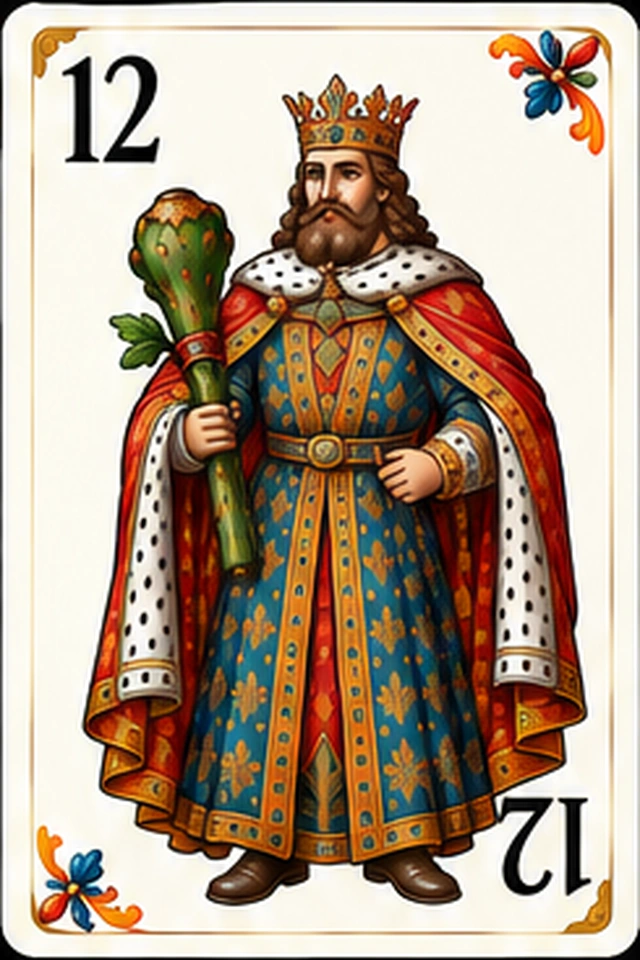
Mus is played with the Spanish deck of 40 cards, removing the eights and nines.
The cards are divided into four suits:
- Oros (coins) [Coins]
- Copas (cups) [Cups]
- Espadas (swords) [Swords]
- Bastos (clubs) [Clubs]
However, the suits have no strategic importance during the game. What is relevant is the value of the cards and the combinations they allow to form.
The popularisation of the modern deck is intimately linked to Heraclio Fournier, whose playing card factory in Vitoria decisively contributed to standardising the design we know today.
How to play Mus
The most common mode involves four players organised into two pairs.
Each player receives four cards, and the game unfolds through a series of rounds that always follow the same order:
- Grande [Greatest cards]
- Chica [Smallest cards]
- Pares [Pairs]
- Juego [Game] (or Punto [Point])
In each of these rounds, players can bet points, accept rival bets, or launch an órdago [all-in bet] to play for the entire game.
If you prefer to go straight to the table, here are the rules of Mus explained step by step, an interactive Mus tutorial to practice play by play, and the online Mus game to play for free against house players or with your friends.
The Mus phase
Before the rounds begin, there is a preliminary phase called "Mus" itself.
During this, players can discard cards and receive new ones to try and improve their hand.
The discard round continues as long as all participants respond with "Mus". The moment someone says "no hay mus" (no Mus) or "corto" (I cut), discards stop and the betting phase begins.
The four rounds of Mus
Grande
In Grande, the player with the highest cards wins.
First, the highest value card of each player is compared. If there is a tie, the next highest cards are compared, and so on.
Chica
This is exactly the opposite of Grande.
Here, the player with the lowest cards wins.
Pares
This is only played if a participant has duplicate cards.
The possible combinations are:
- Pareja [Pair]
- Medias [Threes of a kind] (three identical cards)
- Duples [Two pairs] (two pairs or four of a kind)
Juego
This is probably the most important round.
It involves adding the value of the four cards.
The best possible hand is 31, followed by 32, 40, 37, 36, 35, 34, and finally 33.
If no one reaches 31 or more points, the round is called Punto [Point], and the player closest to 30 without exceeding it wins.
The famous órdago
The history of the word is extensive: we tell it in what the expression "de órdago" means.
The órdago [all-in bet] is the maximum bet in Mus.
When a player launches an órdago, they are betting all the points needed to decide the game or even the entire match.
If the opponent accepts, the cards are shown immediately, and everything is resolved instantly.
This move gives rise to an expression that is now part of everyday Spanish language. When someone "lanza un órdago" (launches an órdago) outside the card table, they are making a risky bet or posing a significant challenge.
The signals: the secret language of Mus
One of the most fascinating features of Mus is the ability to transmit information to a partner through gestures.
The official signals admitted in most rule sets include:
- Biting the lower lip: two Reyes [Kings].
- Sticking out the tip of the tongue: two Ases [Aces].
- Twisting the lips: Medias [Threes of a kind].
- Raising the eyebrows: Duples [Two pairs].
- Winking an eye: 31.
- Pursing the lips forward: Juego [Game].
These signals are part of the essence of Mus and are one of the reasons why Richard Ford described it in the 19th century as a true "game of cards and gestures".
The two main variations of Mus
Although the general structure is the same, there are two main rule sets.
Mus with 8 Reyes and 8 Ases
This is the most widespread modality currently.
Threes count as Reyes [Kings] and Twos count as Ases [Aces].
Mus with 4 Reyes and 4 Ases
This is the traditional Basque-Navarrese variation.
The cards retain their original value, and big hands are much less frequent, which increases the importance of strategy and bluffing.
Curiosities you might not know
The 31 Real
In some areas, there is a special variation known as "31 Real". Depending on the rules used, it can even surpass a conventional 31.
El Solomillo
This name is given to the combination of three Reyes [Kings] and one As [Ace], one of the most powerful hands in the game.
El Perete
This is one of the worst possible hands: a 4, a 5, a 6, and a 7.
La Bocarrana
The five of Bastos [Clubs] has been surrounded by superstitions for generations. Many players consider it to bring bad luck.
More than 200 years of documentation
Few Spanish card games boast such extensive and well-preserved historical documentation.
Official championships and competitions
Far from being just a bar entertainment, Mus has a significant competitive structure.
Among the main organisations, the following stand out:
- Asociación Española de Mus (ASESMUS) [Spanish Mus Association].
- Federación Internacional de Mus (FIM) [International Mus Federation].
- Autonomous federations and regional associations.
Every year, national and international championships are held, bringing together thousands of players from different countries.
Why is it still so popular?
The key to Mus's success is that it combines elements that are very difficult to find together in other games.
There's strategy, probability calculation, psychology, communication with a partner, cultural tradition, and a huge dose of social interaction.
Furthermore, each game is different. The same hand can be played in completely different ways depending on whose turn it is, the signals received, the score, or the opponents' personalities.
That's why, after more than two centuries of documented history, Mus continues to fill tables and generate passionate debates between veteran and novice players.
Conclusion
Mus is not merely a card game. It is a cultural tradition, a language of its own, and a way of understanding competition based as much on the cards as on the people who play them.
From its Basque-Navarrese roots to current international championships, Mus has demonstrated an extraordinary ability to adapt to the times without losing its essence.
Perhaps that's why it remains as alive today as it was more than two hundred years ago: because behind every órdago, every signal, and every challenge, there is always something more important than the cards. There is history, culture, and, above all, companionship.
Sources and references
The information used to compile this article comes from historical documentation, official regulations, specialised works, and organisations related to the practice and preservation of Mus.
Official sources and online resources
- Real Academia Española (RAE) – Official definition of "mus"
- Asociación Española de Mus (ASESMUS) [Spanish Mus Association]
- Federación Internacional de Mus (FIM) – World Mus Championship
- Naipes Heraclio Fournier – History and rules of Mus
- Auñamendi Eusko Entziklopedia – History of Mus
- Biblioteca Nacional de España [National Library of Spain]
Historical sources
- Larramendi, Manuel (1745). Diccionario Trilingüe Castellano-Bascuence-Latín. First known written reference to the game of Mus.
- Ortiz de Zárate, José (1804). Reglas fixas que conviene usar en el juego llamado Mus, característico de vizcaínos y navarros. First known printed rules of the game.
- Ford, Richard (1845). Tipos españoles o costumbres populares. Early description of Mus as a «game of cards and gestures».
Specialised bibliography
- Corominas, Joan. Diccionario crítico etimológico castellano e hispánico.
- Leguineche, Manuel. La ley del mus.
- Bernabeu, C. Diccionario de Mus.
About this article
This content has been compiled from historical sources, regulatory documentation, and specialised bibliography on Mus. Due to the existence of regional variations, some rules, signals, and denominations may differ depending on the geographical area or the rules used.