

Spanish deck
Spanish, Italian and Portuguese playing cards: similarities and differences
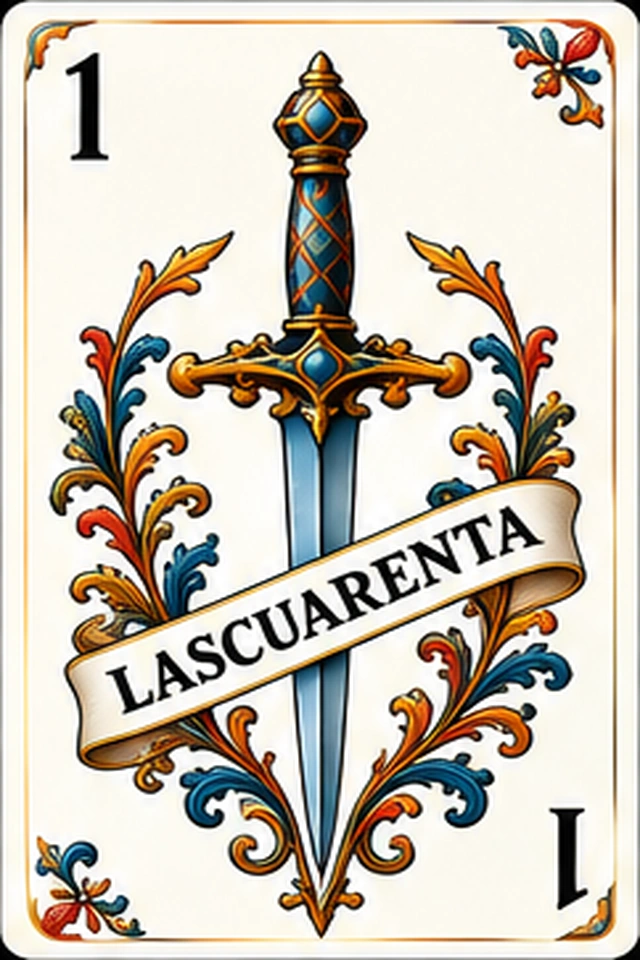
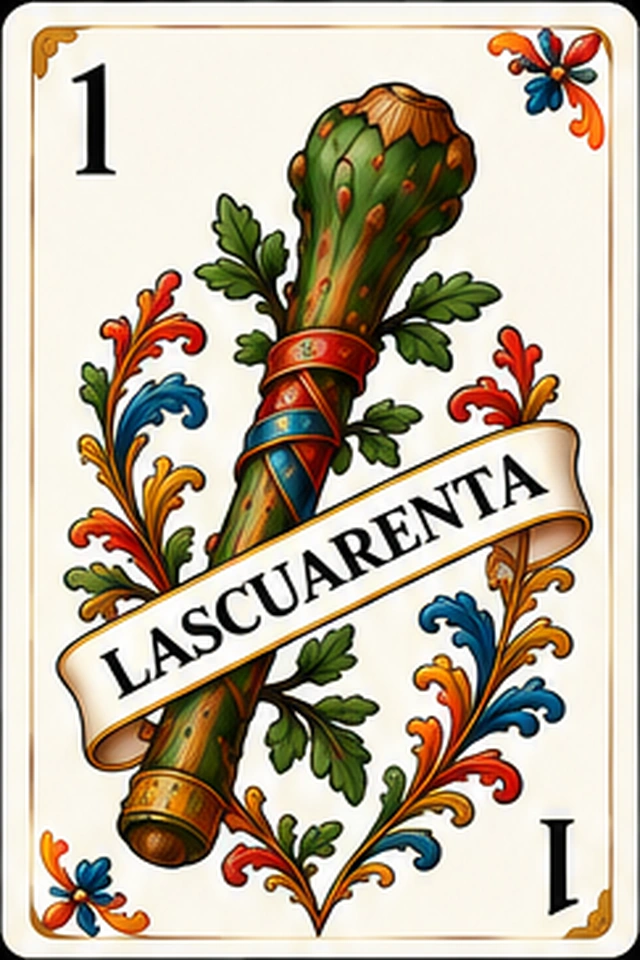
These three decks share the same four Latin suits, but their main difference is their design: Spanish cards have straight swords and separate, cudgel-like clubs, while Italian and Portuguese cards show these elements curved and interwoven. Spanish cards are also the only ones to feature pintas (breaks in the card’s border).
How to tell them apart
- Espadas (swords): straight and separate in Spanish decks; curved and crossed in Italian and Portuguese decks.
- Bastos (clubs): knobbly cudgels in Spanish decks; straight, more ornate batons in Italian decks; crossed in Portuguese decks.
- Border: broken in Spanish decks; unbroken in the other two.
- Number of cards: 40 or 48 in Spanish decks; almost always 40 in Italian decks; 40 or 52 in Portuguese decks.
Why are they so similar?
Because they share the same origins. Playing cards reached Europe via the Mediterranean in the 14th century, and each region adapted them. We explore this in how playing cards made their way to Spain.
Related games
With such similar decks, it’s no surprise that the games are alike too. Take a look at Escoba (Broom) and Scopa or the Italian cousins of Tute (a trick-taking game) and Brisca (a trump-based trick-taking game).
Frequently asked questions
How can you tell an Italian deck from a Spanish one?
Look at the espadas (swords) and bastos (clubs): in Italian decks, the swords are curved and cross one another, while the clubs are straight.
Do Italian decks have pintas (border breaks)?
No, those breaks in the border are distinctive to Spanish decks.