

Culture
The Italian Cousins of Tute, Brisca, and Escoba
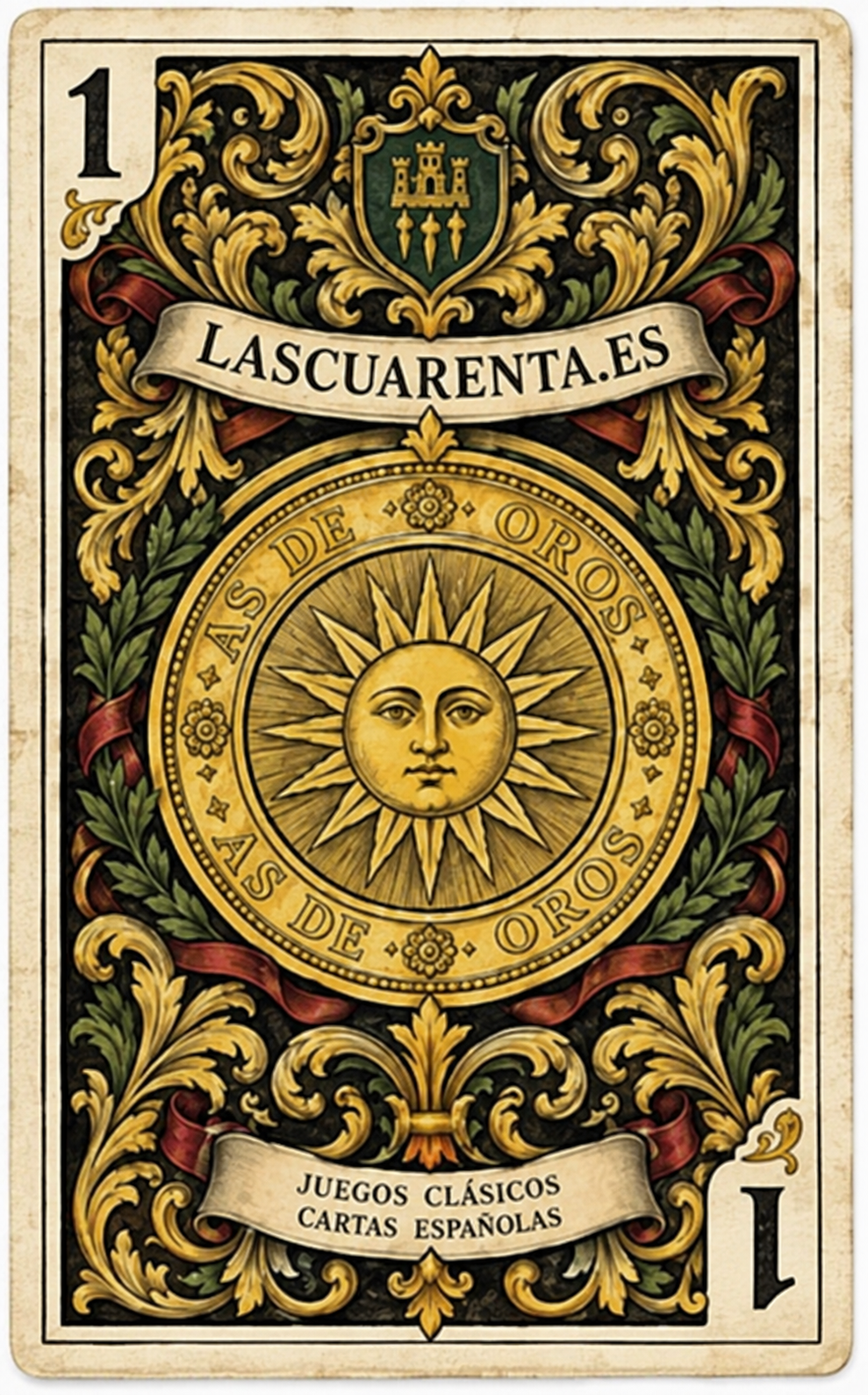
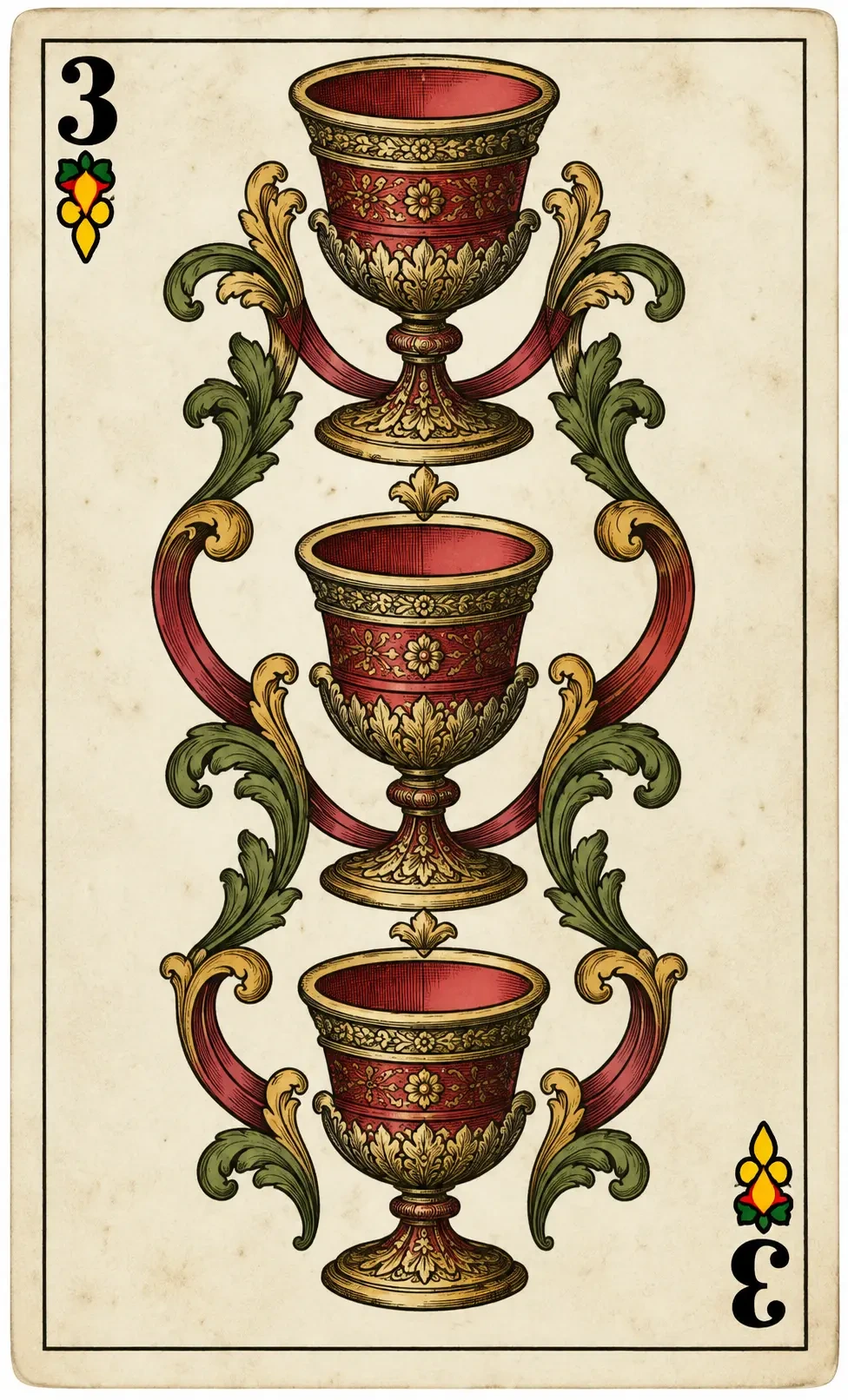
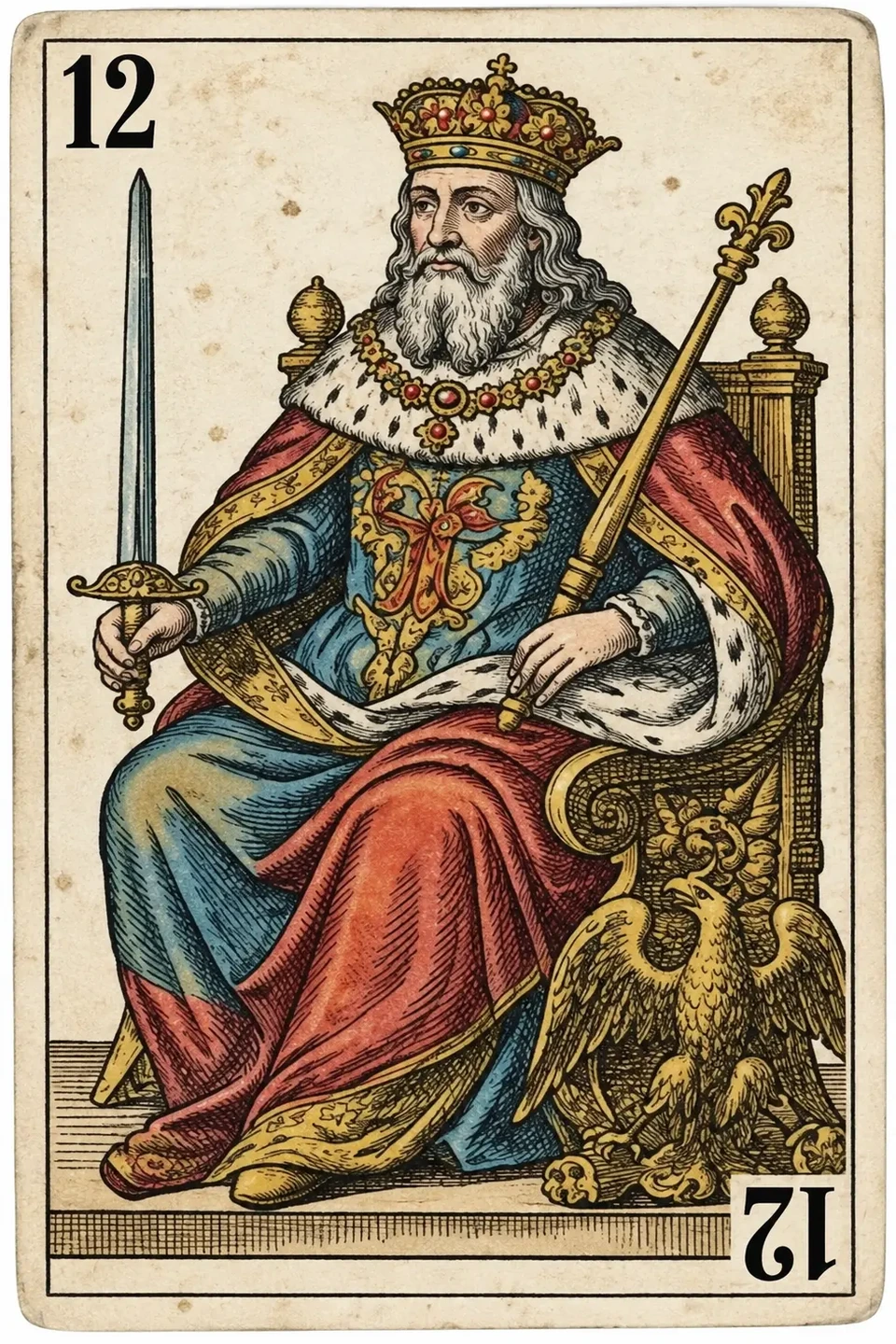
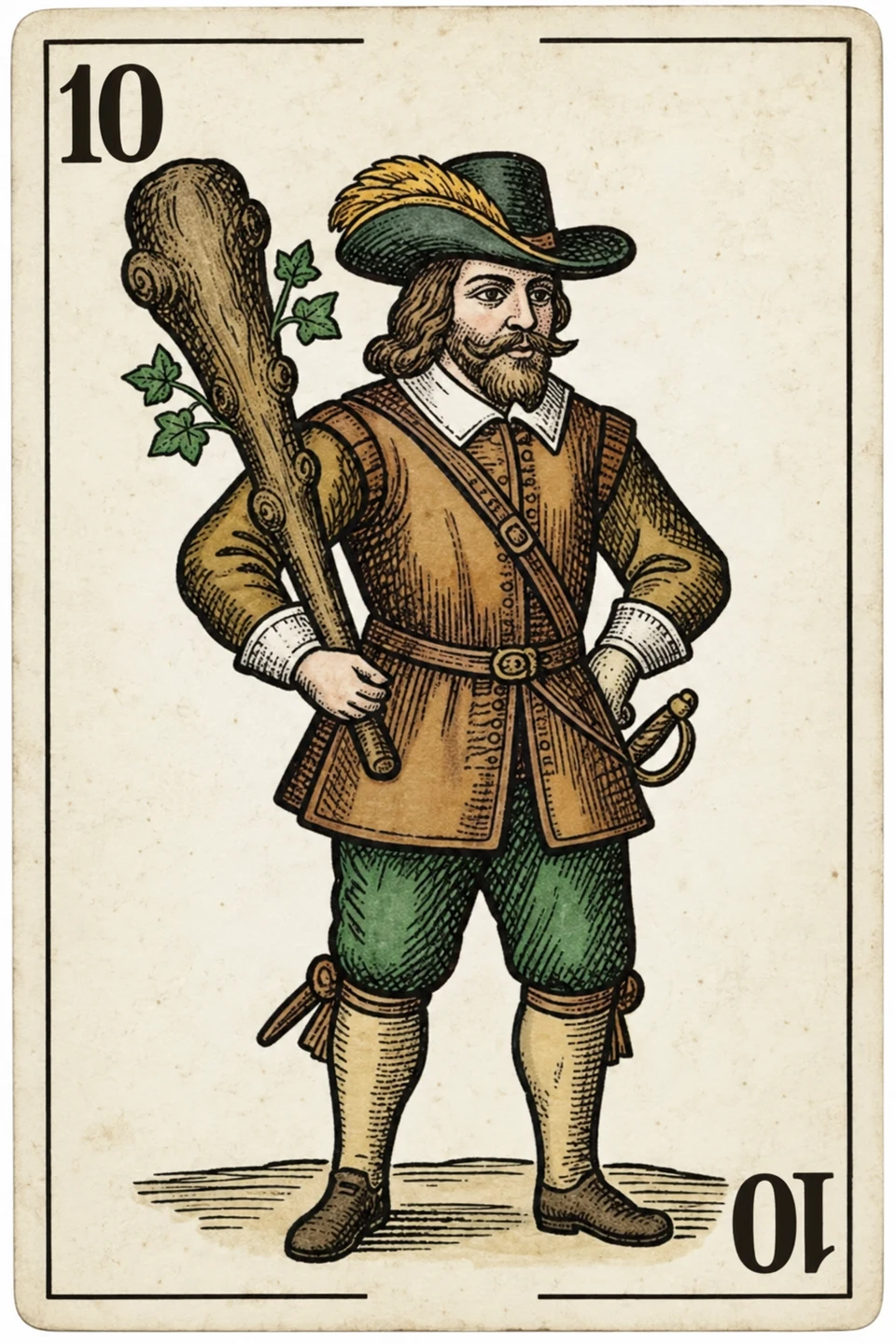
Brisca, Tute and Escoba may feel distinctly Spanish, but they belong to a tradition with close relatives across the Mediterranean. Many games we think of as exclusively Spanish have Italian cousins.
As we already explained in the article "What do the suits of the Spanish deck mean?", the Spanish and Italian decks share a common origin within the family of so-called Latin suits. This relationship is not only reflected in the cards: it also appears in many of the games that have survived to this day.
Two Surprisingly Similar Decks
The correspondence between the Italian and Spanish decks is understood without a dictionary: Oros (coins) [Coins] are denari; Copas (cups) [Cups], coppe; Espadas (swords) [Swords], spade; and Bastos (clubs) [Clubs/Staves], bastoni. The drawing, the name of some court card, and the way the symbols are placed change, but the four objects are still there. In both cases, the Rey [King] and Caballo [Knight] also appear, accompanied by a lower-ranking card that in Spain we call Sota [Page] and in Italy is usually the fante.
Furthermore, many regional Italian decks have forty cards, just like the Spanish deck used for Tute, Brisca, or Escoba. There isn't a single Italian deck: there are Neapolitan, Sicilian, Piacentine, Trevisan, and many other patterns, some closer to the Spanish model than others. Those from Southern Italy look particularly familiar at first glance.
The similarity is no accident. Playing cards circulated through ports, courts, workshops, and trade routes for centuries, and the two peninsulas were linked by continuous political and cultural exchanges. Each region redrew the cards and adapted the games to its customs, but Spain and Italy retained a common Mediterranean base when other parts of Europe adopted different symbols.
Brisca and Briscola: Two Names from the Same Family
The kinship between Brisca and Briscola can be heard before dealing. Both are trick-taking games with trumps, are usually played with forty cards, and share the same order of valuable cards: As [Ace], three, Rey [King], Caballo [Knight], and Sota [Page]. They also total one hundred and twenty points in cards and allow players the freedom to play any suit, without the obligation to follow suit that we find in Tute.
The fundamental mechanics are almost the same. Few cards are dealt, an exposed card indicates the trump suit, and after each trick, players draw from the stock. The goal is not to win many tricks, but to capture the Ases [Aces], threes, and court cards that concentrate the points. Someone who knows how to play one would immediately recognise what is happening in the other.
Differences appear mainly between local variants: number of players, how ties are resolved, who draws first, or which modes are practised in each area. Italy features versions such as Briscola Chiamata for five players, while in Spain, Brisca for two or in pairs is common. It is not appropriate to speak of a single Italian rule versus a Spanish one, because both sides have house rules.
That is why many Italians would immediately recognise a game of Brisca even if they had never played the Spanish version. The printed name of the court cards might change, and perhaps some table customs, but not the logic of saving the As [Ace], using a small trump, or calculating when the stock will run out. If you want to try this mechanic, you can learn to play Brisca with the complete rules.
Escoba and Scopa: The Most Obvious Kinship
Scopa literally means "broom" in Italian. In both games, clearing all the face-up cards on the table produces the play that gives the game its name. Even the image is the same: a card passes over the table and sweeps it clean.
Here, an important nuance is needed. In basic Italian Scopa, you capture a card of the same value or several cards whose sum matches the card played. Spanish Escoba, on the other hand, always looks for groups that add up to fifteen. Its closest relative is not just any Scopa, but the variant called Scopa da Quindici. Both are normally played with forty cards and convert court cards into numerical values for calculations.
Scoring also varies by region. Italian Scopa usually rewards the majority of cards, the majority of Oros [Coins], the seven of Oros, and the primiera, in addition to the escobas [sweeps]. In Spain, several of these awards are recognised, but the exact composition and scoring allow for local customs. The central gesture – capturing from the table and sweeping it clean – remains intact.
Documentation confirms the kinship, but it does not trace a simple, dated route where the game left an Italian city and arrived in Spain on a specific day. For centuries, related fishing games circulated around the Mediterranean, and rules travelled in more than one direction. What is certain is that Scopa and Escoba belong to the same family, and that Scopa remains among the most well-known Italian card games. Here you can learn to play Escoba step by step.
Tute and its Kinship with Tutti
With Tute, two issues need to be separated. The etymology has clear support: the Dictionary of the Spanish Language derives tute from the Italian tutti, "all", because gathering all the Reyes [Kings] or all the Caballos [Knights] allowed one to win or "sing tute" in traditional forms of the game.
That does not mean that we can reconstruct without doubt a direct line from a single Italian game called Tutti to all current Spanish variants. Tute is part of a large European family of trick-taking games with trumps, cards worth points, and combinations of Rey [King] with Caballo [Knight] – or their equivalent court cards. In that family, there are kinships, borrowings, and accumulated changes over generations.
The Italian clue in the name is solid; the exact genealogy of each rule is less so. Therefore, it is more prudent to say that Tute comes from tutti and shares a family with other European trick-taking games, without presenting every similarity as proof of direct descent. Spanish rules, moreover, branched into Tute por parejas (in pairs), subastado (auction), cabrero (goatherd), and other modes with their own life.
By learning to play Tute, you can see the game as it is practised here: the forty cards dealt, obligation to follow suit and play a higher card, calls of twenty and forty, and ten for the last trick. It is easy to recognise the common European root, but also everything that Spanish tradition made its own.
More Similarities Than It Seems
Spain and Italy do not just share three isolated names. They share the custom of playing with regional decks, learning the rules within the family, and accepting that a game changes slightly when crossing a province. In Italy, dozens of patterns and variants coexist; in Spain, one only needs to sit in another region for someone to score a play differently.
This variety explains why some games seem like twins and others only cousins. Brisca and Briscola retained almost the entire skeleton of tricks and trumps. Escoba specialised in sums of fifteen within the Scopa family. Tute kept its Italian-rooted name while developing a wide repertoire of modes in Spain.
Traditional games rarely come into existence fully formed with a signed rulebook. They travel with sailors, merchants, soldiers, and families; then each table keeps some rules, forgets others, and invents solutions for doubtful cases. The surprising thing is not that there are differences today, but that after so many centuries we can still recognise the same game on the other side of the sea.
Why the Italian and Spanish Decks Remain So Similar
The answer returns to the Latin suits. Oros [Coins], Copas [Cups], Espadas [Swords], and Bastos [Clubs/Staves] belong to a tradition predating the modern separation between the Spanish deck and regional Italian decks. Both retained complete objects and human figures, instead of reducing each suit to a two-coloured geometric sign.
While much of Europe ended up playing with hearts, diamonds, clubs, and spades, Spain and a good part of Italy maintained coins, cups, swords, and staves. They also kept the Caballo [Knight] and Rey [King], although the lower-ranking card and drawing style vary. This visual continuity facilitated games and rules crossing the Mediterranean without needing a completely new deck.
The differences between the Spanish and Italian decks tell the other half of the story. In the Spanish pattern, Espadas [Swords] and Bastos [Clubs/Staves] usually appear separated and the Bastos look like gnarled clubs. In patterns from northeastern Italy, they might cross, with curved swords and straight staves; in the south, models much closer to the Spanish can be seen. To speak of a single Italian appearance would be to erase a regional diversity that is still alive.
In the card decks section, you can browse the four suits card by card. Comparing them with a Neapolitan or Sicilian deck allows one to see something difficult to explain with just names: they are different designs, yes, but they speak the same graphic language.
A Shared History Still Being Played
Brisca and Briscola, Escoba and Scopa, Tute and tutti are not forced coincidences. They are traces of a card culture that circulated for centuries between Mediterranean territories and which each community adapted in its own way.
When a Spanish player deals a Brisca and an Italian player a Briscola, they are not practising two independent traditions, but two branches of the same history that has been travelling through the tables of the Mediterranean for centuries. Some names and customs change; the pleasure of looking at the trump, counting the Ases [Aces], and discussing the last play is still perfectly recognisable.