

Full rules
Rules of Tute: how to play
Tute is played by four people in pairs with the forty cards of the Spanish deck, ten per player, with twenty and forty cantes and ten points for the last trick.
Tute is the most widespread Spanish-deck card game in the country: forty cards dealt among four players, compulsory following from the first trick, and the twenty and forty cantes as the backbone of the score. These are the full rules of partnership Tute as played here.
4 players (2 pairs)
What is Tute
The classic partnership game with the Spanish deck: ten cards per player, calls of twenty and forty, ten for the last trick, and the Tute of kings or knaves that can settle the game outright.
The deck and card values
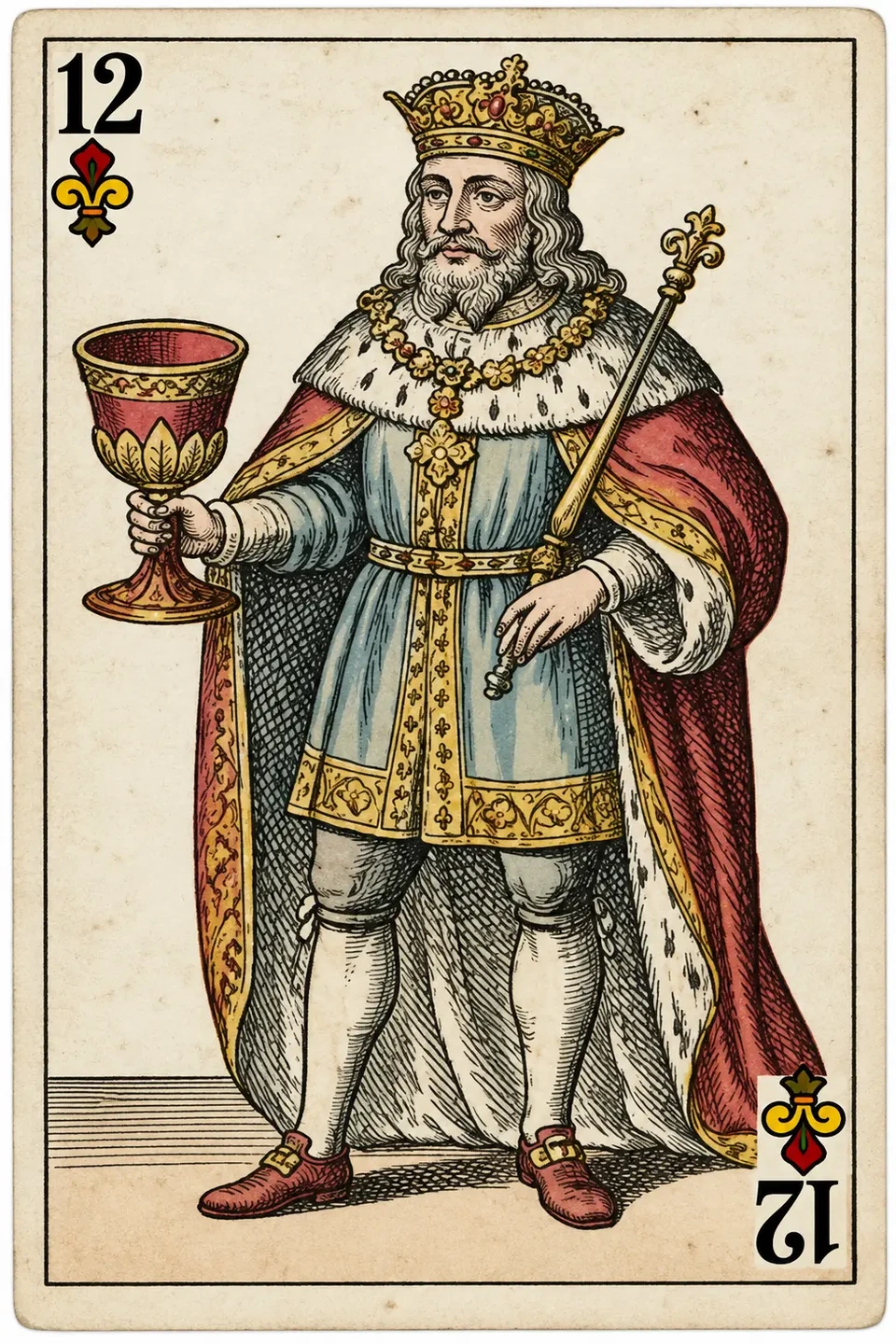
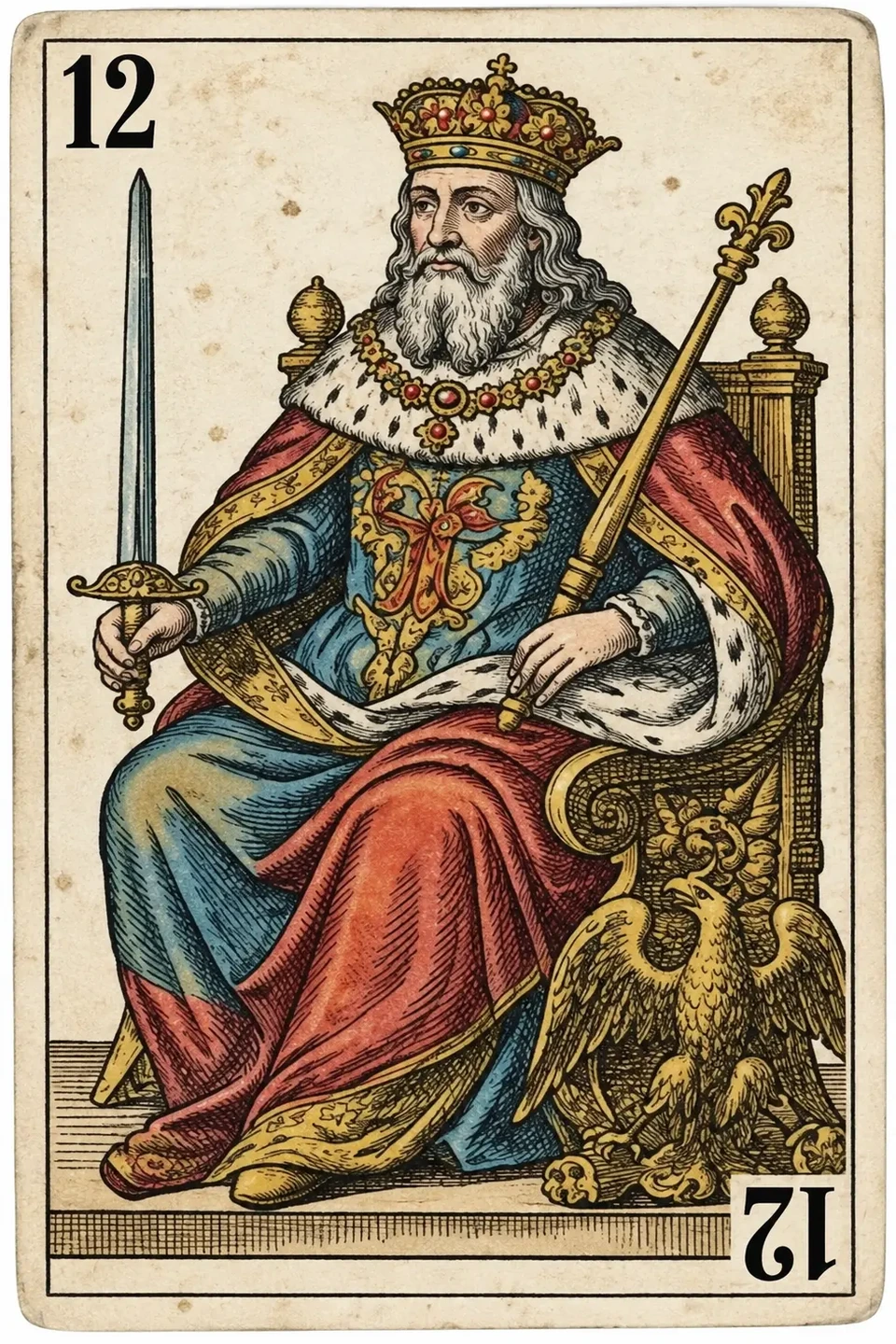
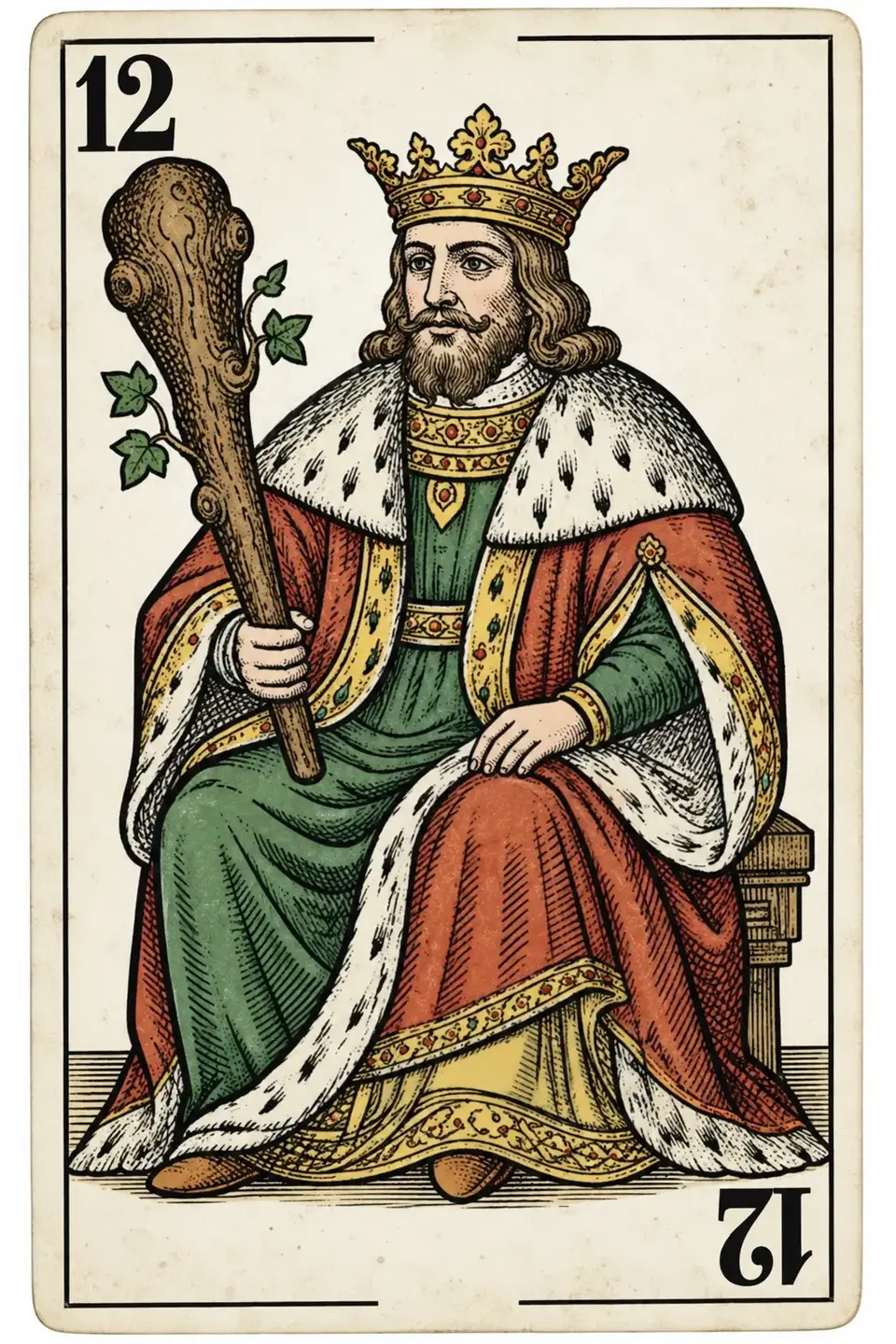
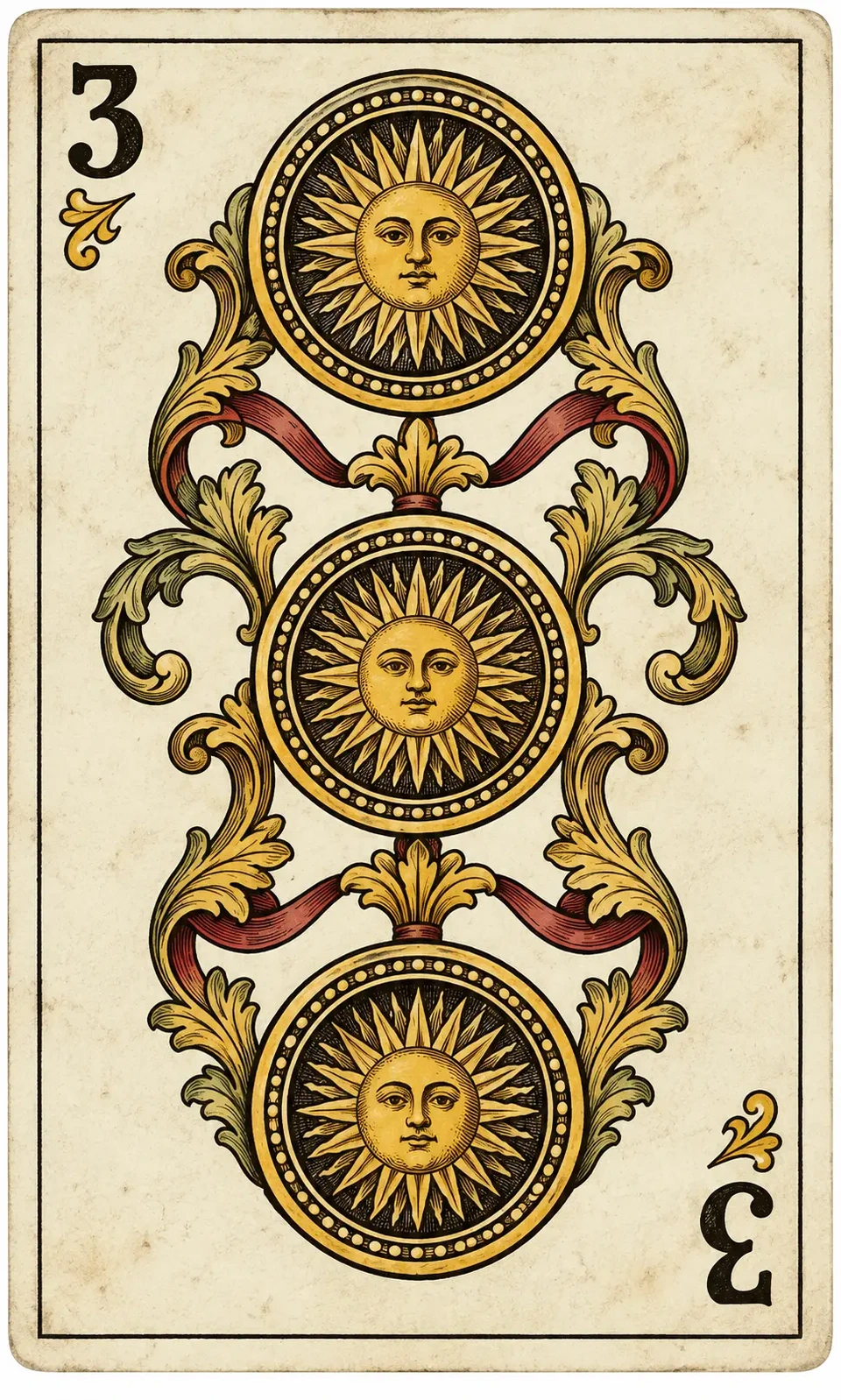
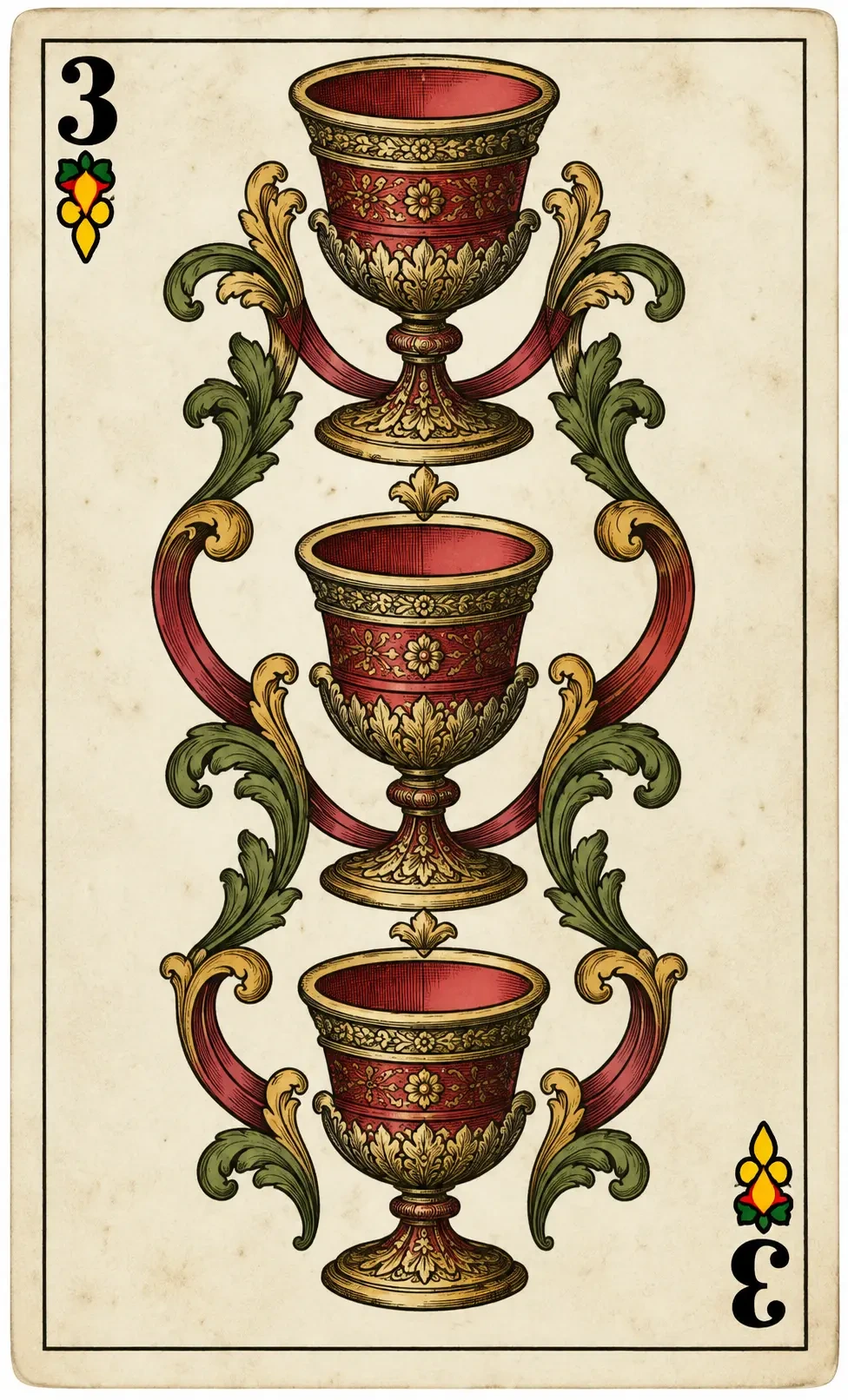
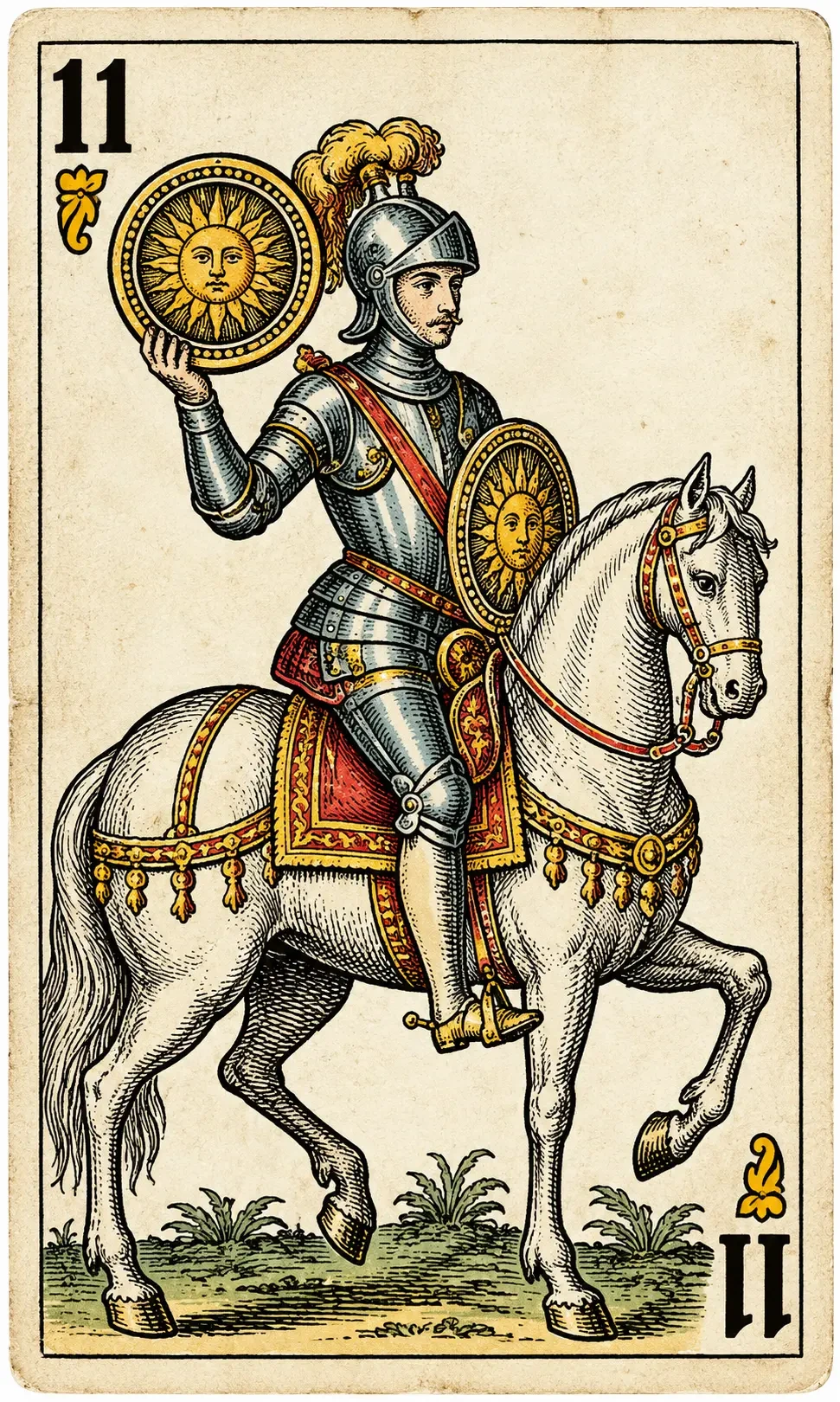
Full forty-card Spanish deck. The twos, fours, fives, sixes and sevens are worth no points, but are still played: they follow suit, they are used to discard, and they steal tricks once a suit is exhausted.
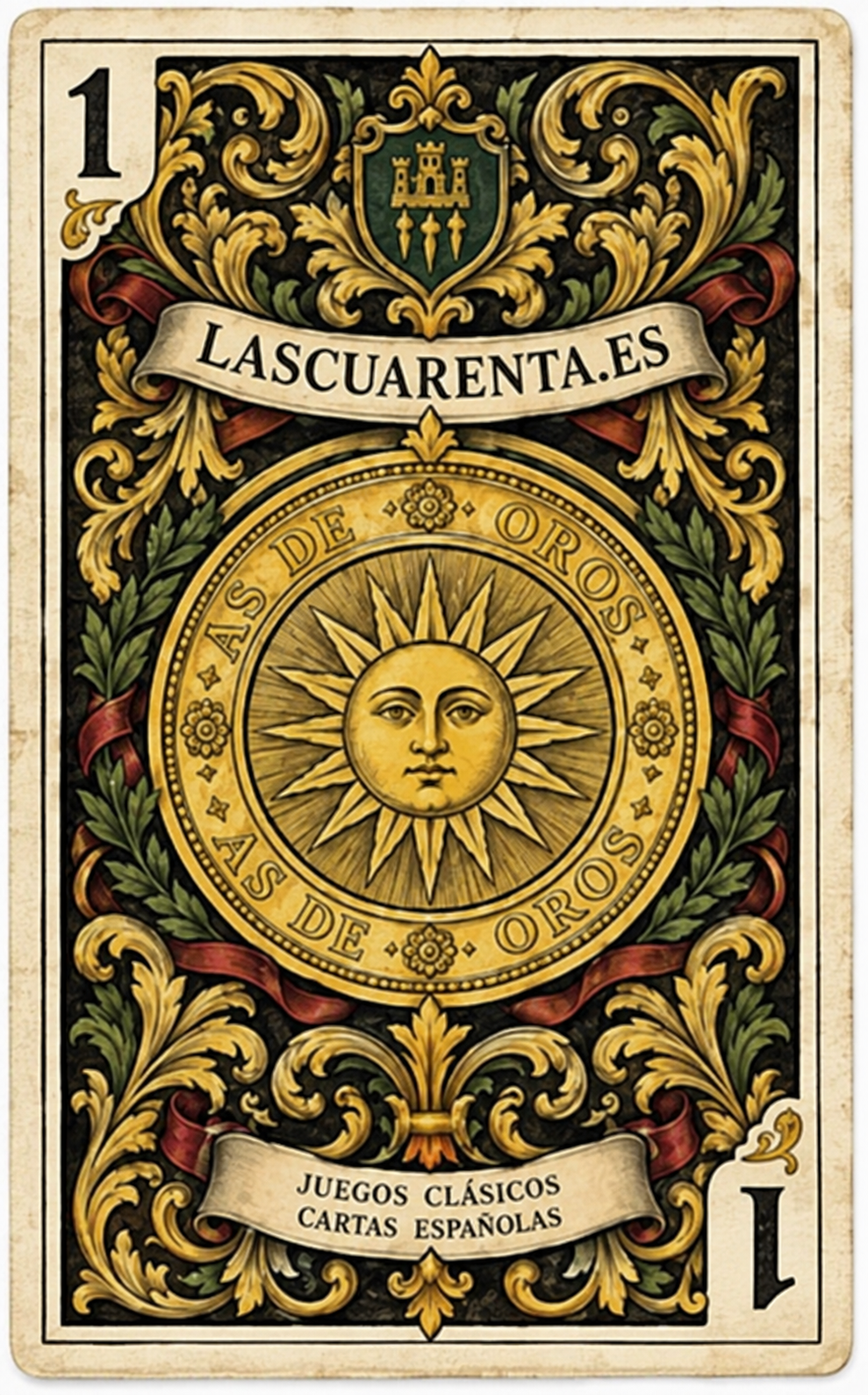
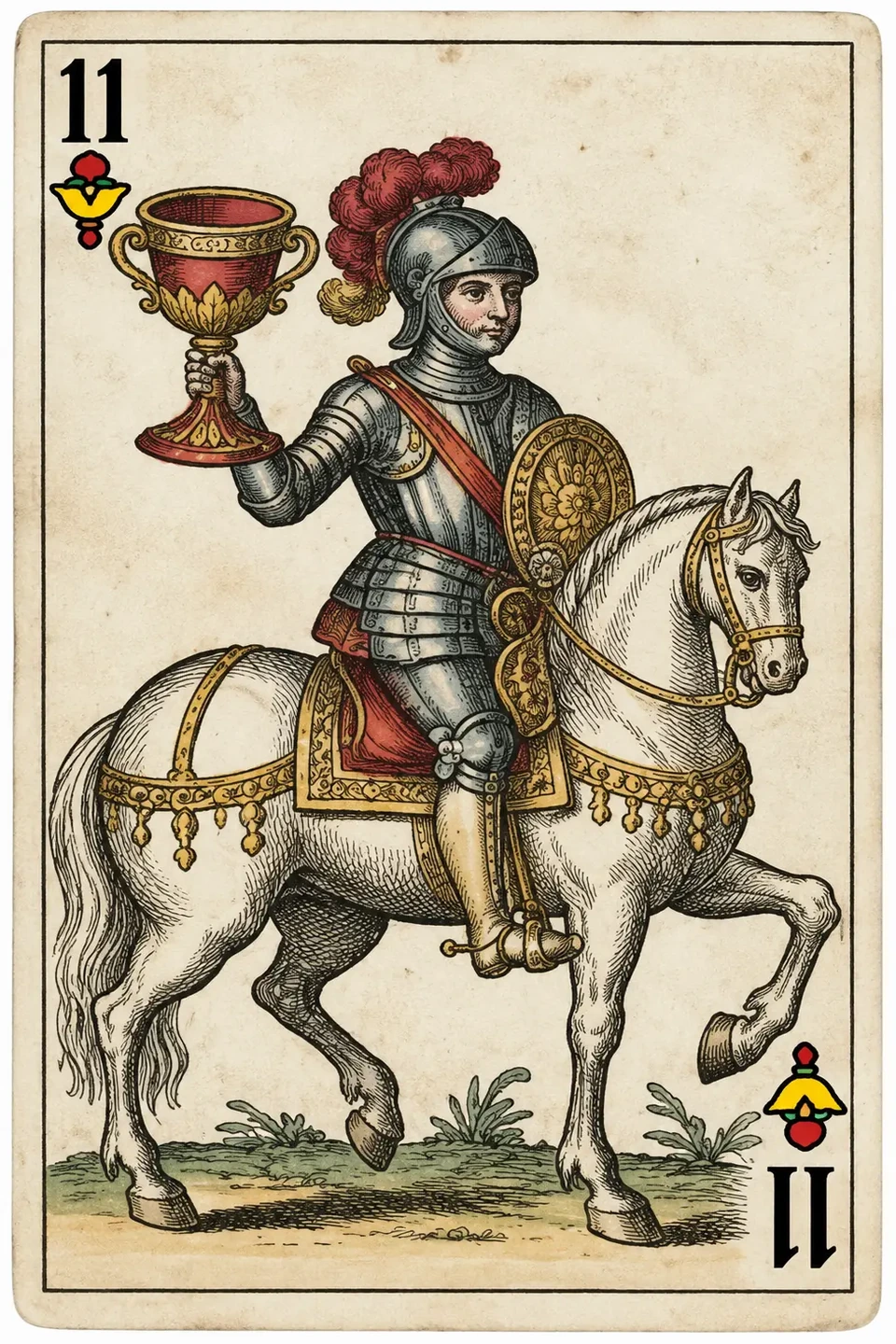
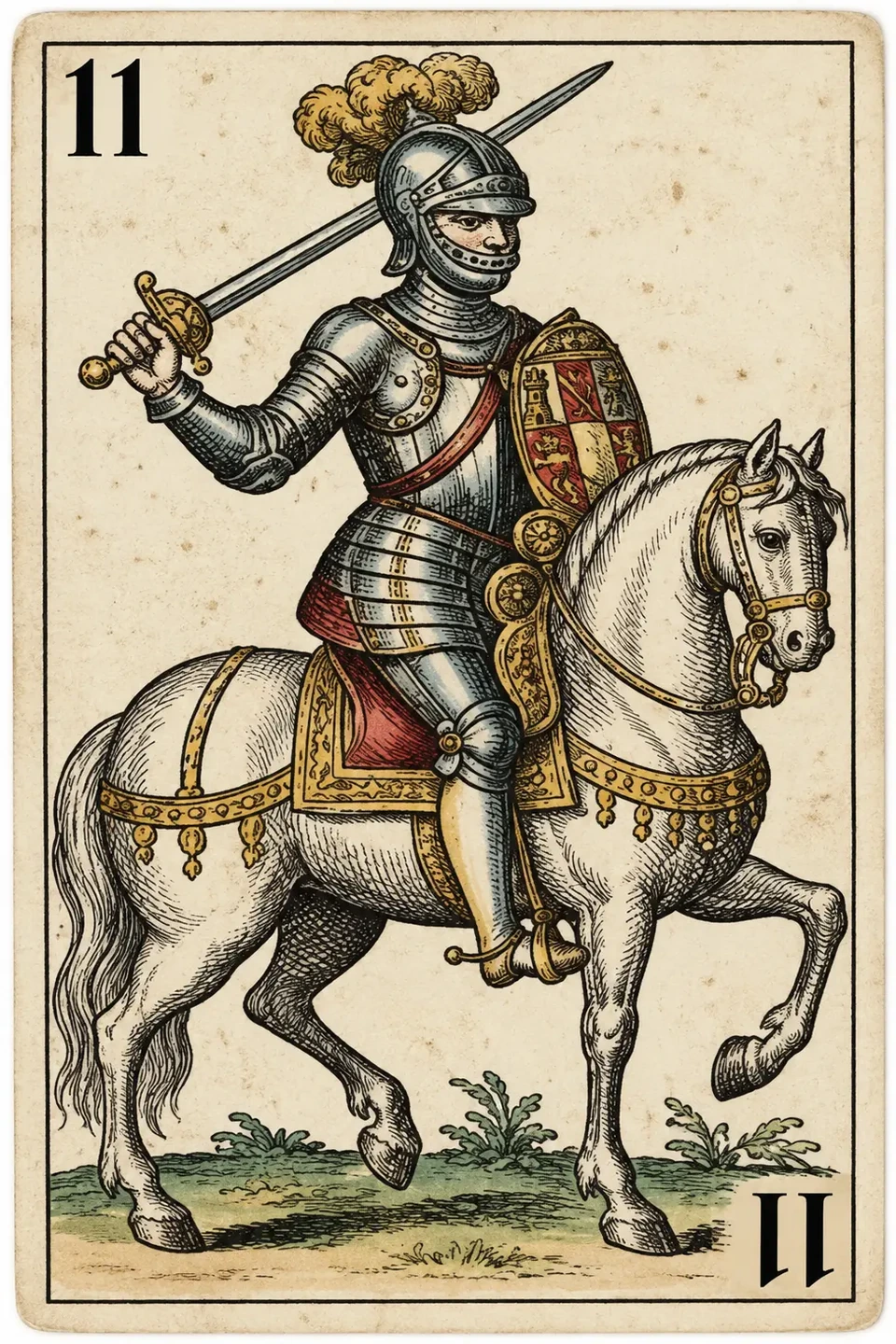
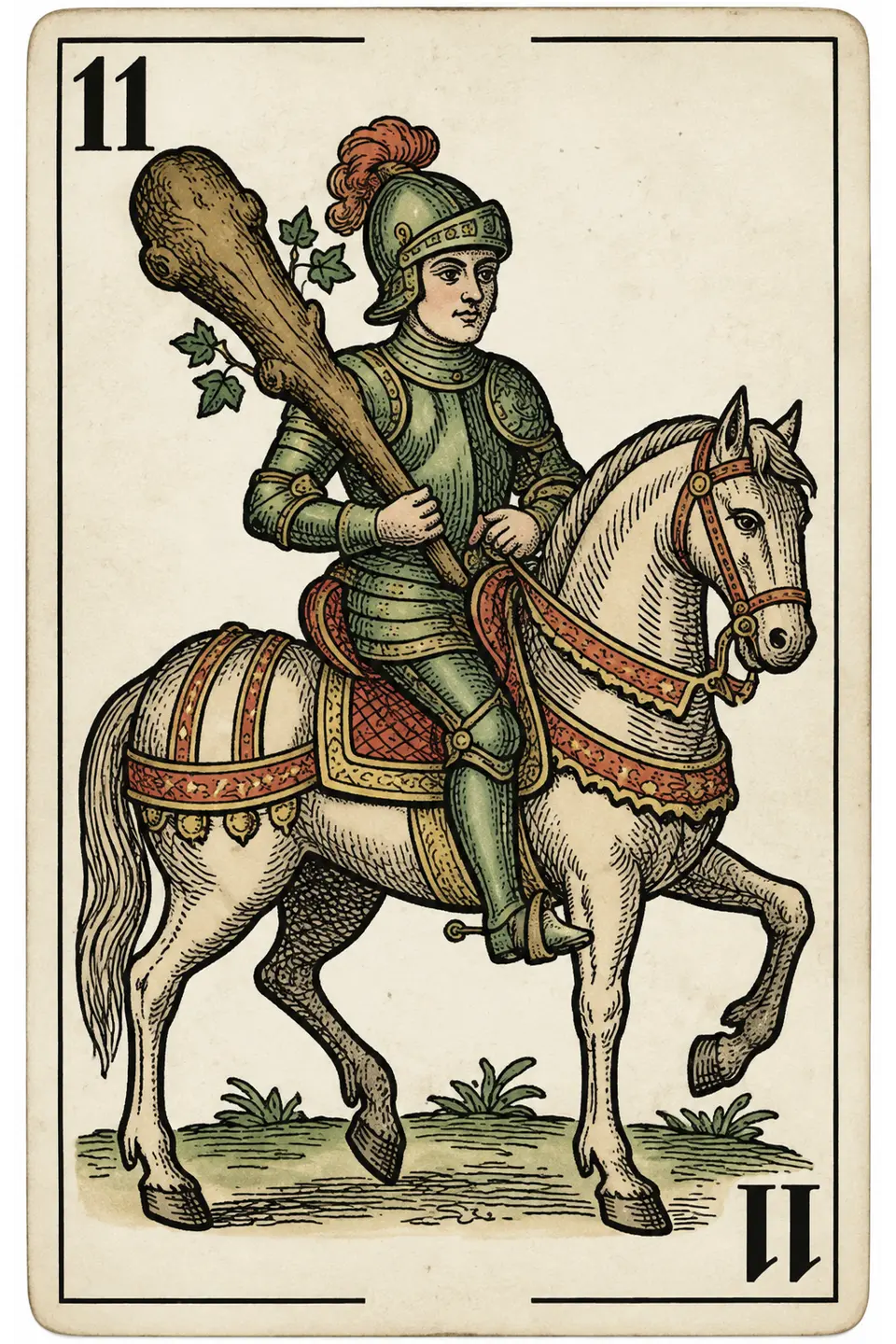
The ranking within each suit is as, tres, rey, caballo, sota, seven, six, five, four, two. The as beats everything, and the tres loses only to the as of the same suit or to a trump.
Values are as eleven, tres ten, rey four, caballo three, sota two. The forty cards of the deck add up to a hundred and twenty points, plus ten for the last trick and the cantes.

The table and the deal
Four players in two partnerships, seated opposite their partner. Each player gets ten cards and no stock remains: the whole deck is in hand from the start.
The dealer reveals the trump: it is the last card they deal to themself. As in Cuatrola, that information belongs to the whole table.
The mano, to the dealer's right, leads first, and turns run clockwise. Ten tricks are played and the points are then counted.
Cantes are announced upon winning a trick: whoever holds the rey and caballo of the same suit may cante twenty, or forty if it is the trump suit. On the site the cante is offered automatically the moment it becomes valid.
How to play, step by step
Tute is played by four people in pairs with the forty cards of the Spanish deck, ten per player, with twenty and forty cantes and ten points for the last trick.
- 1
Deal the forty cards
Ten cards are dealt to each of the four players, who play in two facing pairs. There is no drawing pile.
- 2
Reveal the trump
The dealer shows their last card: that suit is trump for the whole hand.
- 3
Respect the forced follow
Following suit is compulsory; if you hold a higher card you must beat it, and if you have none of the suit you must trump when you can.
- 4
Call twenty and forty
Holding the King and Knight of the same suit is worth twenty points, and forty if that suit is trump. The cante is scored on winning a trick.
- 5
Go for the tute
After winning a trick, gathering all four Kings or all four Knights lets you call tute as you lead and win the game outright.
- 6
Add up the hand
Card points (Ace eleven, three ten, King four, Knight three, Jack two) plus cantes and ten for the last trick. Whoever scores most wins the hand.
Scoring and the end of the round
Each trick goes to the highest card of the suit led, or to the highest trump if someone has trumped. Cards won are stacked in front of the partnership.
At the end of the hand the points of the captured cards, the announced cantes and the ten for the last trick are all added up. A hundred and thirty points are in play, and reaching a hundred and one wins the hand.
Winning the tute (all four reyes or all four caballos) ends the hand instantly: whoever shows it wins outright, with no need to count points.
The match is played to the agreed number of hands. Many groups play the best of three.
Strategy: how to win more hands
Cantes are worth more than tricks
Forty points from a cante equal capturing almost four aces. If you hold the rey and caballo of trumps, the whole hand is built around winning an early trick so you can announce it.
Protect your cante until you can announce it
Do not spend the rey or caballo of the suit you want to cante, even if you are tempted to win a trick with them. If you lose either one, the cante disappears.
Lead trumps if you are ahead on points
When your partnership is stacking up points in captured cards, drawing out the opponents' trumps stops them trumping your aces and threes. It is the most profitable play in the second half of the hand.
Keep track of the cards played
With the whole deck dealt out, keeping count of the aces and threes played lets you know exactly when your tres is the highest surviving card of a suit.
Unload points onto your partner
If your partner is winning the trick with a trump, pile the as or tres of a suit you have none left of on top of it. It is the cleanest way to turn spare cards into points.
Common mistakes beginners make
Confusing Tute with Brisca
In Brisca there is no compulsory following and players draw from the stock; in Tute the whole deck is dealt out and you must follow suit. Many players bring Brisca habits into Tute and lose the first few hands because of it.
Announcing the cante too late
The cante can only be announced after winning a trick and before the hand ends. Waiting for the perfect moment often means ending up with no cante at all.
Spending high trumps on empty tricks
Trumping a trick worth two and four points with the trump as throws away the most powerful card in the hand. High trumps are for capturing points or closing out the end.
Forgetting about the tute
Four reyes or four caballos win the hand instantly. If you are collecting reyes, it is worth taking a risk for the fourth one rather than settling for safe points.
Variants and regional names
Tute in pairs
The most common version and the one played at our tables: four players, two pairs facing off, ten cards each and forced follow from the very first trick.
Auctioned Tute
Played individually: before starting, players bid how many points they commit to scoring, and whoever wins the auction plays alone against the rest.
Tute cabrón
The popular name for the solo version, with no fixed partner, where alliances shift hand to hand and each player scores for themself. Exact rules vary by house.
Three-player Tute
To make the deal work, cards are removed from the deck according to house custom, and it's played solo, everyone against everyone.
Local names
Tute is also known as tute habanero, tute arrastrado or tute de reyes depending on the region, and each town has its own quirks in the cantes and scoring.
Table glossary
- Tute
- All four reyes or all four caballos in the same hand: wins the hand instantly.
- Cuarenta
- A cante of rey and caballo of the trump suit.
- Veinte
- A cante of rey and caballo of a suit that is not trumps.
- Fallar
- Playing a trump when you have no cards of the suit led.
- Montar
- Playing a higher card than the one currently winning the trick.
- Ciento uno
- The points needed to win the hand out of the hundred and thirty in play.
Frequently asked questions about Tute
Rules of the other games
Still have a general question? Check the site's frequently asked questions or the blog.