

Full rules
Rules of Chinchón: how to play
Chinchón is played by two to four players: draw and discard until you combine your hand into sets and runs, and whoever closes leaves the rest holding whatever's left over.
Chinchón is the combination game of the Spanish deck: draw, discard, and close out once your hand is clean. It is played by two to four people, whoever passes the point limit is eliminated, and a chinchón — seven consecutive cards of the same suit — wins the game outright.
2 to 4 players
What is Chinchón
A rummy-style game for two to four players: draw and discard until your hand forms sets and runs. Whoever closes without loose cards leaves the rest holding the leftovers.
The deck and card values
Forty-card Spanish deck, plus jokers if you play with them. Values for loose points are: as one point, two through seven their face value, and sota, caballo and rey ten points each.
Runs are formed with consecutive cards of the same suit. Since the Spanish deck jumps from seven to sota, the sequence continues seven, sota, caballo, rey: there is no eight or nine in between. In games against the house or in a custom room you can choose the 48-card deck, and then the 8 and 9 slot in as normal (seven, ocho, nueve, sota). With ten cards per player, two decks are combined from 3 players upward (or from 4 with the 48-card deck); in that case a group cannot hold two cards of the same suit.
Groups are three or four cards of the same value in different suits: three reyes, four fives. Each card can only belong to one combination.
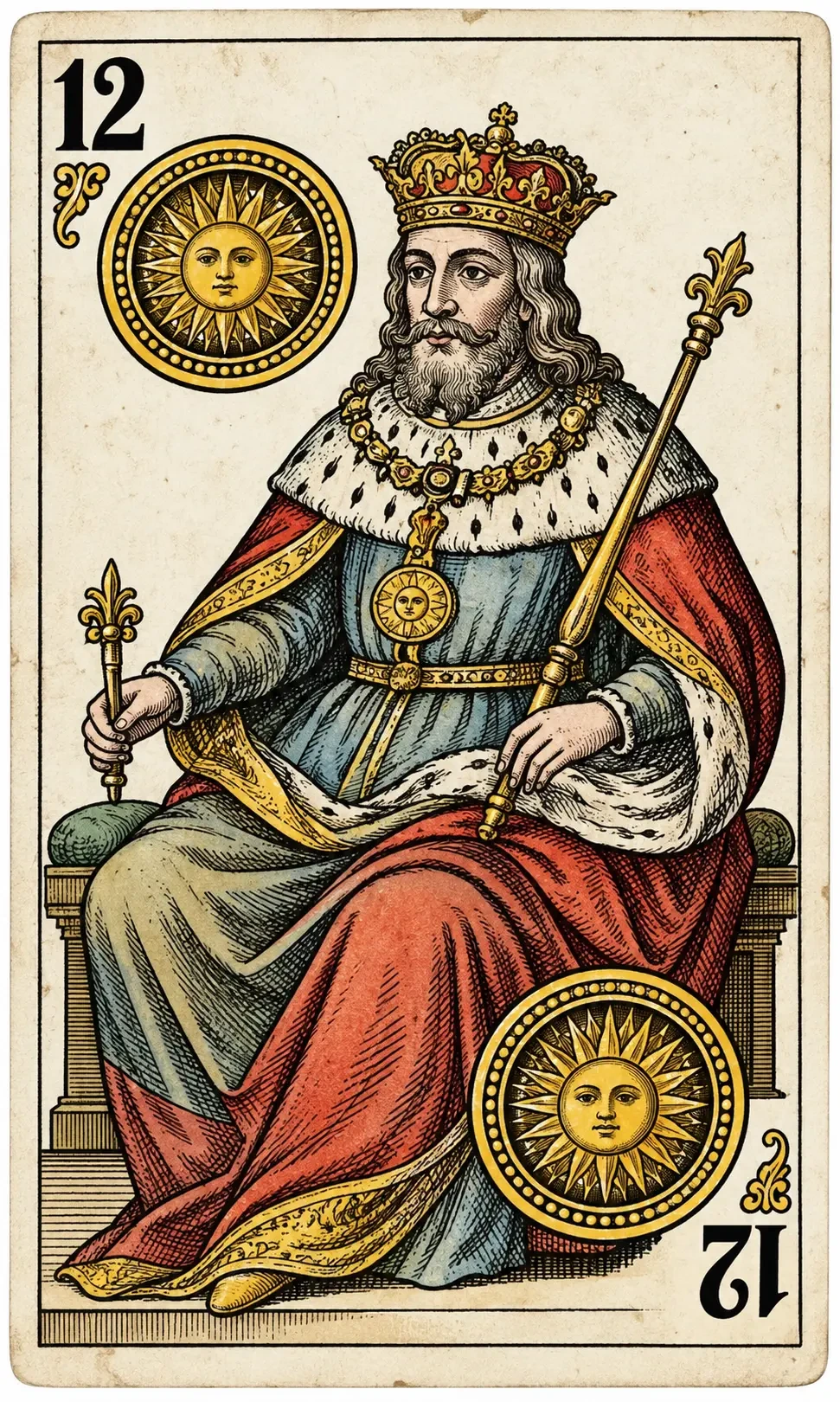
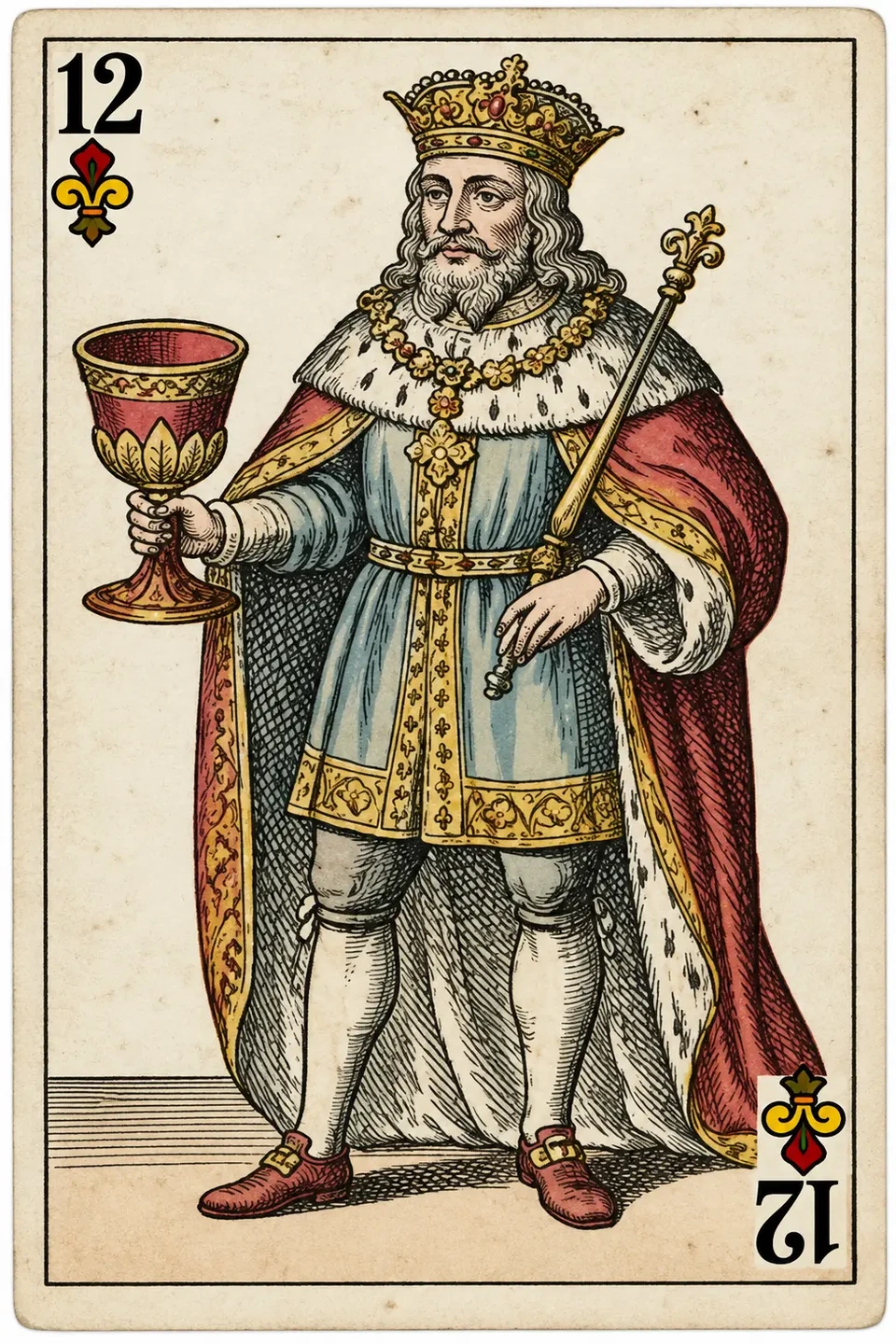
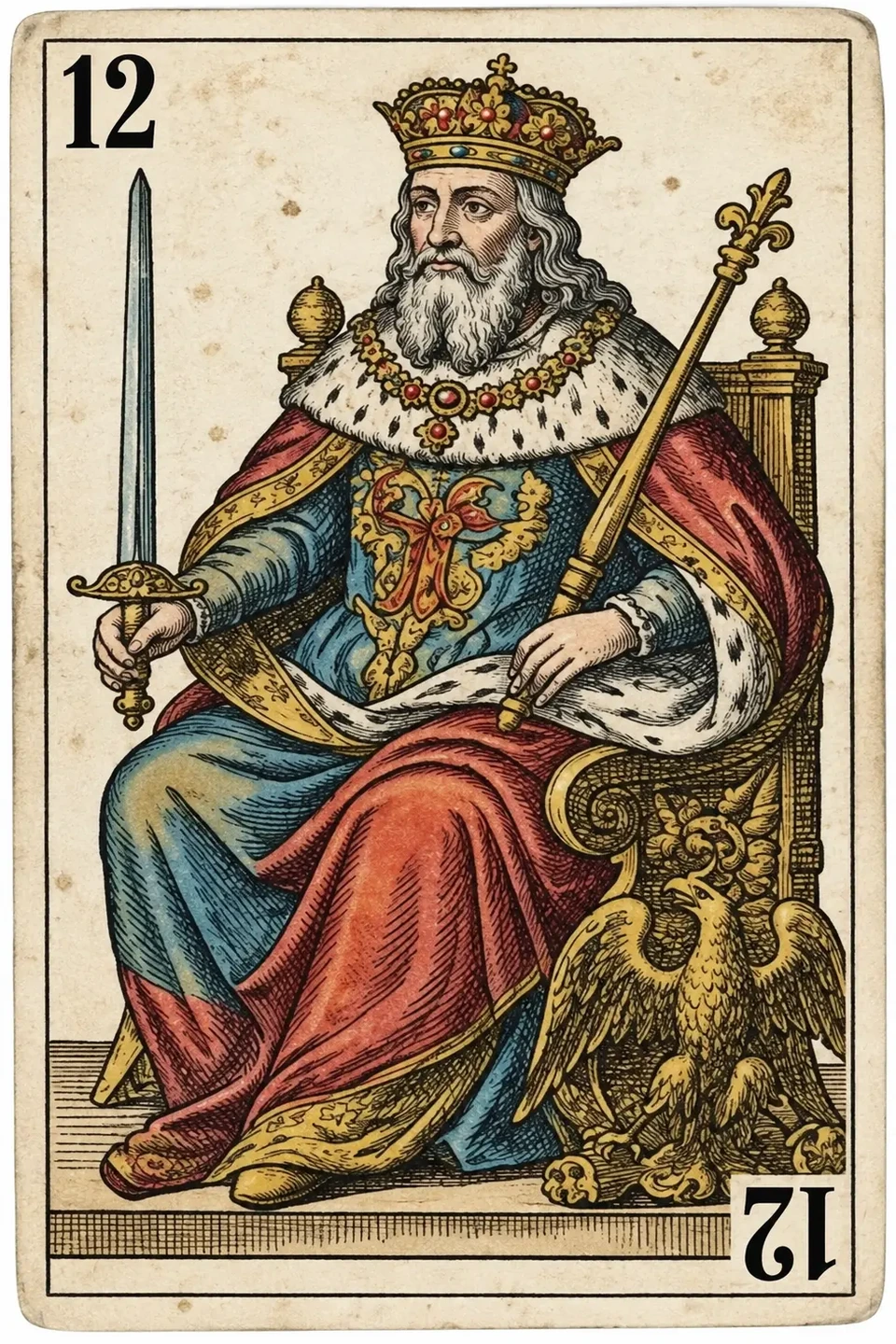
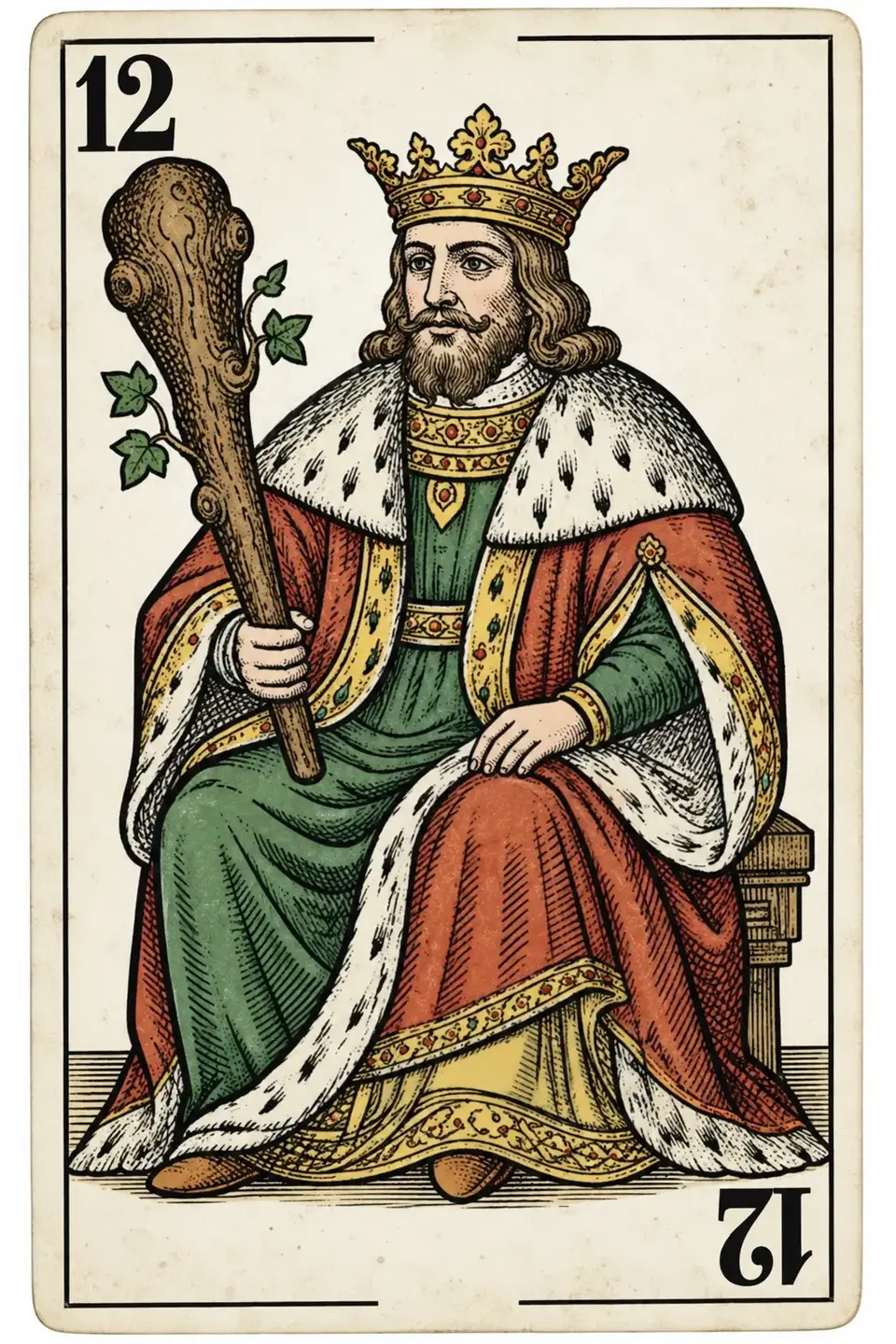
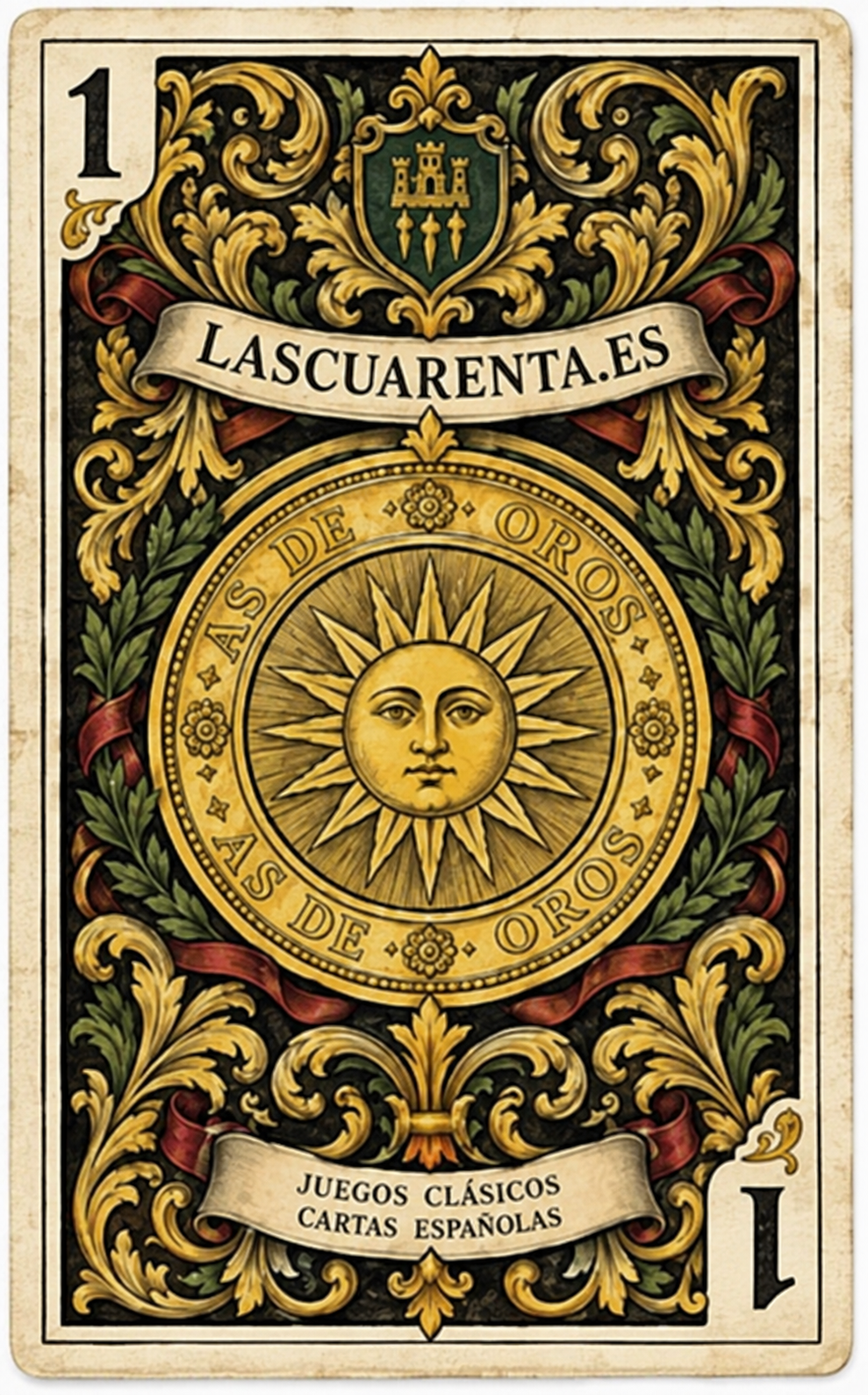
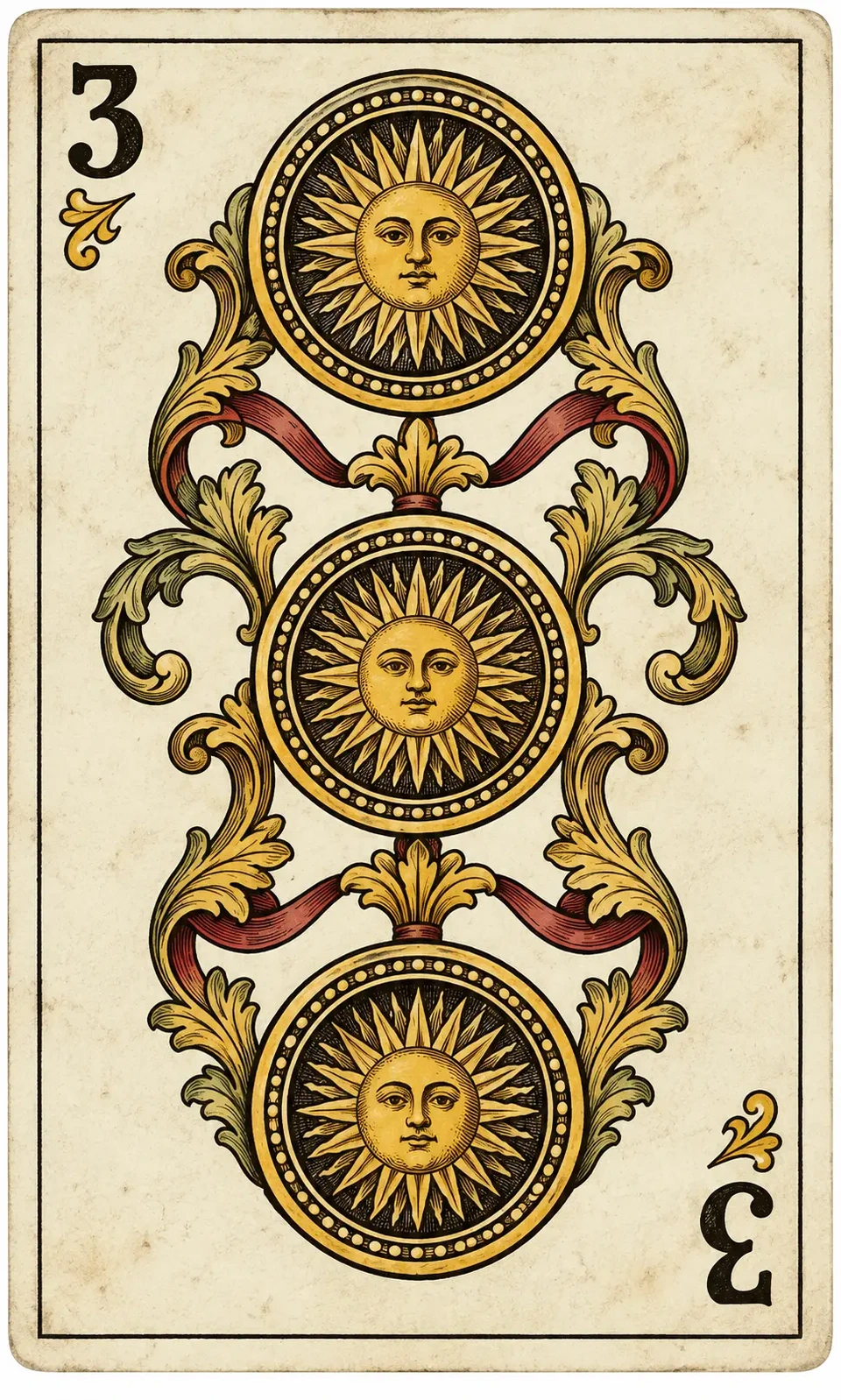
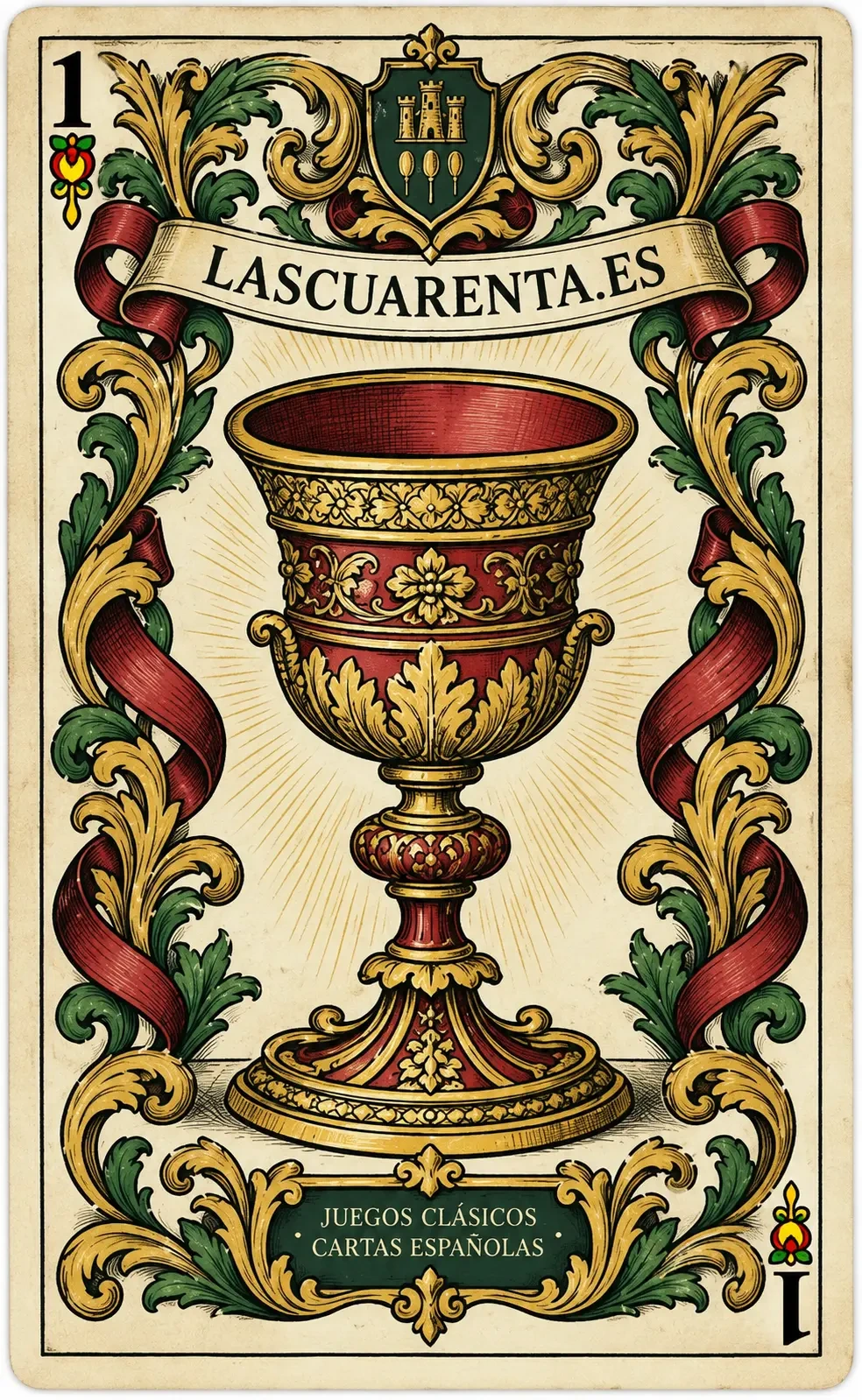
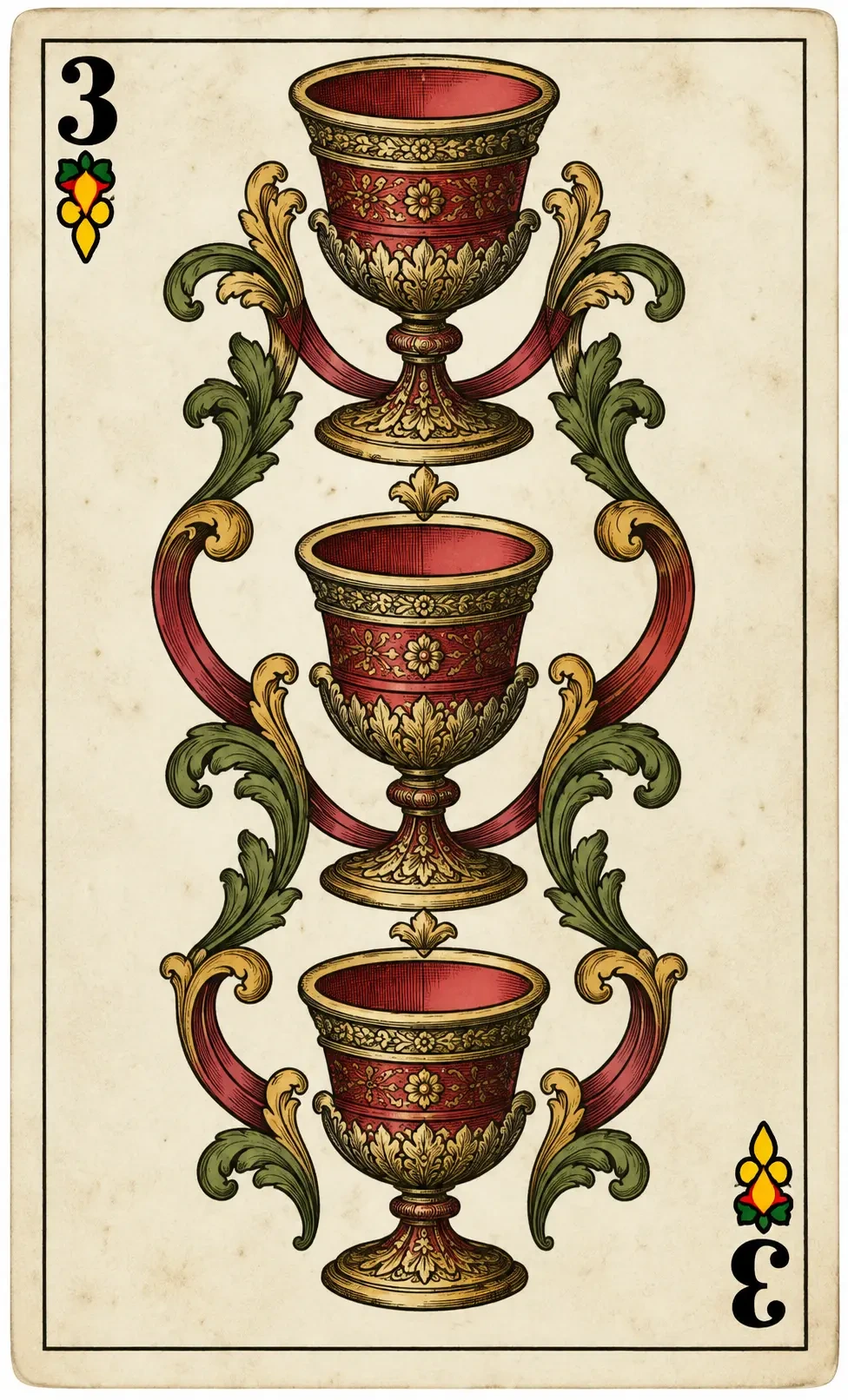
The table and the deal
Two to four players, each on their own. Seven cards are dealt to each player, the stock is placed face down, and its top card is turned face up to start the discard pile.
On your turn you draw a card — from the stock or the top of the discard pile — and then discard one. Your hand always returns to seven cards.
You may close once your seven cards form combinations leaving no more than five loose points (the usual limit). The other players then score whatever points they have left uncombined.
Whoever closes with no loose points at all deducts points from their own score, and whoever collects a chinchón — seven consecutive cards of the same suit — wins the game outright.
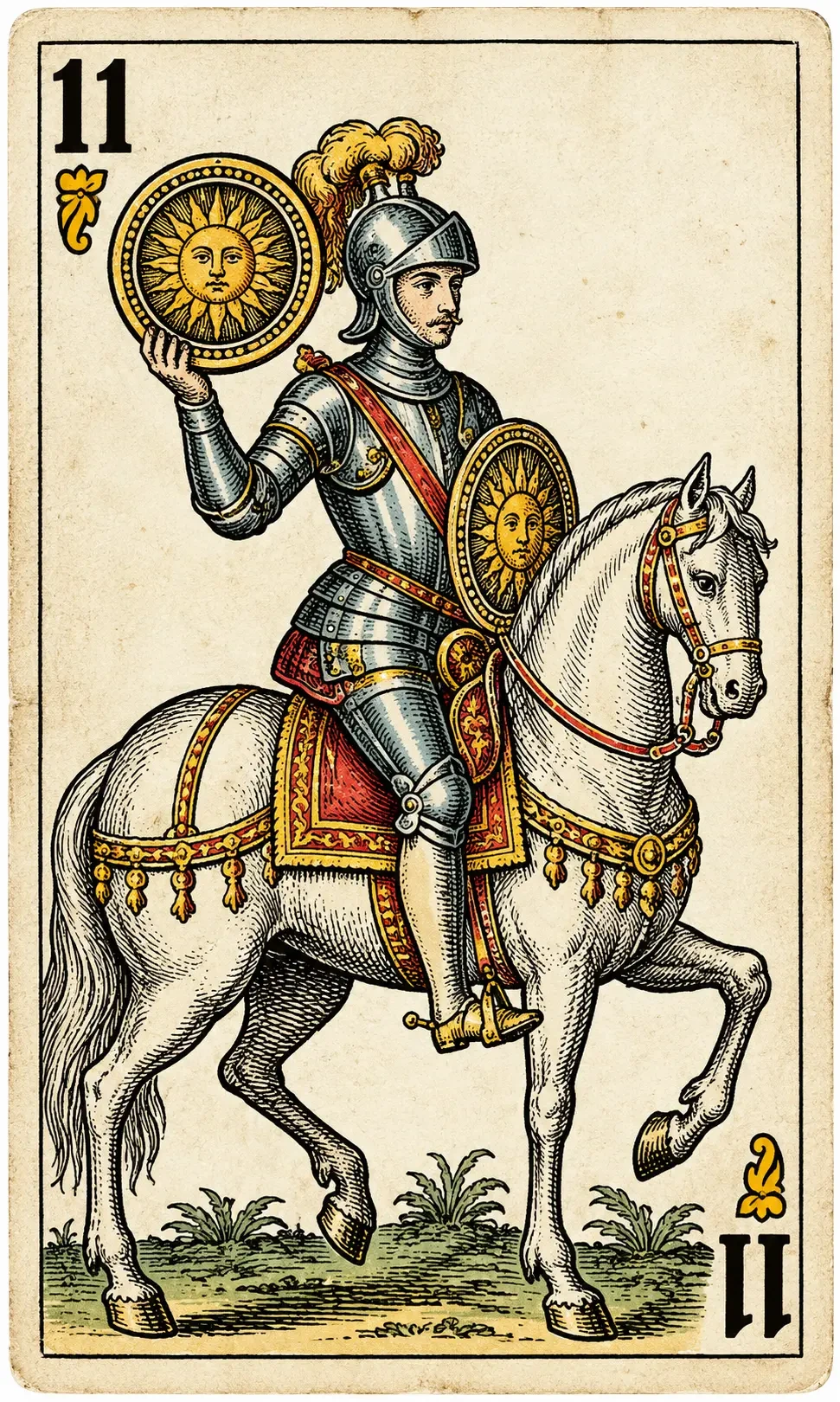
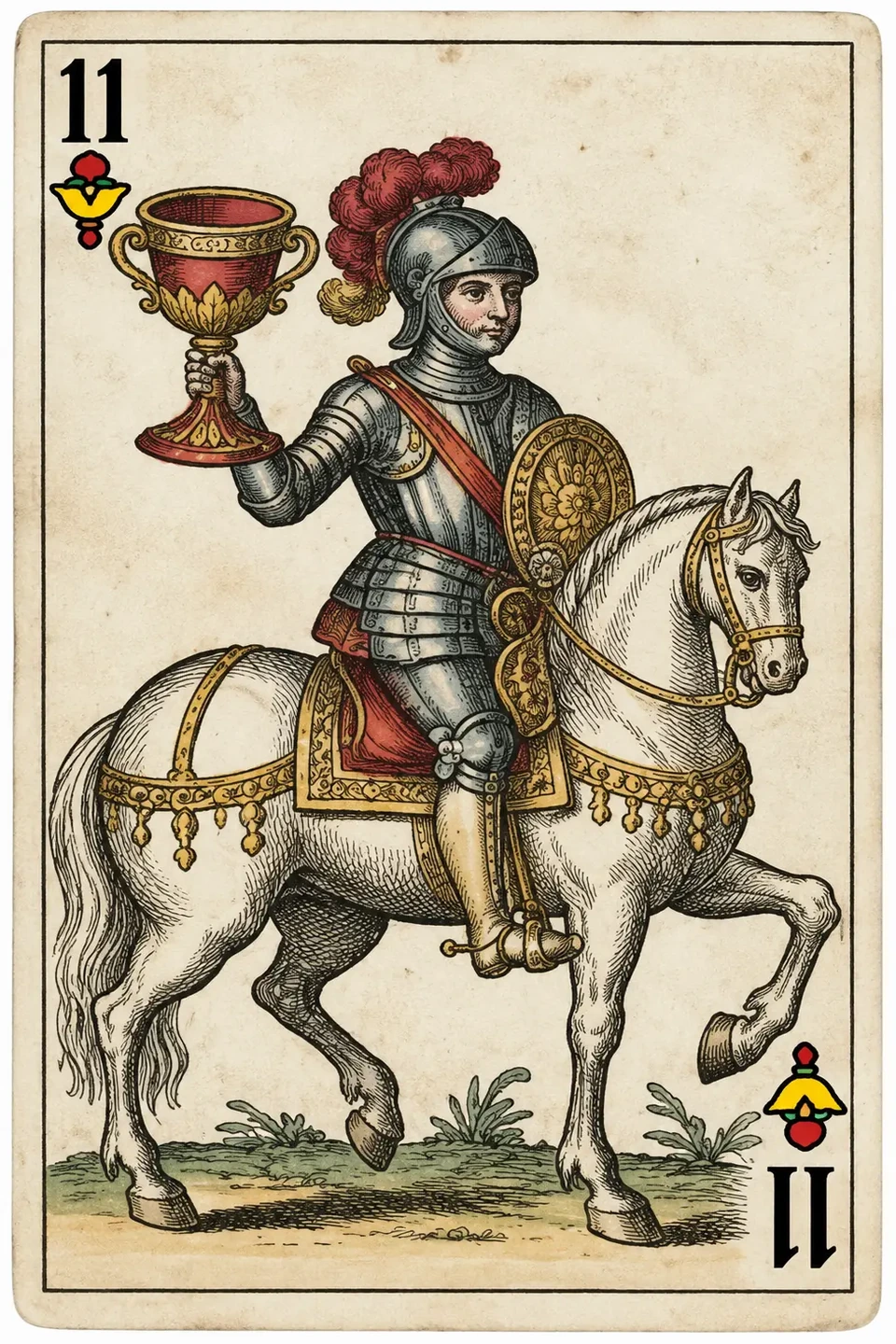
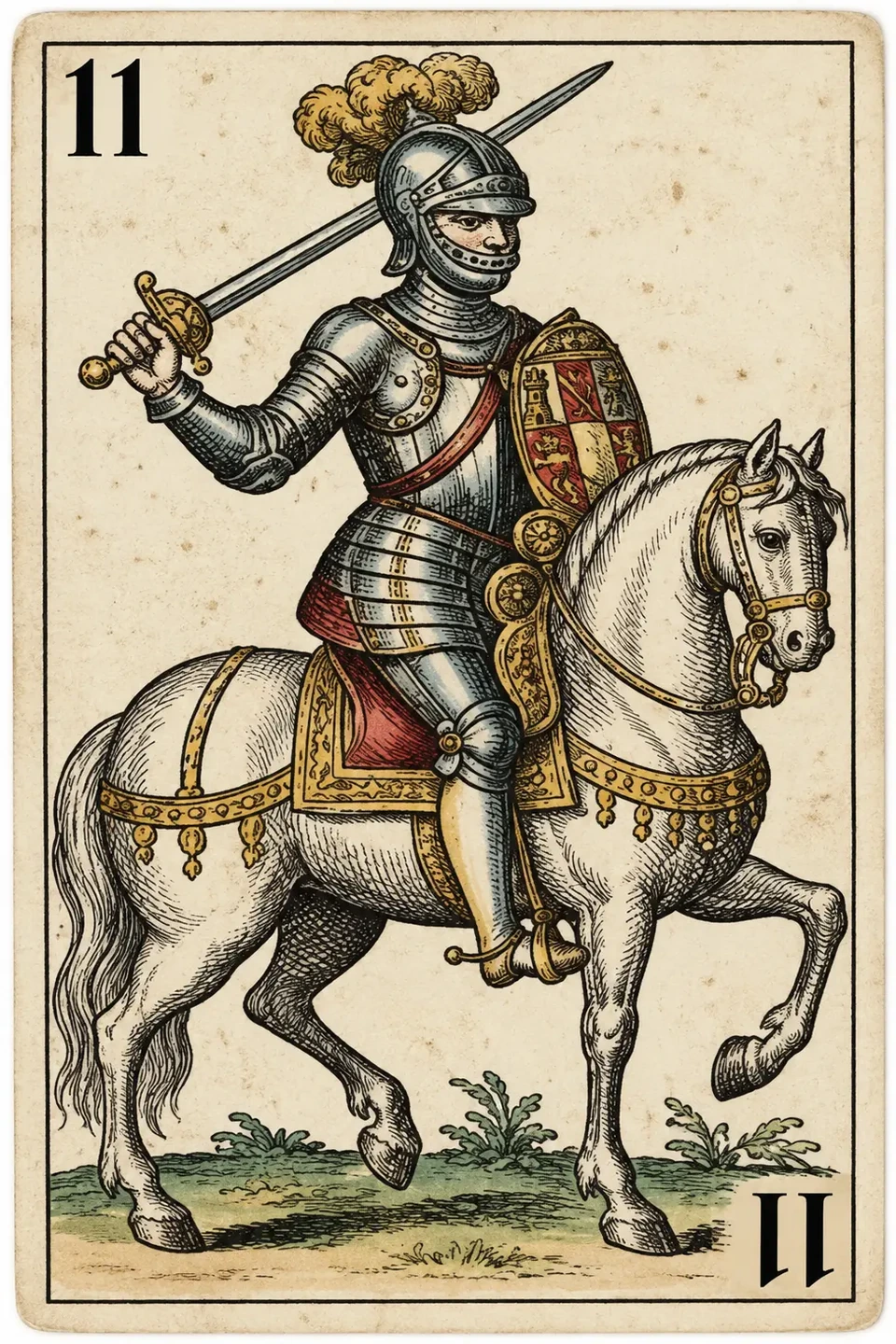
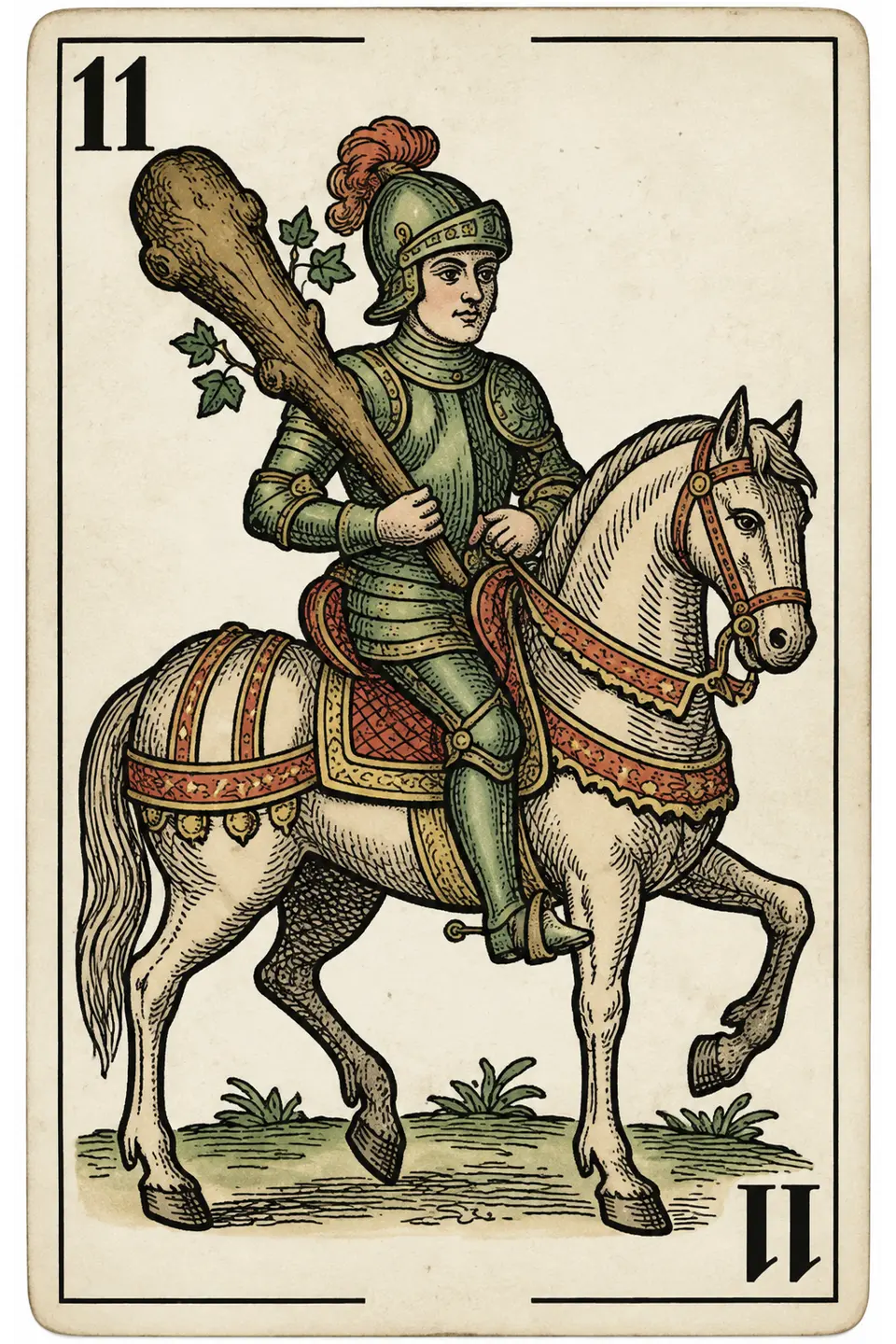
How to play, step by step
Chinchón is played by two to four players: draw and discard until you combine your hand into sets and runs, and whoever closes leaves the rest holding whatever's left over.
- 1
Deal seven or ten cards
With the forty-card Spanish deck plus wild cards, each player gets seven cards (or ten in the long variant). The rest form the stock, with one card turned face up as the discard.
- 2
Draw and discard
On your turn, draw either from the stock or the top of the discard pile, then drop another card, always keeping the same number of cards in hand.
- 3
Form sets and runs
Sets are three or four cards of the same value; runs are three or more consecutive cards of the same suit. The wild card can stand in for any card.
- 4
Close the round
You close when your whole hand is combined, discarding your last card. You can also close with a few loose points left, depending on house rules.
- 5
Score the loose points
The other players add up whatever they haven't combined: face cards count ten, the wild card twenty-five and the rest their number. Whoever closes scores nothing.
- 6
Eliminate whoever passes the limit
Play continues to seventy or a hundred points. Whoever passes that total is eliminated, and the last player standing wins. A chinchón (the whole hand as one run) wins the game outright or subtracts forty points.
Scoring and the end of the round
Each player's uncombined leftover points are recorded. Closing with zero loose points usually deducts ten from your own score; closing with some points deducts nothing.
When a player passes the agreed point limit (usually a hundred) they are eliminated. Many tables allow a single "buy-back" to return with the score of the worst surviving player.
The last player left under the limit wins the game, or whoever shows a chinchón.
Strategy: how to win more hands
Watch what everyone else discards
The discard pile is public information. If someone keeps picking up copas (cups), do not give them copas: discard cards from suits they have already thrown away.
Let go of figure cards early
Sota, caballo and rey are worth ten points each. If they do not fit a clear combination in the first few rounds, every turn you keep them is a risk of eating thirty points.
Prefer open-ended runs
A five and six of espadas (swords) can be completed with a four or a seven: two useful cards. An as and a tres can only be completed with the dos. Combinations with two outs come together twice as fast.
Close early when you are ahead
You do not have to close at zero. If you are leading the game, closing with three or four loose points and loading the others with twenty is a better deal than waiting for the perfect hand.
The chinchón is a lottery, not a plan
Chasing it from the start means keeping bad cards for many rounds. Only pursue it when the deal already gives you five consecutive cards of one suit.
Common mistakes beginners make
Drawing from the discard pile out of habit
Picking up the visible card tells everyone what you are building. If the stock card serves you almost as well, draw blind instead.
Holding cards "just in case"
A card that only fits an unlikely combination is a card you are going to pay for. In Chinchón you lose by hoarding, not by closing late.
Forgetting there is no eight or nine
The Spanish-deck run jumps from seven to sota. Players coming from Rummy with a French deck often expect cards that do not exist.
Not watching the scoreboard
When an opponent is about to pass the limit, closing quickly with few points eliminates them. Always playing the same way without checking everyone else's score gives games away.
Table glossary
- Chinchón
- Seven consecutive cards of the same suit: wins the game instantly.
- Cerrar
- Laying down your combined hand to end the round.
- Puntos sueltos
- Cards that belong to no combination and are scored against you.
- Escalera
- Three or more consecutive cards of the same suit.
- Grupo
- Three or four cards of the same value in different suits.
- Recompra
- Returning to the game after passing the limit, with the worst surviving player's score.
Frequently asked questions about Chinchón
Rules of the other games
Still have a general question? Check the site's frequently asked questions or the blog.
To go beyond the rulebook, read our blog's the origins, history, rules and trivia of Chinchón.