

Full rules
Rules of Cuatrola: how to play
Cuatrola is played by four people in two pairs, using the twenty scoring cards of the Spanish deck: Ace, three, King, Knight and Jack.
Cuatrola is the fastest partnership game in the Spanish deck: twenty cards, five per player, and a hand settled in under two minutes. Here are the full rules, how the points are counted, and what to check before calling Solo or Cuatrola.
4 players (2 pairs)
What is Cuatrola
A partnership game from south-east Spain played with only the twenty scoring cards. Five cards per player, forced play from the very first trick, and the chance to call Solo or Cuatrola.
The deck and card values
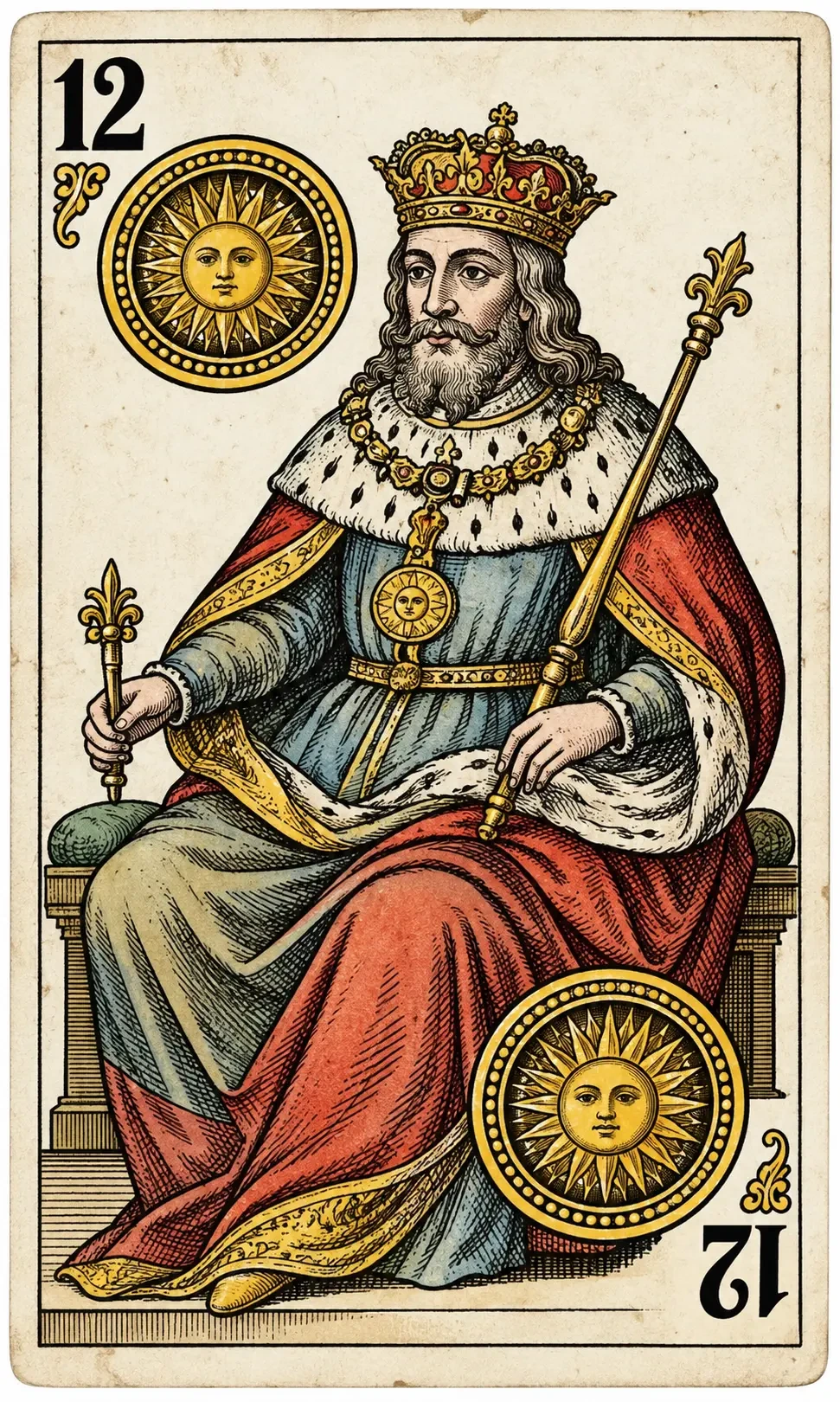
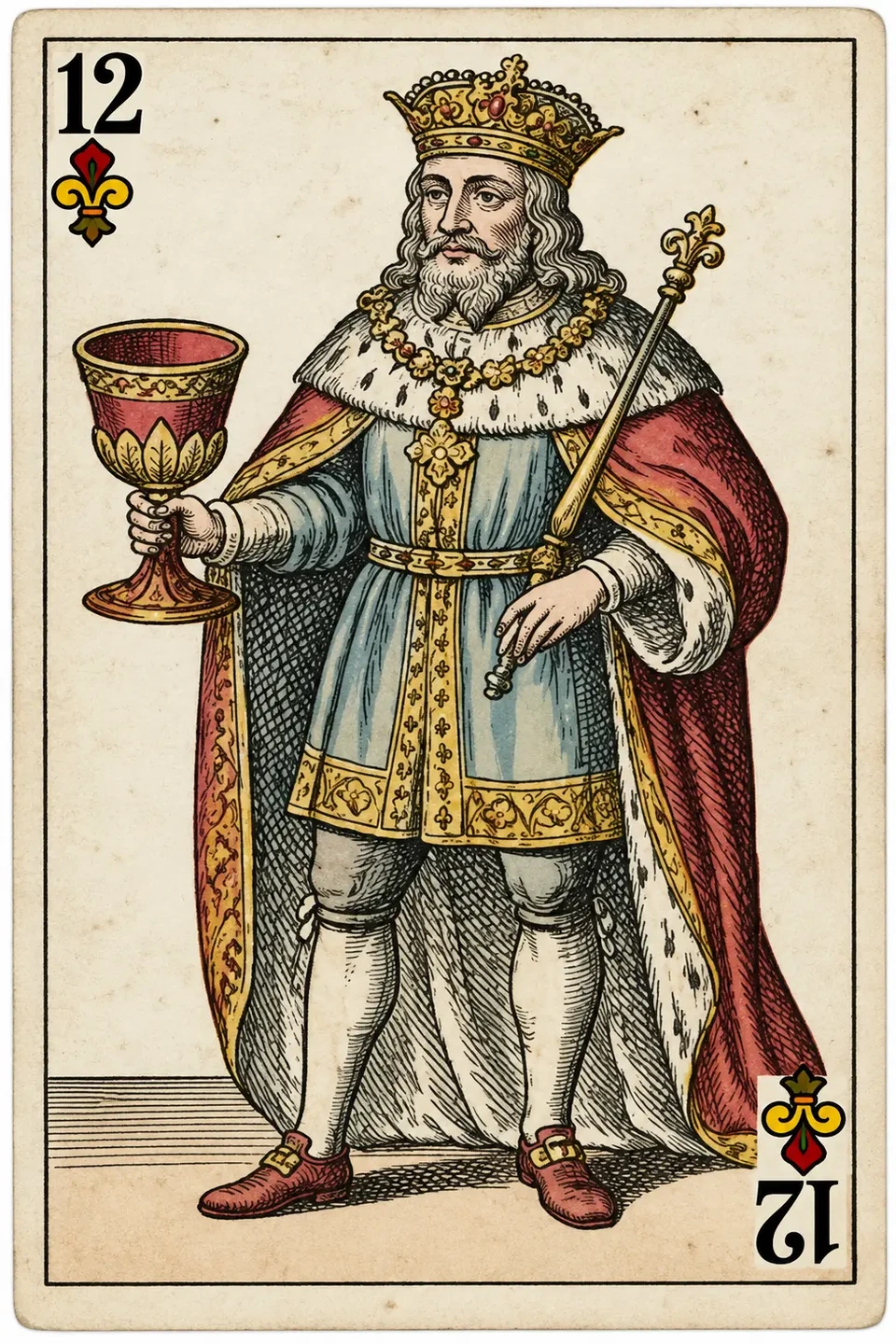
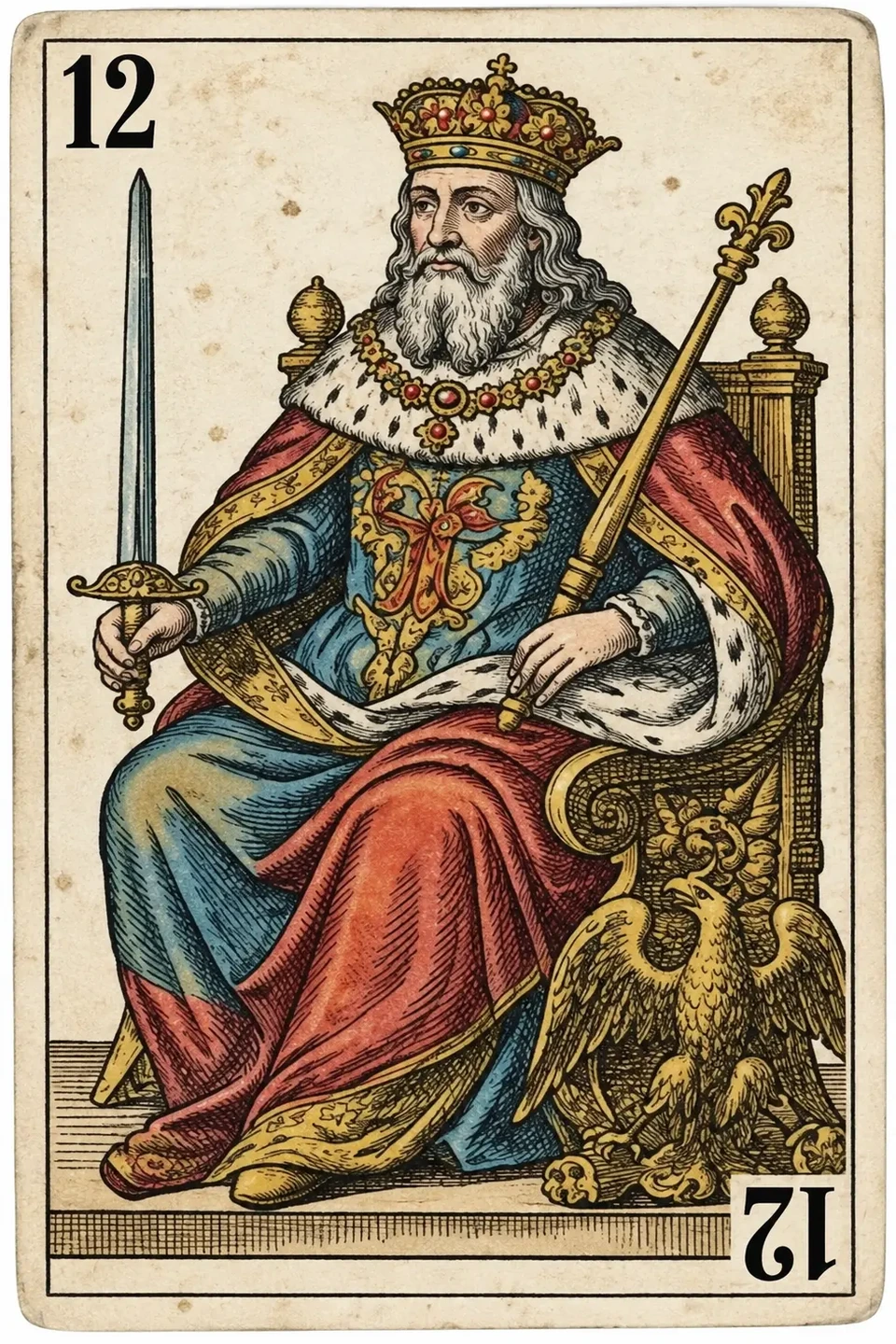
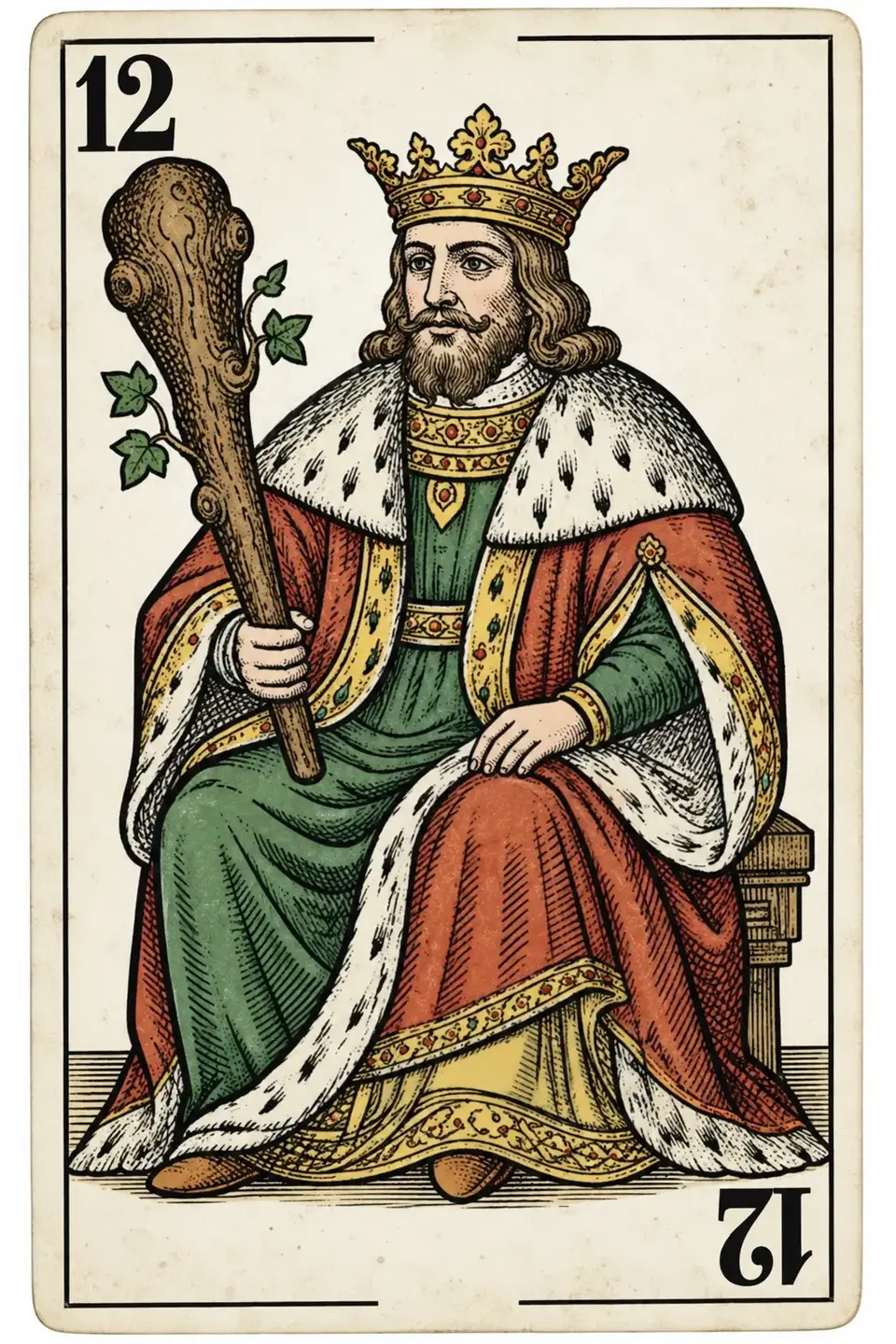
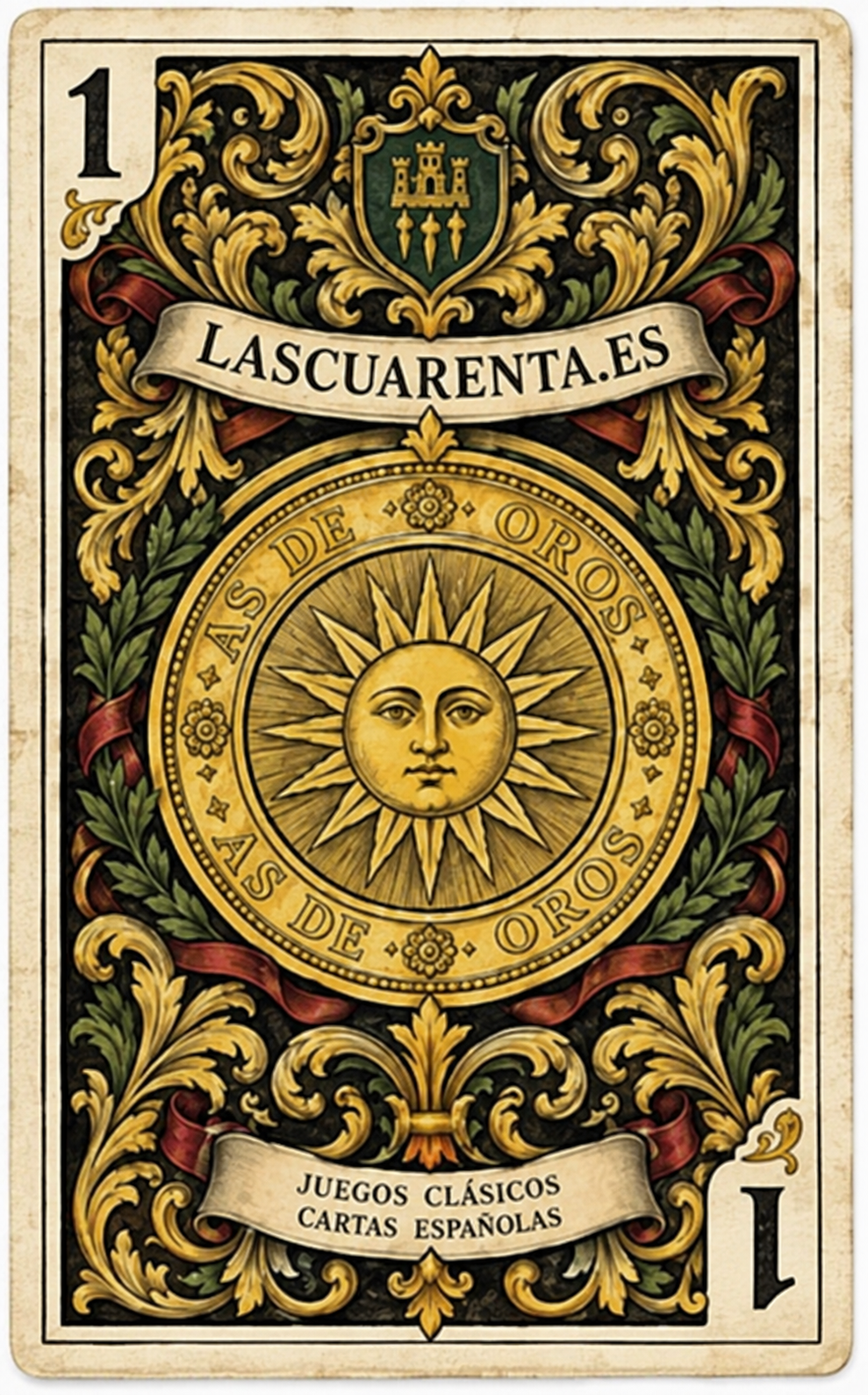
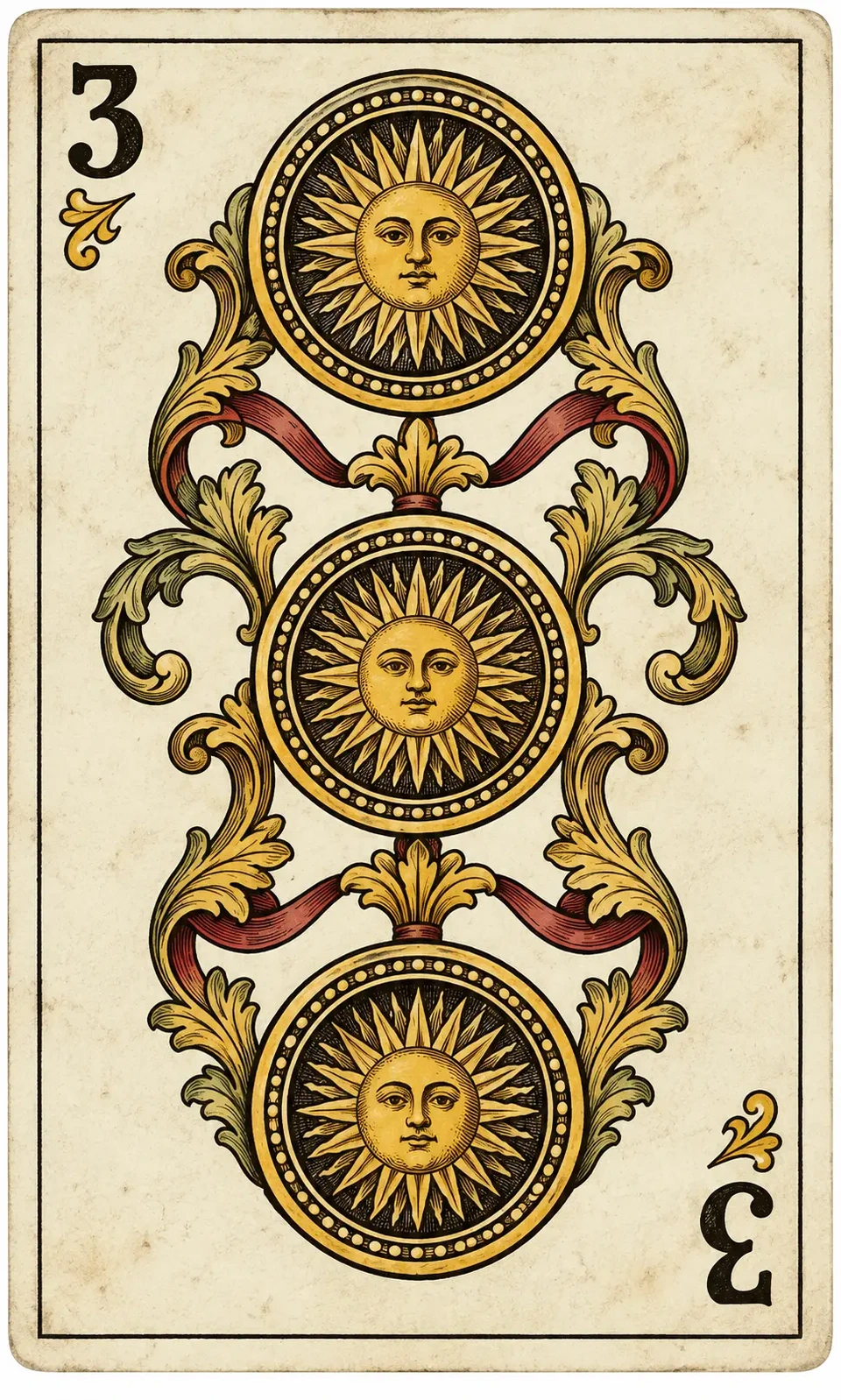
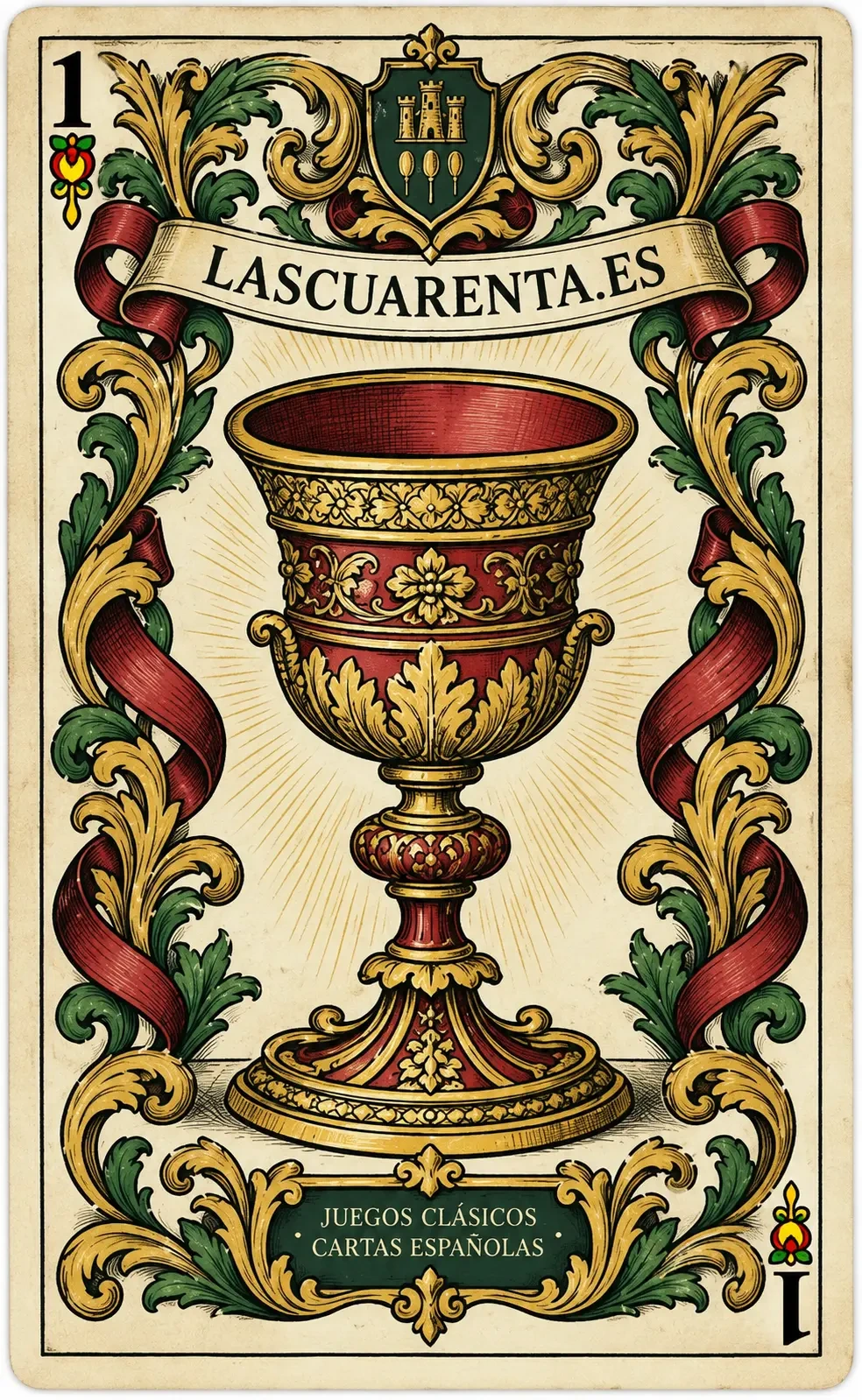
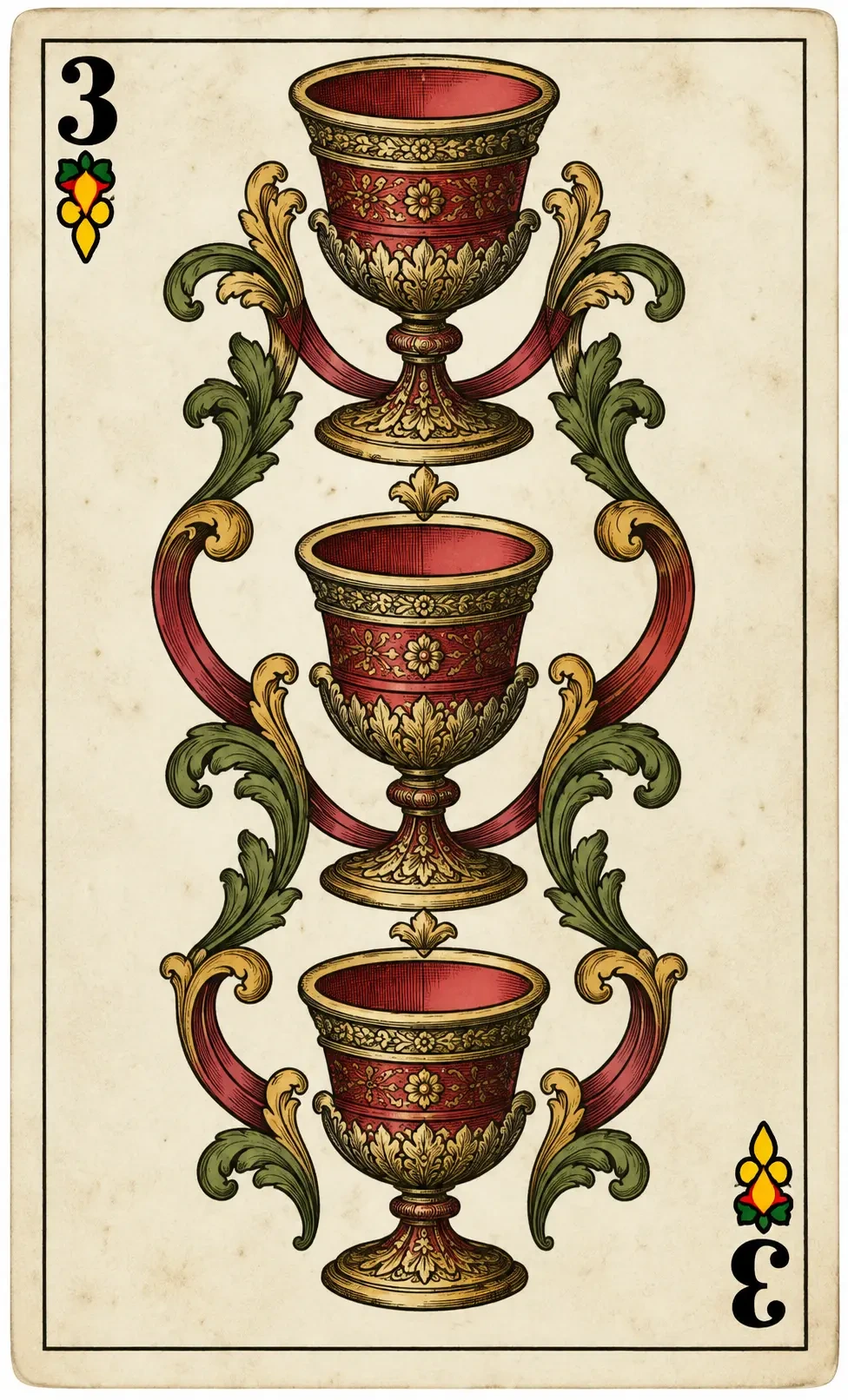
Played with the forty-card Spanish deck, but only the twenty cards that score: the as (ace), tres (three), rey (king), caballo (knight) and sota (jack) of oros (coins), copas (cups), espadas (swords) and bastos (clubs). The rest (twos, fours, fives, sixes and sevens) are set aside before dealing and never appear.
Within a suit the ranking from strongest to weakest is as, tres, rey, caballo, sota. It matches the point order, so the top card is also the most valuable one: no surprises like the seven in Escoba or the nine in other games.
Values are: as eleven points, tres ten, rey four, caballo three, sota two. All twenty cards together add up to a hundred and twenty points, and with the ten points for winning the last trick (always on the table), each hand distributes a hundred and thirty points in total. If someone cantes (announces a scoring combination), the total rises with the twenty or forty of each cante, though not every hand has one.
The table and the deal
Four players in two facing partnerships: your partner sits opposite you and the opponents sit either side. Talking about the game is allowed, but never about the cards in your hand.
The dealer gives five cards to each player, one at a time or in twos and threes according to custom. The last card is for the dealer, who shows it to the table: that is the trump suit, and everyone knows from the start that the dealer holds that exact card.
The mano (the player who leads) sits to the dealer's right. They speak first and lead first. Turns run clockwise, as in almost every Spanish card game, and the dealer's position rotates the same way.
Before the first card is played, each player may pass, announce Solo (play the hand without their partner's help, who sits out) or Cuatrola. If no one announces anything, the hand is played normally. You may only raise the bid, never lower it: pass, Solo, Cuatrola and, in the quintola variant, Quintola.
There are two ways to play the big bid. Without quintola, Cuatrola requires winning all five tricks and is worth four. With quintola, Cuatrola requires four of the five tricks and is still worth four, while Quintola requires all five and is worth five. On the site you choose the variant in the options window, along with the length of the match.
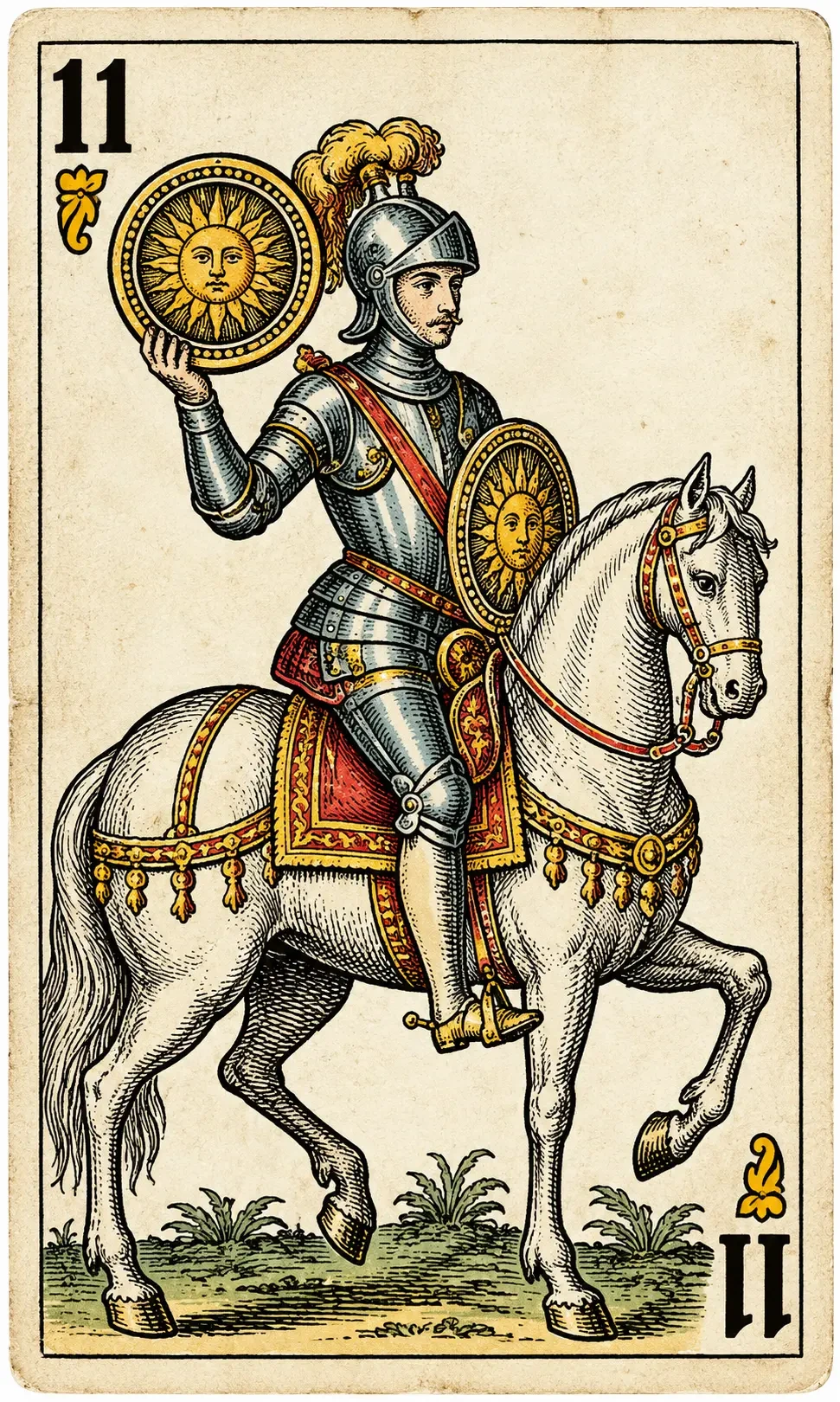
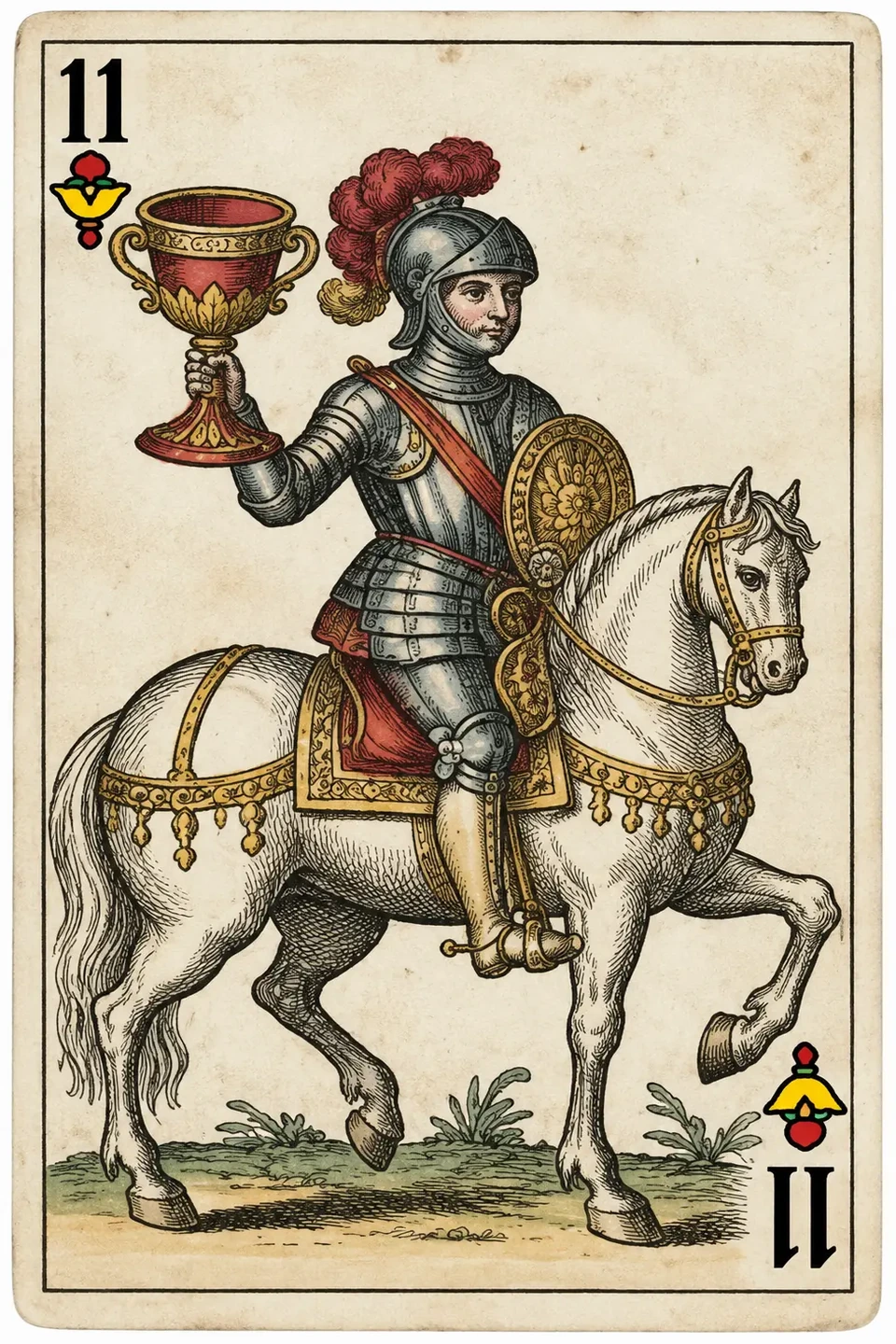
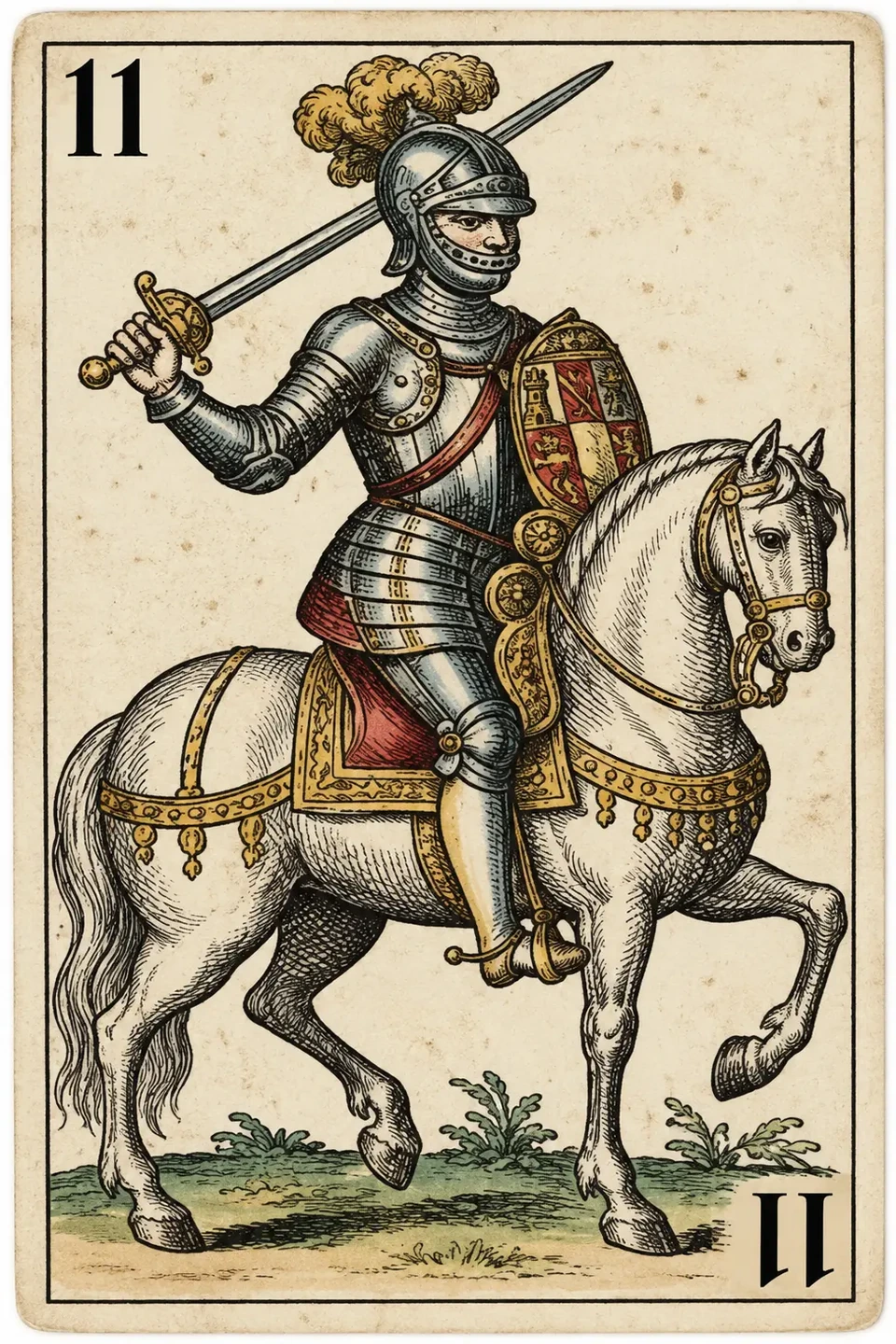
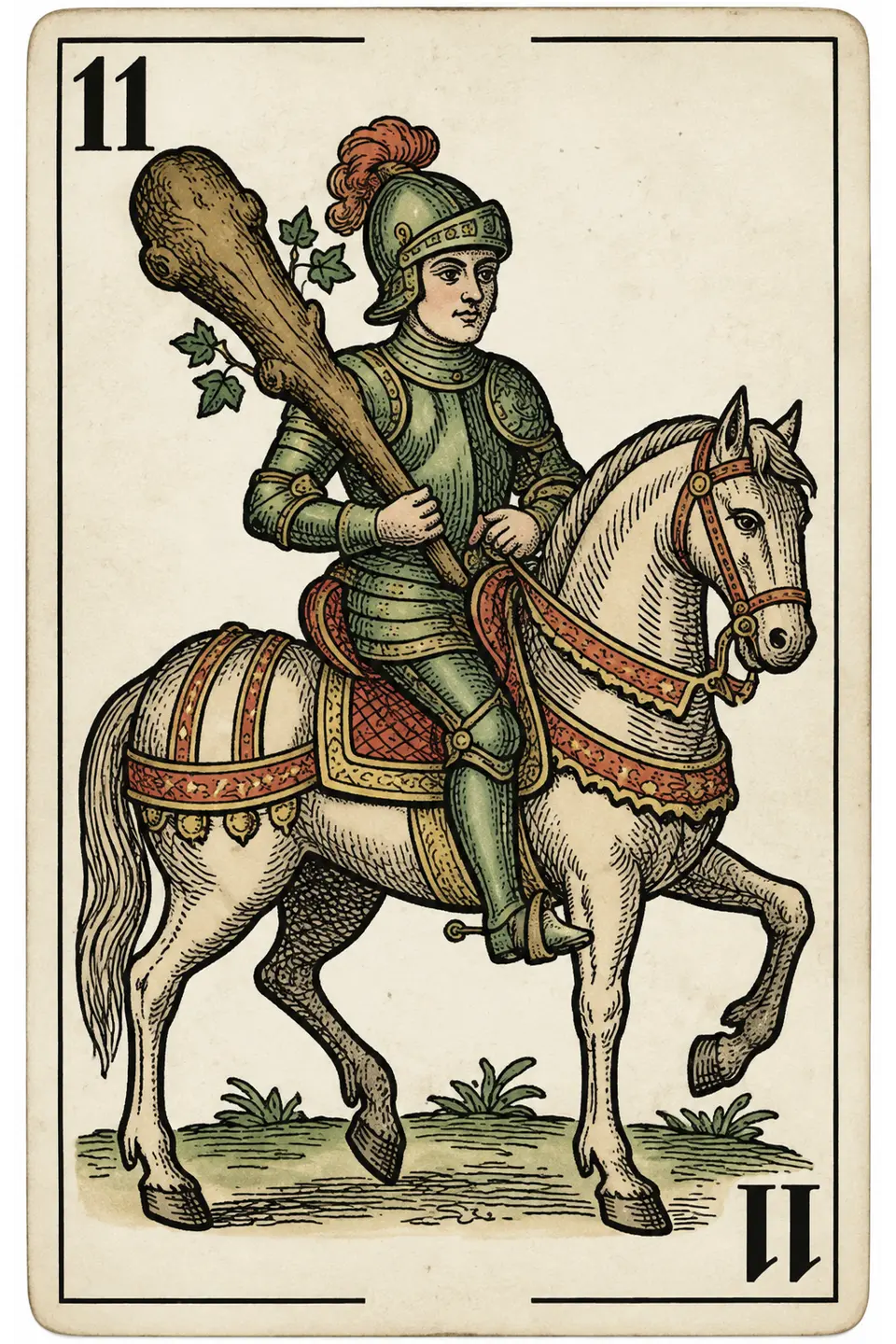
How to play, step by step
Cuatrola is played by four people in two pairs, using the twenty scoring cards of the Spanish deck: Ace, three, King, Knight and Jack.
- 1
Set up the twenty-card deck
Remove every non-scoring card from the Spanish deck, leaving twenty: Ace, three, King, Knight and Jack of each suit. Five cards are dealt to each player and there is no drawing pile.
- 2
Reveal the trump
The last card the dealer deals becomes the trump and is shown to the table, so everyone knows one of the dealer's cards.
- 3
The forehand speaks first
The forehand sits to the dealer's right and speaks first, choosing to pass, call Solo (playing without a partner) or Cuatrola. Without quintola, Cuatrola commits to winning all five tricks; with quintola, four are enough and Quintola asks for all five.
- 4
Play with forced follow
You must follow the suit led, beat the highest card if you can, and trump if you have none of the suit. This applies from the very first trick.
- 5
Count the card points
Ace is worth eleven, three is worth ten, King four, Knight three and Jack two, plus twenty for each King-and-Knight cante of the same suit (forty if it's the trump suit) and ten for taking the last trick.
- 6
Score the hands
The pair with more points wins the hand and scores one point, two if Solo was called, four with Cuatrola and five with Quintola. Matches run to eleven hands, or twenty in the long format.
Scoring and the end of the round
Each trick goes to the highest card of the suit led, unless someone has trumped: then the highest trump wins. Cards won are set face down and counted at the end of the hand.
The partnership adds up the points of the cards it captured, plus twenty for each cante of rey and caballo of the same suit, forty if that suit is trumps, plus ten for winning the last trick.
Only one cante can be announced per trick won, and the cante belongs to the partnership: if both partners hold a cante, only one is announced and the other waits until the partnership wins another trick. When there is more than one, the forty is announced before the twenty.
The partnership with more points scores one point on the scoreboard. If Solo was called, the hand is worth two; with Cuatrola it is worth four and with Quintola five. When the side that made the announcement fails to fulfil it, those points go to the opposing partnership instead.
The match ends when a partnership reaches the agreed number of points, usually three or five. On the site you play the number of hands fixed for the table: eleven in a quick match, and eleven or twenty against house players or in a custom table.
Strategy: how to win more hands
Count the trumps before anything else
With only twenty cards in play, the five trumps are almost all the information there is. If you hold three, the hand is yours to steer; if you hold a low one, your job is to protect your partner's points and not to give away the ten points for the last trick.
Lead trumps when you are strong
Leading trumps forces opponents to spend theirs and clears the way for your aces and threes in other suits. It is the textbook play when you hold the as or tres of trumps with support.
Never lead below your as
If you hold the as of a suit, do not lead a lower card of that suit: anyone can capture it and your as loses its trick. Only do this once that suit has already been played this hand, or when you are holding so many cards of it that you need to unload them.
Only lead trumps when you can win with them
Leading trumps without holding the as or the tres just hands over control: the opponent takes the trick and steers the hand. The exception is when the trump as was shown as the dealer's card and your partner holds it, because then the lead clears the way for them.
Force the fallo instead of leading trumps
Without the trump as, instead of leading trumps, play a suit that has already been played this hand: whoever is out of it will have to fallar (play a trump) and will spend a card they needed for later.
Break up a painted forty
When the dealer shows the rey or caballo of trumps and you hold the matching card they are missing, there is a good chance they will cante forty. If you are on lead, play trumps even if it is just the sota: forcing them to spend the pair breaks the cante.
When following with the as, play the as
When it is your turn to follow and you can win, ducking with a small figure card usually ends with the as being captured later anyway. Only hold back if you hold three or more cards of that suit and the opponent playing after you looks likely to fallar with a trump.
If someone has already trumped, don't waste your own
With a trump already on the table that you cannot beat, there is no need to spend your own: keep it, and also keep the aces of suits that have not been played yet, because each of those is a trick you already half own.
Keep the as of your opponent's suit
If you have noticed an opponent insistently playing one suit, it is because their points are there. Holding back the as of that suit to capture their tres is worth more than winning a small trick early.
Signal with the cards you discard
When you cannot win the trick, the card you throw away tells your partner where your strength lies. Throwing a sota of a suit usually means there is nothing there; trumping instead signals you want to keep control.
Solo is called on trumps, not on points
Many players call Solo simply because they hold the as and tres of some suit. What actually wins hands alone is high trumps and one clean suit to unload: without at least three good trumps, the announcement falls apart.
Cuatrola is called almost never
Winning all five tricks demands total control of trumps and no exposed suit. It is worth four points, but failing gives them to the opponents: it is an end-of-match play, when you are behind and need everything.
Common mistakes beginners make
Forgetting that following suit and trumping is compulsory
In Cuatrola you must follow suit from the very first trick, beat the trick if you can, and trump if you have no cards of that suit. It is not optional: holding back a good card for later is an illegal move, not a tactic.
Announcing a cante without checking trumps
A rey and caballo cante is worth twenty, but forty if it is the trump suit. Many new players lose twenty points by not checking which suit the dealer revealed.
Giving away the last trick
The ten points for the last trick decide many tight hands. Holding back a small trump for the fifth trick is usually worth more than spending it earlier to capture a sota.
Playing against your own partner
If your partner is already winning the trick, there is no need to beat it with your as: pile the points on top instead. Beating their card with a higher one of yours just wastes ammunition.
Table glossary
- Arrastre
- The obligation to follow suit, beat the trick if you can, and trump if you have no cards of that suit.
- Triunfo
- The trump suit, which beats every other suit; set by the last card the dealer deals to themself.
- Cante
- Holding the rey and caballo of the same suit: worth twenty points, or forty if it is the trump suit.
- Mano
- The player who speaks and leads first, seated to the dealer's right.
- Solo
- An announcement to play the hand without your partner's help; the hand is then worth double.
- Últimas
- The ten points awarded for winning the last trick of the hand.
Frequently asked questions about Cuatrola
Rules of the other games
Still have a general question? Check the site's frequently asked questions or the blog.
To go beyond the rulebook, read our blog's the origins, rules, cantes and trivia of Cuatrola.