

Learn to play
Chinchón tutorial: practise play by play
Chinchón tutorial
Chinchón isn't played in tricks, but by combining your hand. Here are the keys to drawing, discarding and closing; then practise a game against the bot.
Key points
The essentials del Chinchón
Sets and runs
A set is three or four cards of the same value; a run is three or more consecutive cards of the same suit. The wild card can stand in for whatever card you're missing.
Drawing and discarding
On your turn, draw from the stock or the top of the discard pile and drop another. Watch what you discard: the player to your left may put it to good use.
Closing and scoring
You close when your hand is fully combined with no loose cards left. The rest score whatever's left over: face cards ten, the wild card twenty-five and the rest their number. Whoever passes the agreed limit is eliminated.
The chinchón
Combining your whole hand into a single run of the same suit is a chinchón: depending on the variant you choose before sitting down, it wins the game outright or subtracts forty points.
Questions
Questions about this tutorial
Origins
History of the deck
Origin of the deck
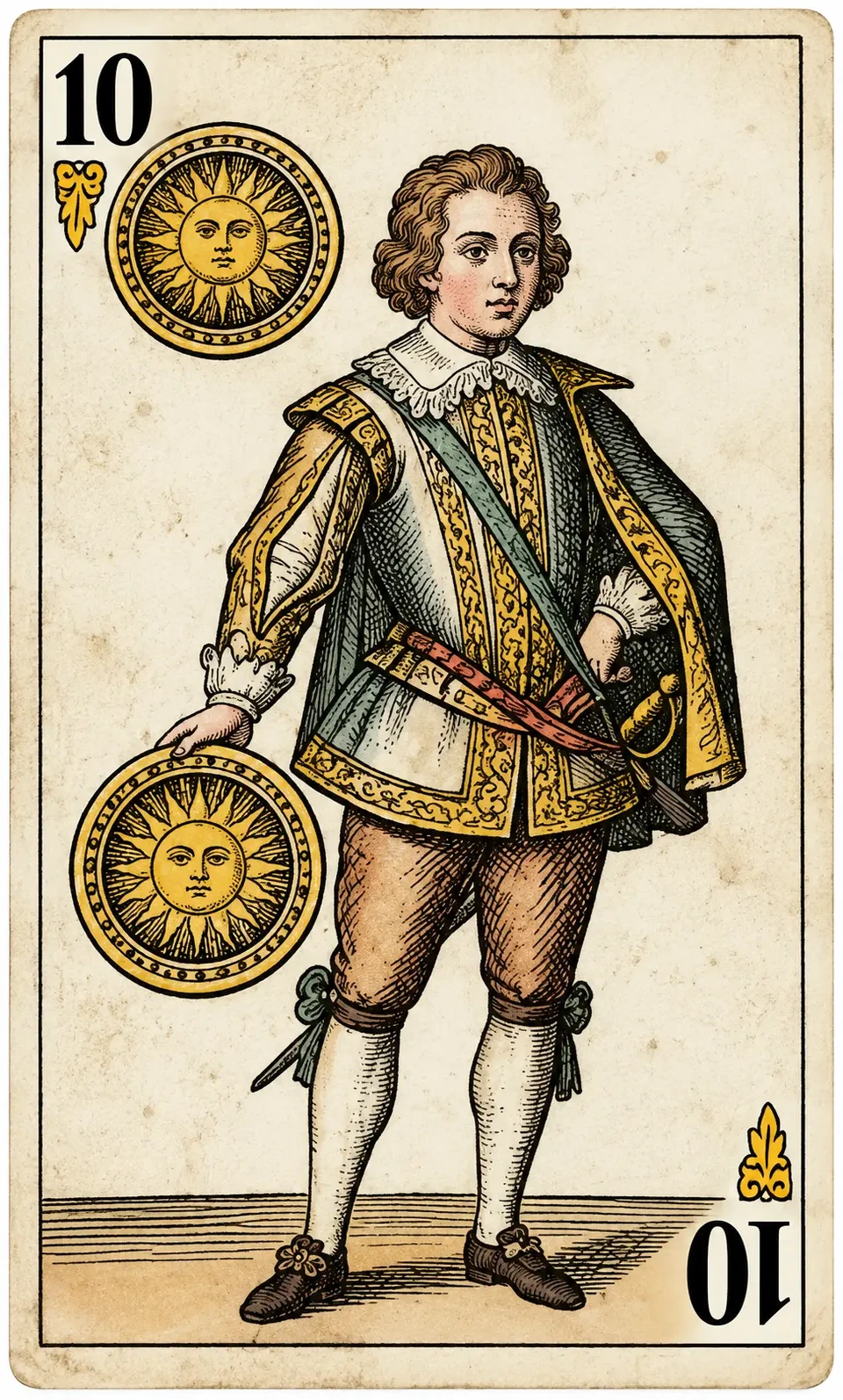
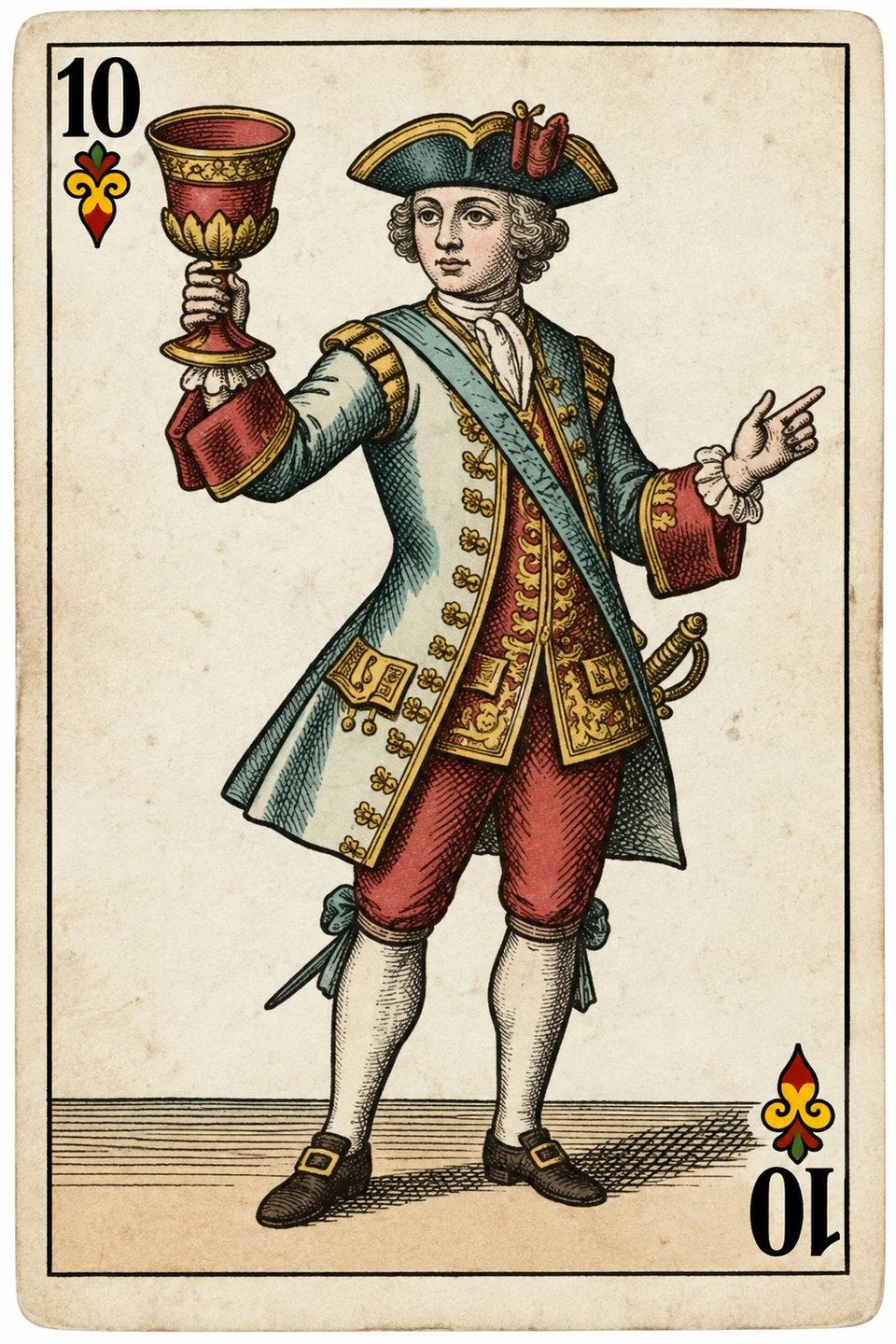
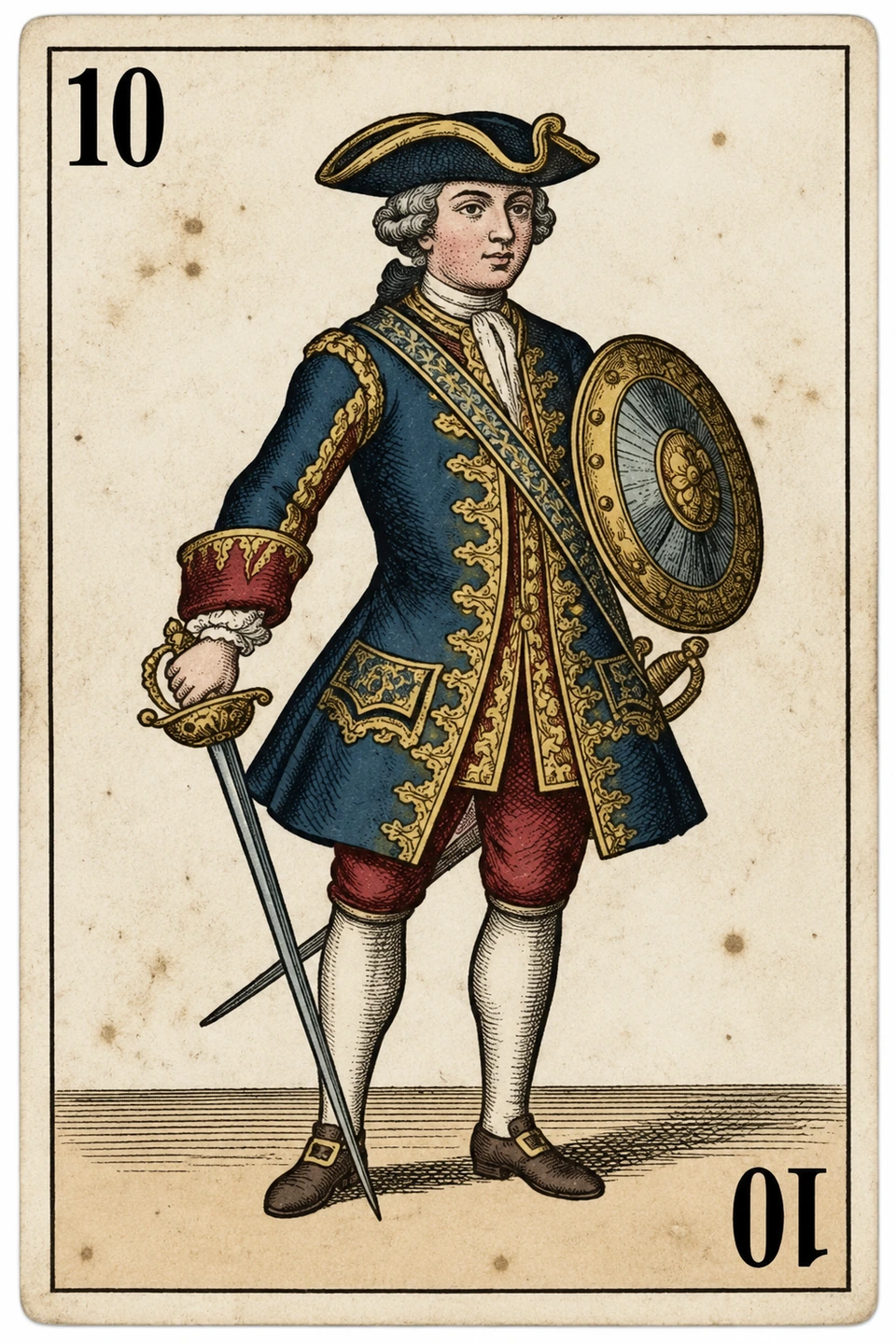
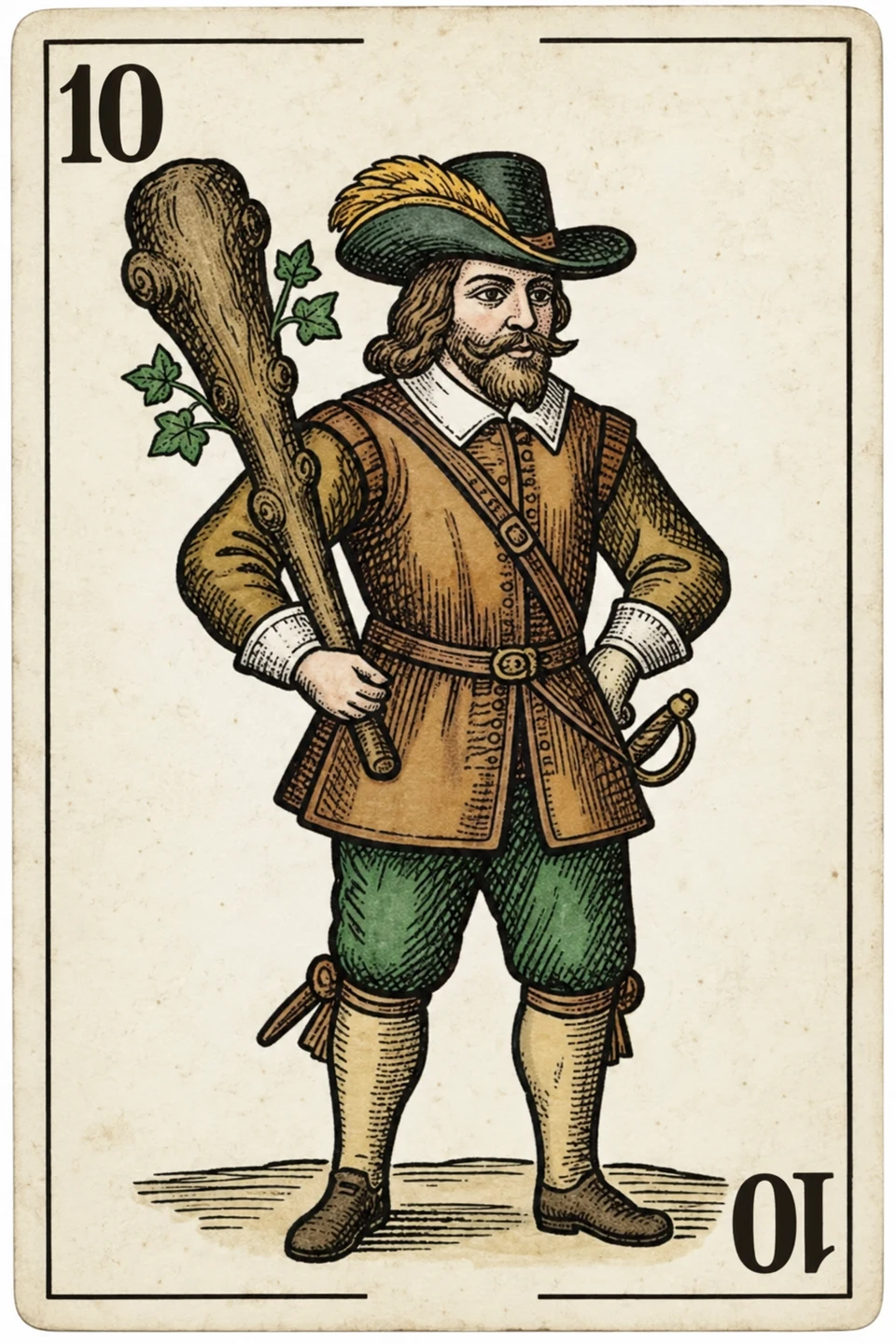
The 40-card Spanish deck arrived on the peninsula in the 14th century and established its four suits —coins, cups, swords, and clubs— as symbols of medieval social classes.
The Tute
Heir to the Central European Marriage, Tute popularized the 20 and 40 declarations and became the quintessential table and tavern game.
La Cuatrola
A pairs variant from the southeast of the Iberian Peninsula. It is played only with the 20 scoring cards (aces, 3s, kings, knights, and jacks): all are dealt, 5 per player, and the trump card is one of the dealer's cards, which they show to the table. Whoever dares to 'sing Cuatrola' commits to winning all five tricks alone.
Full rules
Rules of every game, in writing
Check the deck and its values, the deal, how a round unfolds, scoring, strategy, common mistakes, regional variants and table vocabulary.