

Spanish deck
How Many Cards Are in a Spanish Deck? 40, 48 and 50-Card Versions
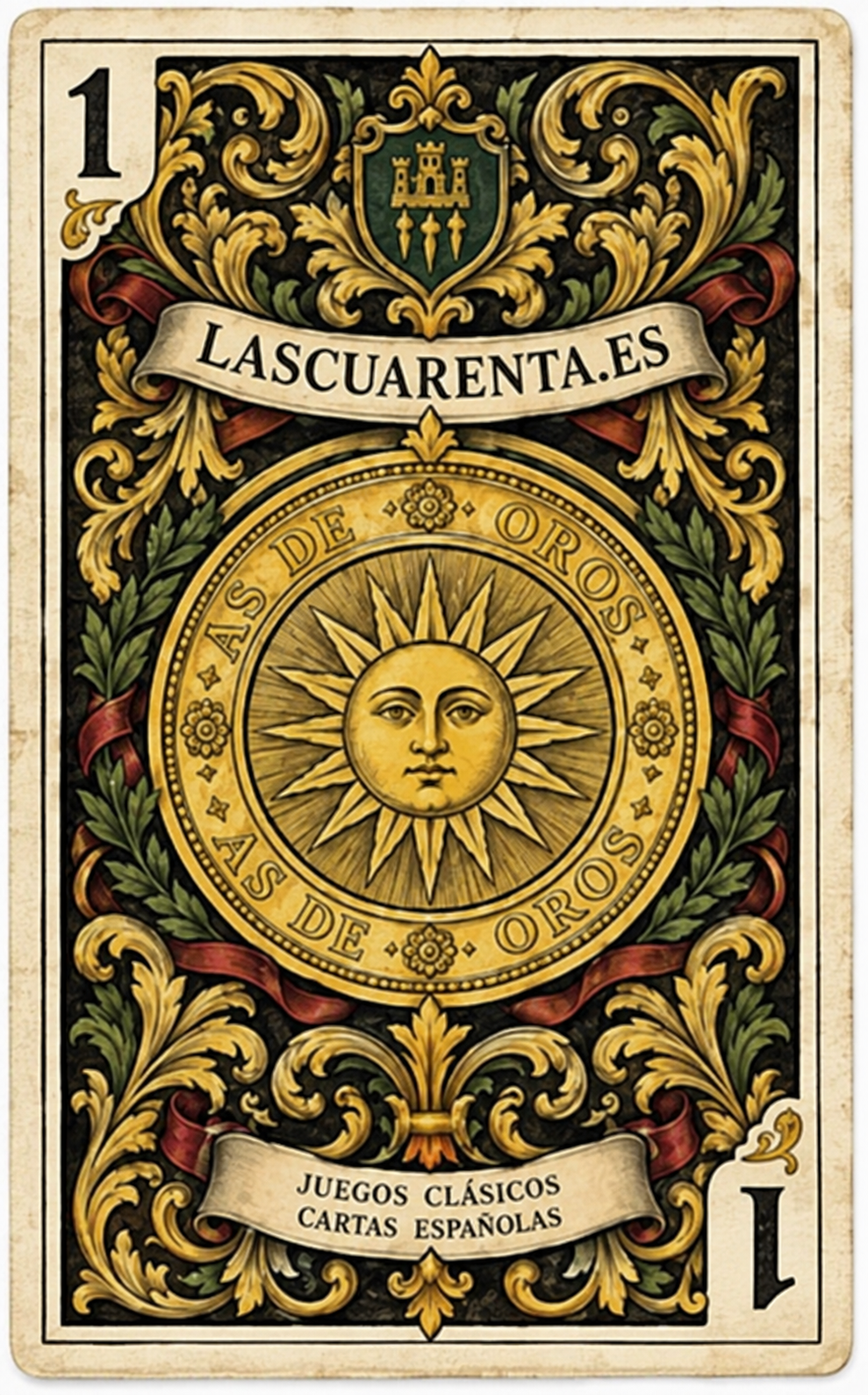
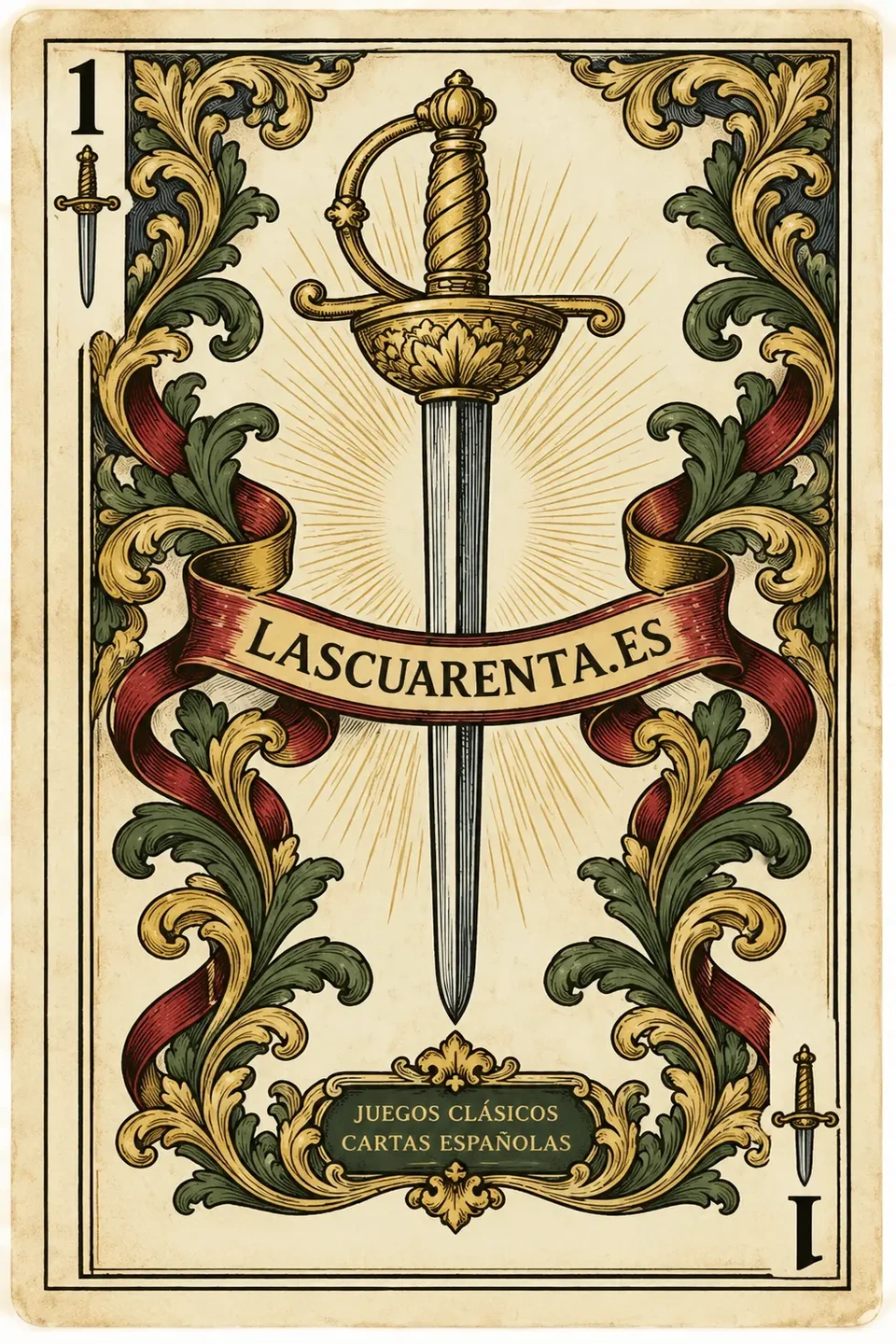
The most widely used Spanish deck contains 40 cards, with no eights or nines, while the complete version has 48. Some editions include two additional jokers for a total of 50, though not every game uses them. All versions have four suits: oros (coins), copas (cups), espadas (swords) and bastos (clubs).
How many cards does each version of the Spanish deck have?
There is no single card count that applies to every Spanish deck. The main difference is whether eights and nines are included; after that, you need to check whether the manufacturer has added jokers. So, before starting a game, it is worth checking the contents of the deck rather than relying solely on the number on the box.
You can get to know the cards in our card decks section. Here is a summary to help you tell the formats apart at a glance:
| Version | Cards per suit | Contents | Total |
|---|---|---|---|
| 40-card deck | 10 | 1 to 7, sota, caballo and rey | 40 cards |
| Complete 48-card deck | 12 | 1 to 9, sota, caballo and rey | 48 cards |
| 48-card deck with jokers | 12, plus two additional cards with no suit | The 48 cards and two jokers | 50 cards |
The differences between the 40-card and 48-card decks do not affect their four suits or their court cards. The 40-card deck has eight fewer cards: the four eights and the four nines.
How are the cards divided among the four suits?
The suits of the Spanish deck are oros, copas, espadas and bastos. Each suit contains the same number of cards within a given version of the deck: ten in the 40-card deck and twelve in the 48-card deck.
- Oros: recognizable by their depictions of coins.
- Copas: show vessels or cups.
- Espadas: use swords as their symbol.
- Bastos: identifiable by their batons or clubs.
In the 40-card version, each suit contains an ace, two, three, four, five, six, seven, sota, caballo and rey. The ace corresponds to the number 1, while the court cards bear the numbers 10, 11 and 12, respectively.
This clears up a common question: having a rey numbered 12 does not mean that every deck has twelve cards in that suit. In the reduced version, the numbering jumps from 7 to 10.
Why does the 40-card deck have no eights or nines?
Because it is a reduced version that has become established through use in many traditional games. It is not a defective deck, nor are cards missing by mistake: it is designed for games whose rules use ten cards per suit.
This absence should not be attributed to a single historical explanation that applies to every place and period. Card formats and games have changed over time, and the 40-card deck exists alongside the 48-card deck.
The court cards also keep their numbers when the eights and nines are removed. The sota is still 10, the caballo 11 and the rey 12. These numbers identify the cards, but do not necessarily indicate their point values during play.
If you have a 48-card deck and need a 40-card one, simply set aside all eight of the eights and nines. Also remove any jokers if the rules do not use them.
Which games use 40 cards, and which allow 48?
Many traditional Spanish games use the 40-card deck. Others allow different deck sizes depending on the variant, local customs or agreed rules. This table covers the options worth keeping in mind:
| Game | Deck used | What to check |
|---|---|---|
| Tute | 40 cards | The variant and number of players determine how the cards are dealt. |
| Guiñote | 40 cards | Played without eights, nines or jokers. |
| Brisca | 40 cards | The deal depends on the variant; not all cards are dealt at the start. |
| Mus | 40 cards | Which cards count as equivalent varies between variants. |
| Escoba | 40 cards | Its card values for making fifteen differ from those used in trick-taking games. |
| Chinchón | 40 or 48 cards | You need to agree on the deck size and whether to use jokers. |
| Cinquillo | 40 or 48 cards | The sequence changes depending on whether eights and nines are included. |
In 40-card Cinquillo, the next card after the seven in ascending order is the sota. With 48 cards, the eight and nine are played first. In Chinchón, the deck size affects the combinations available, so it is best not to mix rules from different versions.
How much are the cards worth in trick-taking games?
In games such as Tute, Guiñote and Brisca, the printed number does not match the points the card is worth. A trick is the set of cards played during one turn of a round, usually one per player; whoever wins it collects those cards.
These are the usual card values in those three games:
| Card | Points |
|---|---|
| Ace | 11 |
| Three | 10 |
| Rey | 4 |
| Caballo | 3 |
| Sota | 2 |
| Seven, six, five, four and two | 0 |
The cards add up to 30 points per suit and 120 for the whole deck. This calculation does not include any extra points for declarations, the last trick or other specific rules.
A card worth no points can still win a trick: the suit led, the trump suit and the game's card ranking also matter. Nor should you apply this table to Mus, Escoba or Chinchón, which have their own systems for valuing cards.
Are jokers part of the Spanish deck?
Some commercial editions include jokers, but they are not needed to define the four suits of the Spanish deck. They are additional cards and do not belong to oros, copas, espadas or bastos.
When an edition contains all 48 cards and adds two jokers, the result is a 50-card deck. That does not mean you should use all 50 in every game: to play Brisca, for example, you would set aside both the jokers and the eights and nines.
In Chinchón variants that allow them, jokers can stand in for other cards when forming combinations. Check the specific rules of the game for any restrictions on their use and their effects on scoring.
How to check that you have the right deck
Before dealing, a quick check can prevent interruptions and confusion:
- Separate the four suits and check that each contains the same cards.
- Look for the eights and nines: their presence distinguishes the complete deck from the 40-card deck.
- Set aside the jokers if the game does not use them.
- Confirm the variant, especially in Chinchón and Cinquillo.
Remember this: 40 is the most common answer; 48 is the complete deck, and 50 is that same deck with two jokers. The right choice depends on the game, not on one format being better than another.
Sources
Frequently asked questions
Does the Spanish deck have 40 or 48 cards?
Both versions are Spanish decks. The most widely used has 40 cards, without eights or nines; the complete deck has 48, with twelve cards in each of its four suits.
Which cards are removed to go from 48 to 40?
The four eights and the four nines are removed. If the edition includes jokers, these are also set aside when the game does not use them.
Why do some Spanish decks have 50 cards?
Because they include all 48 cards of the complete version plus two additional jokers. Jokers do not belong to any suit and are only used if the rules of the variant allow them.
How much are the ace and three worth in the Spanish deck?
It depends on the game. In Tute, Guiñote and Brisca, the ace is worth 11 points and the three is worth 10. These values do not apply to every game played with a Spanish deck.