

Culture
Everything you need to know about Guiñote: Origin, History, Rules and Curiosities
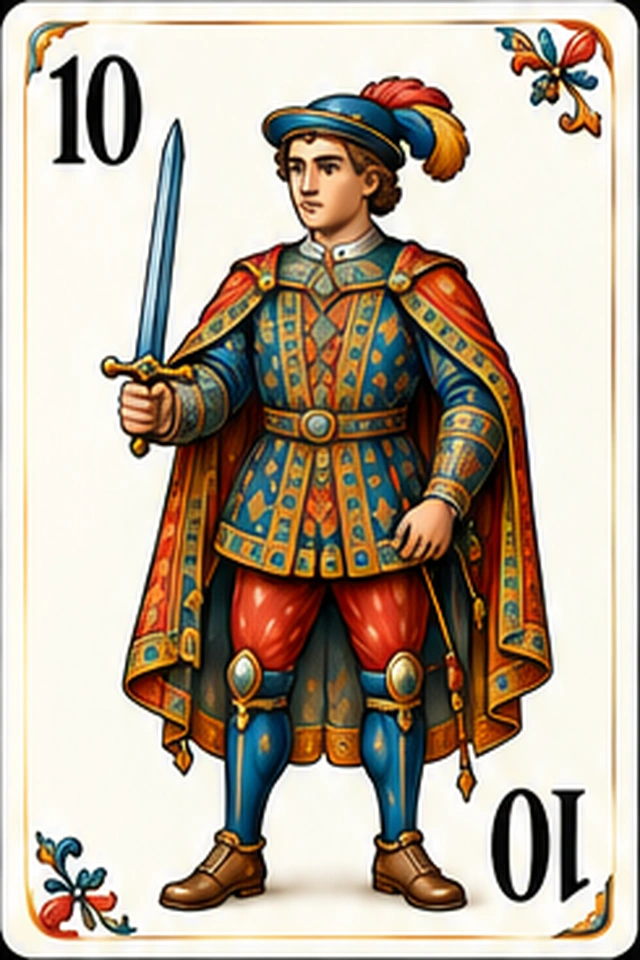
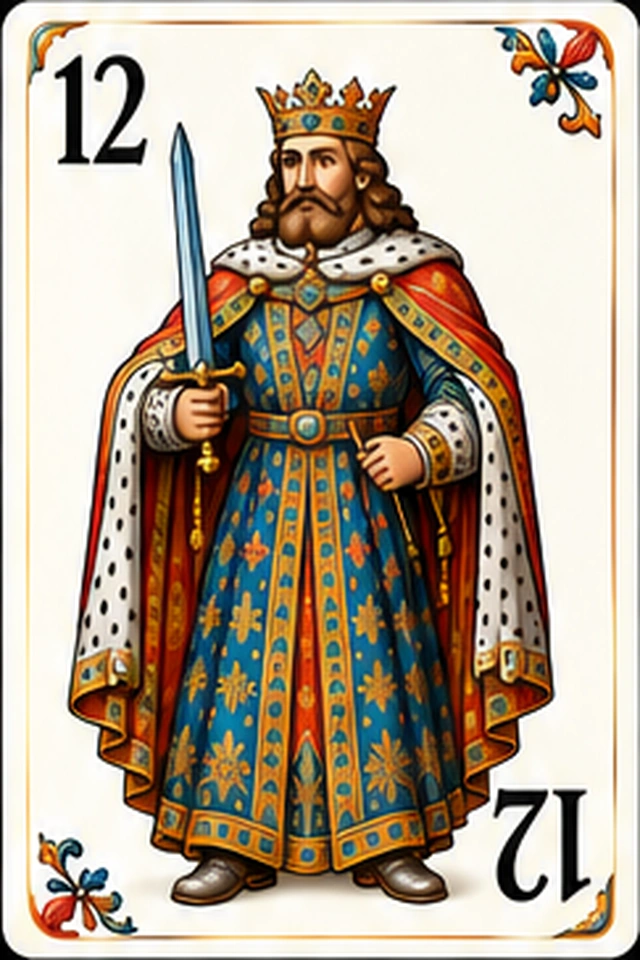
Guiñote is a card game woven into life in Aragon, as familiar as the jota (a traditional Aragonese dance and music style), patron saint festivals and long after-dinner conversations. It also remains popular in Navarra, Soria, La Rioja, Castellón and other areas, bringing generations together in bars, social clubs (peñas), associations and family gatherings, with friendships, rivalries and lively arguments along the way.
At first glance, it might seem a simple game. A Spanish deck of cards, four players and a few tricks. However, anyone who has shared a table with veteran guiñoteros (Guiñote players) knows that behind every card there is a mix of memory, strategy, calculation and psychology that turns each game into a small intellectual battle.
In this guide, you will find everything you need to understand Guiñote, and if you prefer to go straight to the rules, you have the rules of Guiñote and the step-by-step tutorial. When you want to put it into practice, you can play Guiñote online. Here we review its history, its rules, its scoring system, its variations and some of the most striking curiosities surrounding one of Spain's most emblematic card games.
What is Guiñote?
Guiñote is a trick-taking game belonging to the same family as Brisca and Tute. Traditionally, it is played with a 40-card Spanish deck, and in its most popular mode, four players participate, organised in pairs.
The objective is to accumulate points through cards won in tricks, cantes (special card combinations declared for points), and special bonuses until reaching 101 points. Although luck influences the initial deal and the cards drawn during the game, experience shows that skill eventually makes the difference between a beginner and an experienced player.
It is no coincidence that many fans define Guiñote as a game that takes an afternoon to learn and a lifetime to master.
The origin of Guiñote: a history between Aragon and Italy
Determining the exact origin of Guiñote is not easy. As with many traditional games, it was transmitted orally for centuries and left few written records.
The most widely accepted theory places its roots in the Mediterranean expansion of the Crown of Aragon during the 14th and 15th centuries. Aragonese territories maintained an intense relationship with places like Sicily, Sardinia, and Naples, where various card games related to the Italian briscola were already played.
Many historians believe that Aragonese soldiers and merchants adapted those rules to their own customs, leading to an evolution that would eventually result in modern Guiñote.
There is also a curious explanation for its name. According to a widespread tradition, the term "guiñote" could be related to the winks (guiños) and signals that partners used to communicate during games. Paradoxically, these signals, which may have given the game its name, are now strictly prohibited in official competition.
The first known documentary reference appeared in 1836, when Mariano Peralta included the word "guiñote" in his Aragonese-Castilian Dictionary. That mention shows that the game was already well-established among the population and had recognisable rules.
During the 19th century, its popularity soared in Aragonese towns and cities, becoming a common activity in taverns, casinos, social clubs, and family gatherings. It has been played ever since.
Why is Guiñote so important in Aragon?
In many regions, card games are simply a form of entertainment. In Aragon, Guiñote has become a true element of identity.
For decades, it was one of the main forms of leisure in rural areas. Games accompanied pig slaughters, patron saint festivals, long winters, and neighbourhood gatherings. The game eventually generated its own vocabulary, popular expressions, and even proverbs.
Currently, various associations are working to ensure Guiñote gains greater recognition as intangible cultural heritage, highlighting its role as a tool for transmitting traditions and fostering coexistence between generations.
The deck and the value of the cards
Guiñote uses the traditional 40-card Spanish deck, consisting of four suits:
- Oros (golds)
- Copas (cups)
- Espadas (swords)
- Bastos (clubs)
The hierarchy of the cards does not match the intuition of those who come from other games. Here, the Rey (King) is not the most powerful card.
Card Value As (Ace) 11 points Tres (Three) 10 points Rey (King) 4 points Sota (Knave/Jack) 3 points Caballo (Knight) 2 points 7, 6, 5, 4 and 2 0 pointsThe cards that score are commonly called "guiñotes". The As (Ace) and Tres (Three) are especially valuable, as they concentrate a good portion of the total points in the game.
How a game of Guiñote is played
In the classic mode, four players participate, forming two pairs.
After shuffling, six cards are dealt to each player. One card is placed face-up and determines the trump suit. The rest form the draw pile.
The player to the right of the dealer starts the first trick.
During the first phase of the game, there is great freedom of play. Participants can discard cards without obligation to follow suit or play trump. This characteristic clearly differentiates Guiñote from other similar games.
After each trick, players draw a card to replenish their hand.
The situation changes completely when the draw pile runs out.
El arrastre (The drag): where games are won
The final phase is called el arrastre and is the most strategic moment of the game.
From that moment, several obligations arise:
- If you have cards of the suit that was led, you must play one of them.
- If you can also beat the highest card of that suit, you are obliged to do so.
- If you do not have cards of the suit led, you must play a trump if possible.
- Only when you cannot meet any of the above conditions are you free to discard.
Failure to comply with these rules constitutes a renuncio (renege) and usually means losing the game.
Los cantes (The declarations): veinte, cuarenta and tute
One of the most well-known features of Guiñote are the cantes.
When a player holds the Rey (King) and the Sota (Knave/Jack) of the same suit, they can declare it after winning a trick.
Las veinte (The twenty)
If the Rey (King) and Sota (Knave/Jack) belong to a suit that is not trump, the pair gets an additional 20 points.
Las cuarenta (The forty)
If both cards belong to the trump suit, the bonus amounts to 40 points.
It is precisely from this play that the name of Las Cuarenta, the game that inspires this website, originates.
El tute (The tute)
The most extraordinary play consists of holding all four Reyes (Kings) or all four Sotas (Knaves/Jacks). Whoever achieves this can declare tute and automatically win the game.
It is a very rare situation, but it has been part of the game's mythology for generations.
Las diez de últimas (The ten of lasts)
The last trick of the game is of enormous importance.
The pair that wins it receives an additional bonus of 10 points popularly known as "las diez de últimas" (the ten of lasts).
Many evenly matched encounters are decided precisely thanks to this final prize.
That is why experienced players usually save key cards for the final stages of the game.
The thirty bad rule
One of the most peculiar rules of Aragonese Guiñote stipulates that a pair cannot win solely thanks to the cantes.
For the victory to be valid, they must have obtained at least 30 points from cards captured in tricks.
This prevents a pair from winning exclusively by having received favourable combinations in the initial deal.
The philosophy is simple: luck can help, but merit must also be demonstrated at the table.
Basic strategies to start winning
Guiñote has a much greater strategic depth than it seems.
Some fundamental tips for beginners are:
- Do not waste trumps during the first tricks.
- Try to remember which Ases (Aces), Treses (Threes) and trumps have already been played.
- Protect your cantes until you can declare them.
- Do not unnecessarily "kill" your partner's cards (i.e., play a higher card on your partner's winning card).
- Always think about the diez de últimas (ten of lasts).
- Learn to mentally count the accumulated points.
Veteran players develop a surprising ability to mentally reconstruct which cards remain in play. That memory usually makes the difference in el arrastre.
Curiosities of Guiñote
It has reached the courts
There are 19th-century court rulings related to discussions and altercations that arose during Guiñote games. Some even ended in violent confrontations, demonstrating the intensity with which it was played.
It has its own vocabulary
Expressions such as arrastre, renuncio, guiñotero (Guiñote player), cantar las veinte (to declare the twenty), or cantar las cuarenta (to declare the forty) are part of the daily language of thousands of fans.
It is also played online
The advent of the internet has allowed Guiñote to survive generational changes. There are specialised platforms and mobile applications that bring together thousands of players daily.
It continues to fill tournaments
Far from disappearing, current championships bring together hundreds of pairs and keep alive a tradition several centuries old.
Is it a game of luck or skill?
The most honest answer is that it has a significant part of both.
Luck determines the cards each player receives. However, as the number of games increases, skill eventually prevails.
The management of trumps, memory, calculation ability, reading the game, and coordination with one's partner are decisive factors that explain why the same players tend to appear year after year in the top positions of championships.
A game that has survived the centuries
Few traditional games can boast such a long history and such a loyal community. Guiñote has survived political changes, social transformations, and technological revolutions without losing its essence.
Perhaps that is its greatest secret: behind a simple deck of cards lies a perfect combination of strategy, emotion, tradition, and companionship. And as long as there is a table, four chairs, and someone willing to "cantar unas cuarenta" (declare a forty), Guiñote will continue to be part of Spanish popular culture.
The information in this article has been compiled from historical sources, traditional rules, specialised publications, and documentation from associations dedicated to the study and preservation of Guiñote.
Sources and bibliography
- Peralta, Mariano (1836). Diccionario Aragonés-Castellano. First known written reference to the term «guiñote».
- Asociación Aragonesa del Guiñote (Guiñarte). Historical research, rules, cultural promotion and documentation on the traditional Aragonese game.
- Cortés Mingote, Miguel. El Guiñote (2nd edition). Reference work on the history, rules, strategies and evolution of Guiñote.
- Gran Premio de Guiñote «Full Energía». Competition rules and documentation of contemporary tournaments.
- Wikipedia. «Guiñote». Consulted for comparison of rules, regional variations and historical references.
- Heraclio Fournier. Documentation on the traditional Spanish deck and card games of the Brisca and Tute family.
- Spanish historical press (19th and 20th centuries): references to Guiñote in regional publications, customary chronicles and judicial documentation.
- Bécquer, Gustavo Adolfo. References to Guiñote in 19th-century customary texts.
- Baroja, Pío. Mentions of Guiñote as part of popular leisure in various works and chronicles from the early 20th century.
- Documentary research on the history, rules, terminology and regional variations of Guiñote.